Eivinsen/Kamil

History

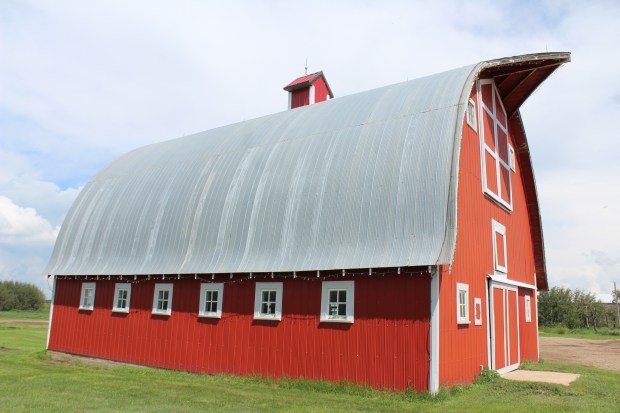
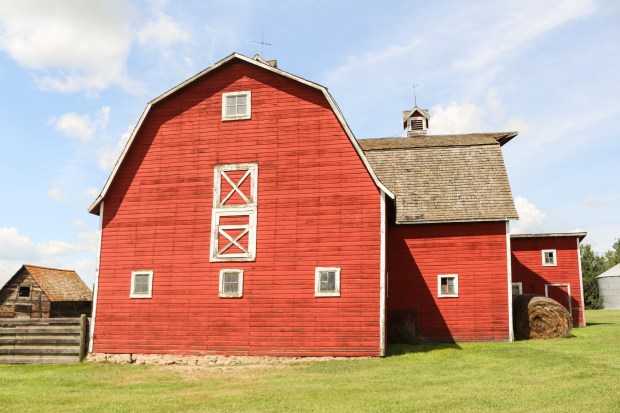
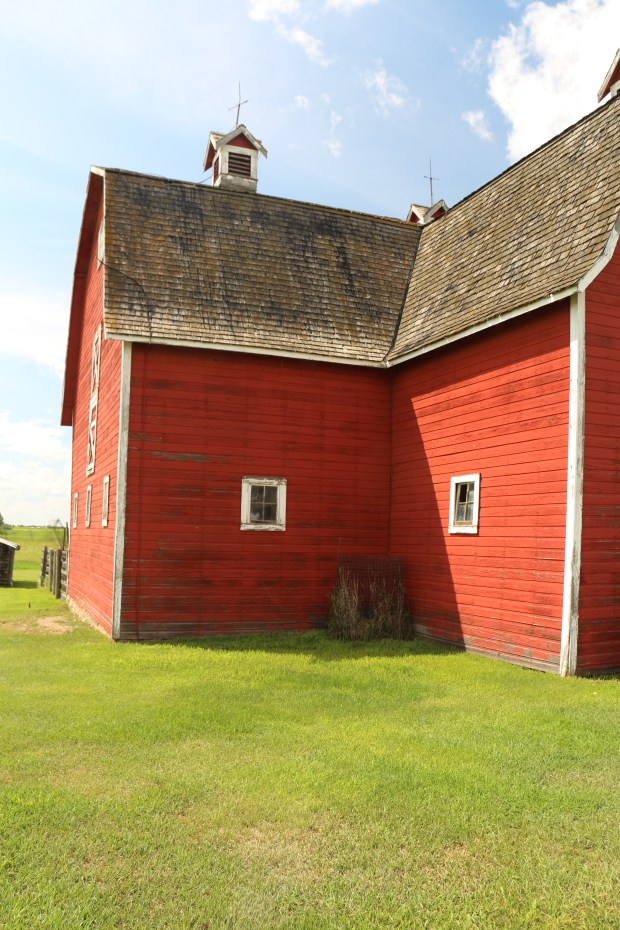
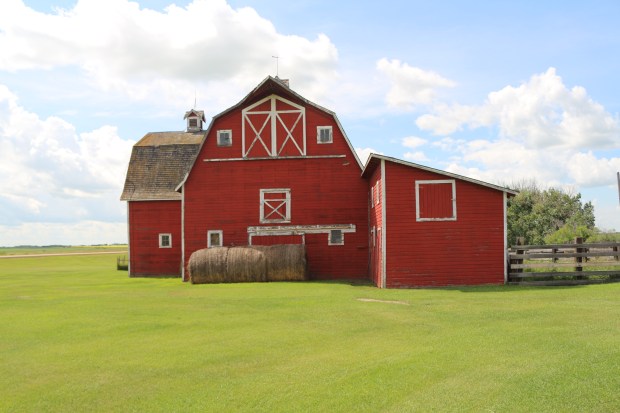
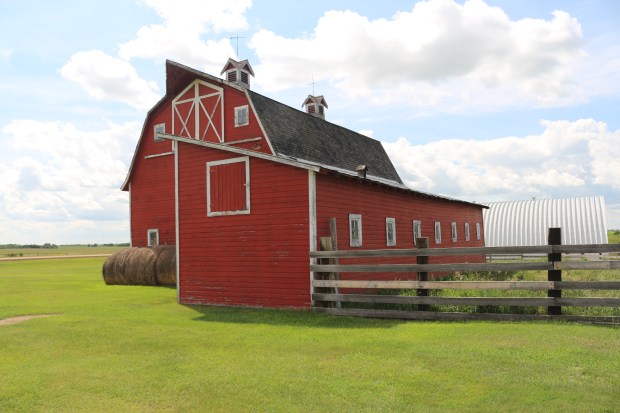
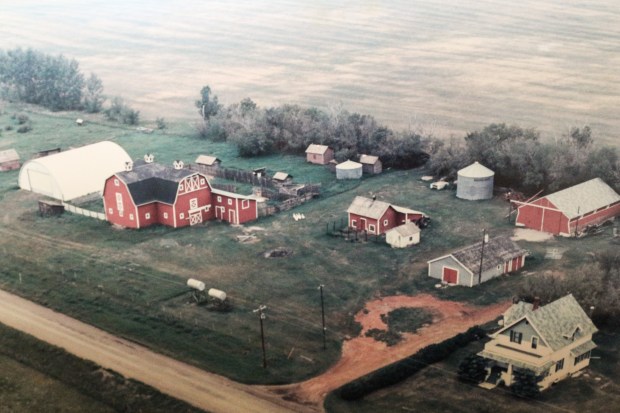
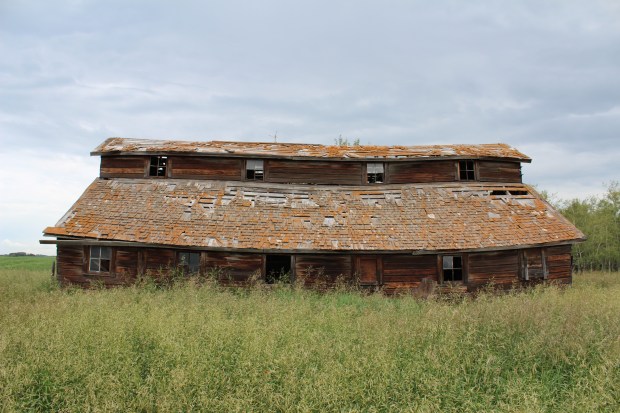
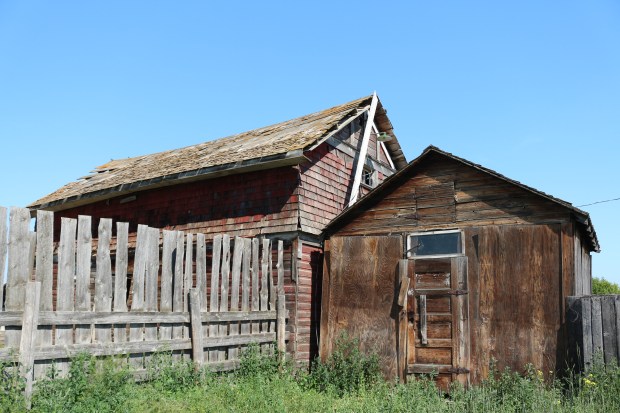
This barn was built from 1930-1933 by Ole Eivinsen. For more information on the building of the barn you can read an account by Edwin Eivinsen below. The property was bought by Spatzi and Olga Kamil in 1998. They used the barn over the years for sheep, horses, donkeys, and chickens. Presently the barn is used for storage.

Kamil, Spatzi and Olga. Personal communication. 19 Jul. 2016.

Past Written History and Photos

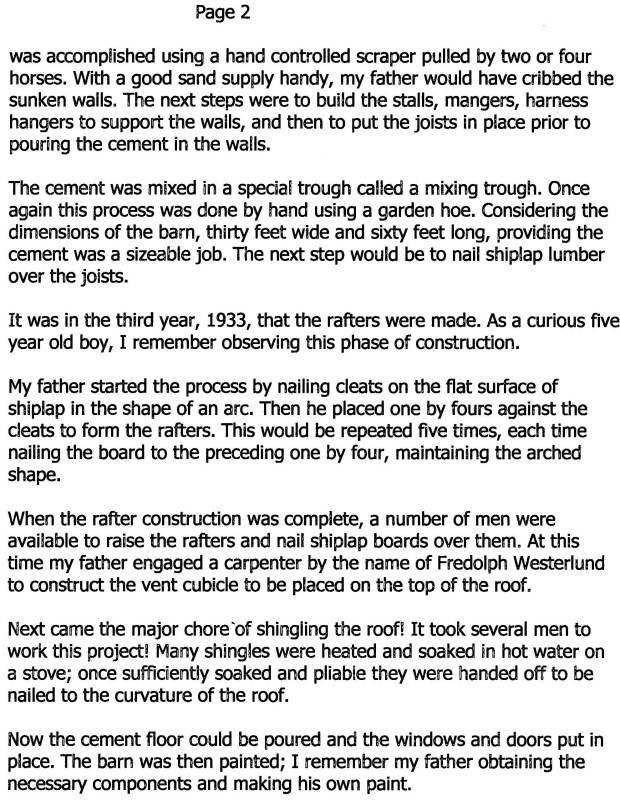
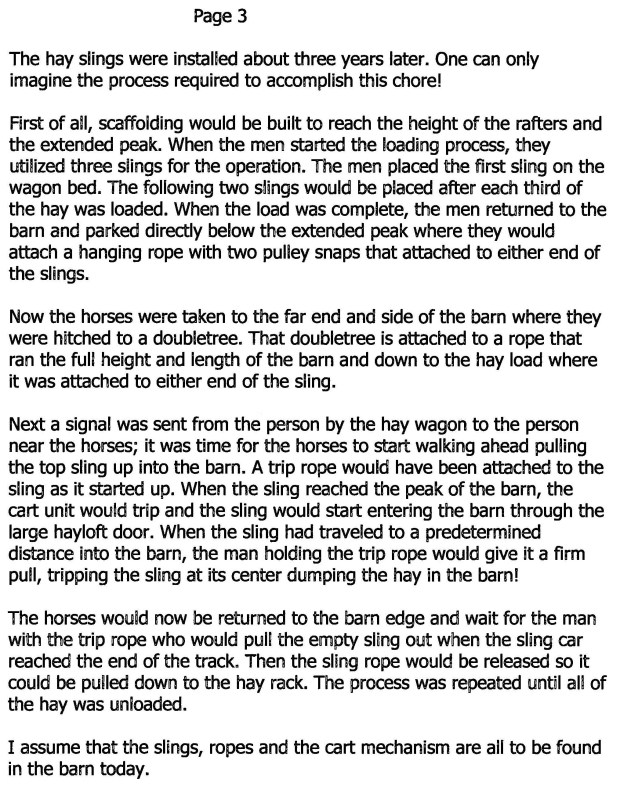
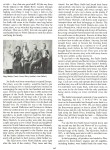
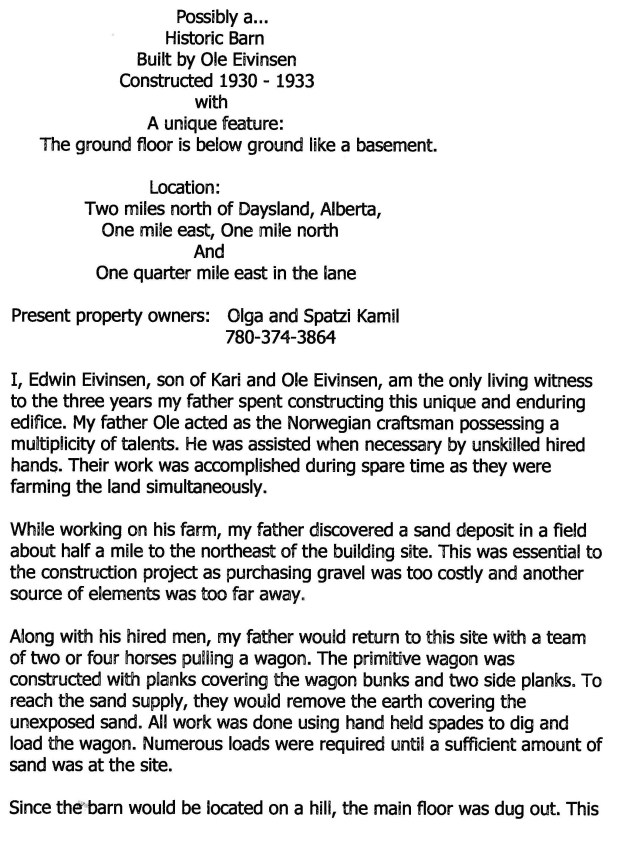
The following scanned pages are original written work completed by Edwin Eivinsen and are about the building of the barn on the SW 35-45-16 W4.

Eivisen, Ole. Story-page-001Eivisen, Ole. Story-page-002Eivisen, Ole. Story-page-003eivisen-ole-story-page-004-2-e1494005136218.jpg

Eivinsen Barn.1Eivinsen Barn.2

Present Day Photos

IMG_5624

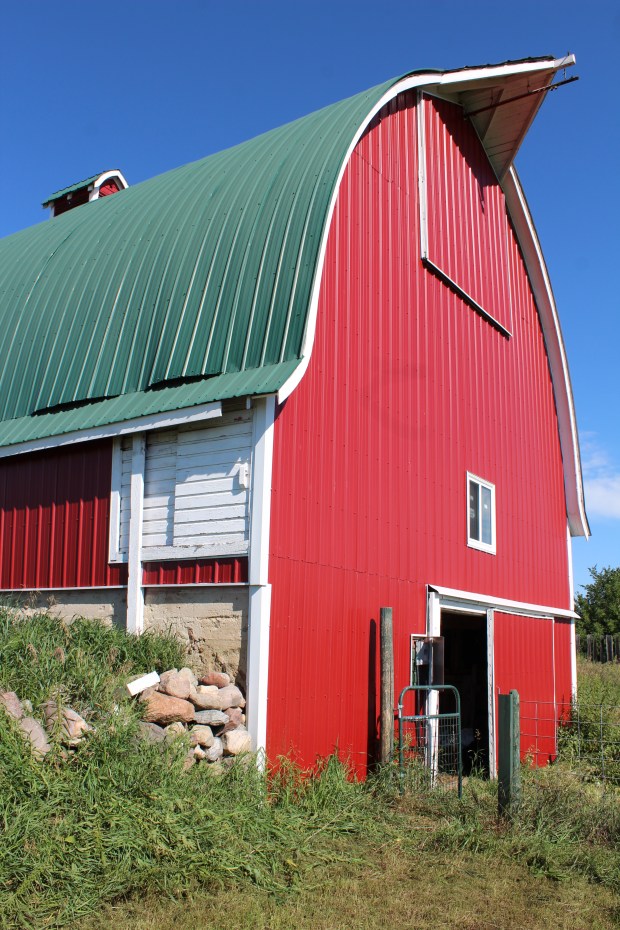
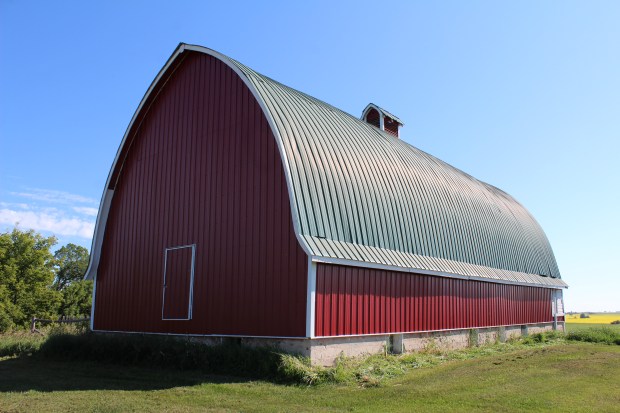
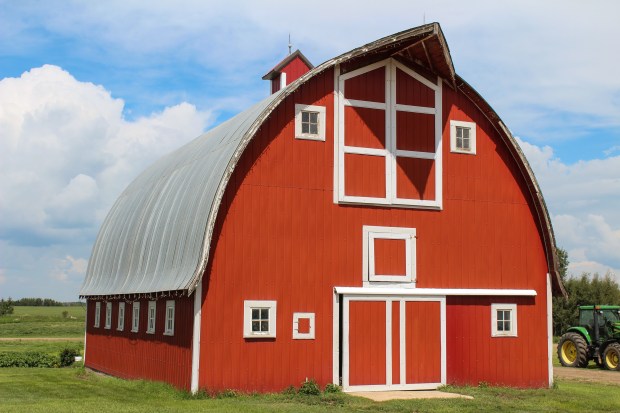
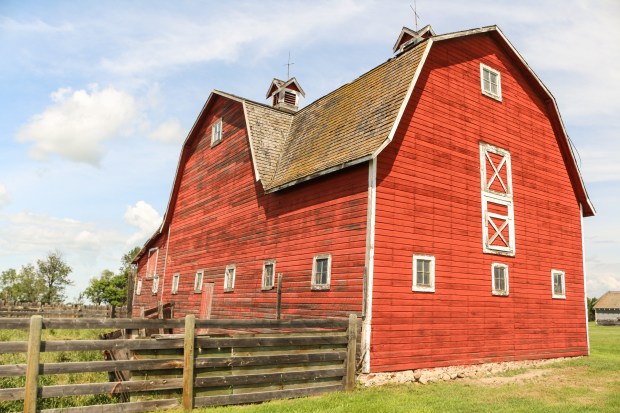
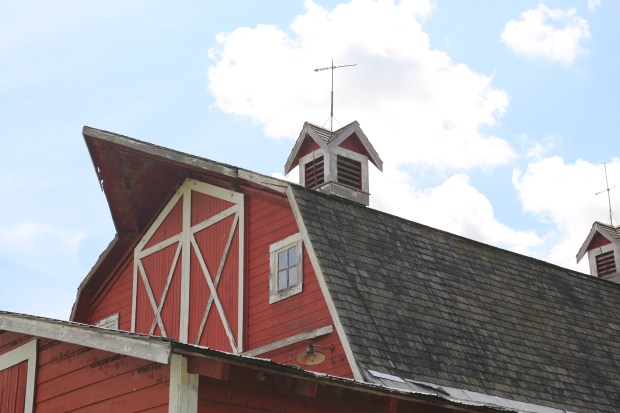
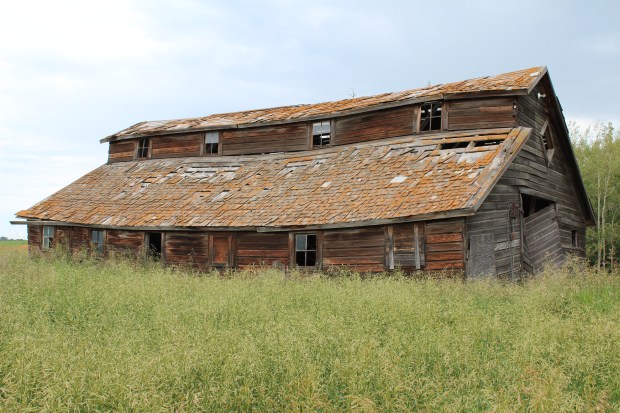
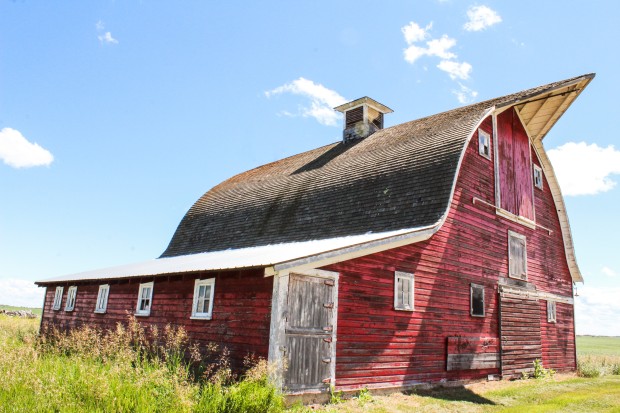
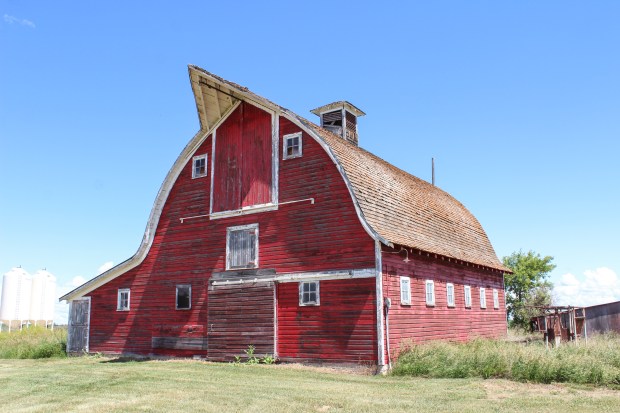
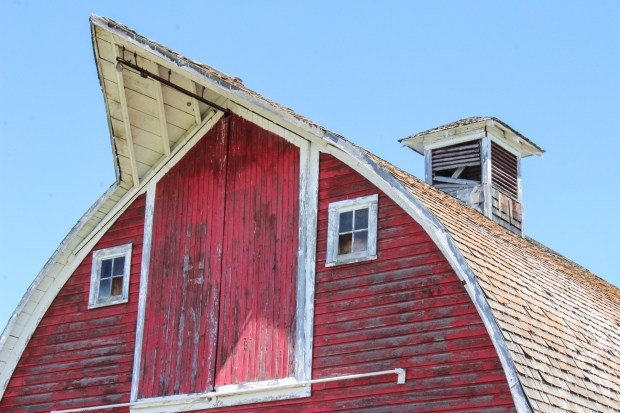
This frame shows the eastern face of the barn. The barn has a hay hood and hay track, a cupola, and a field stone foundation.

IMG_5626

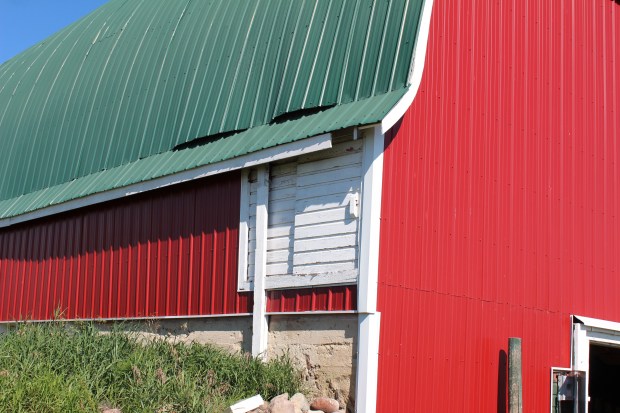
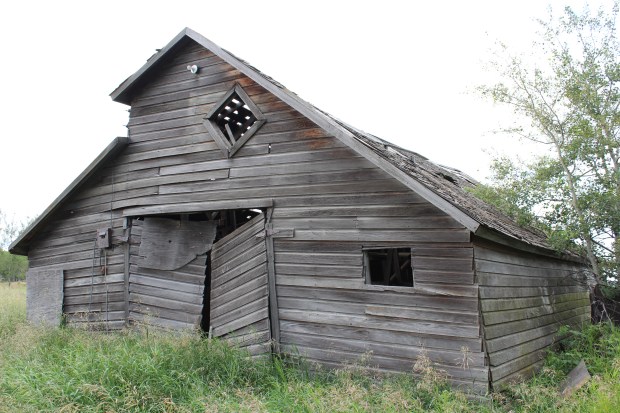
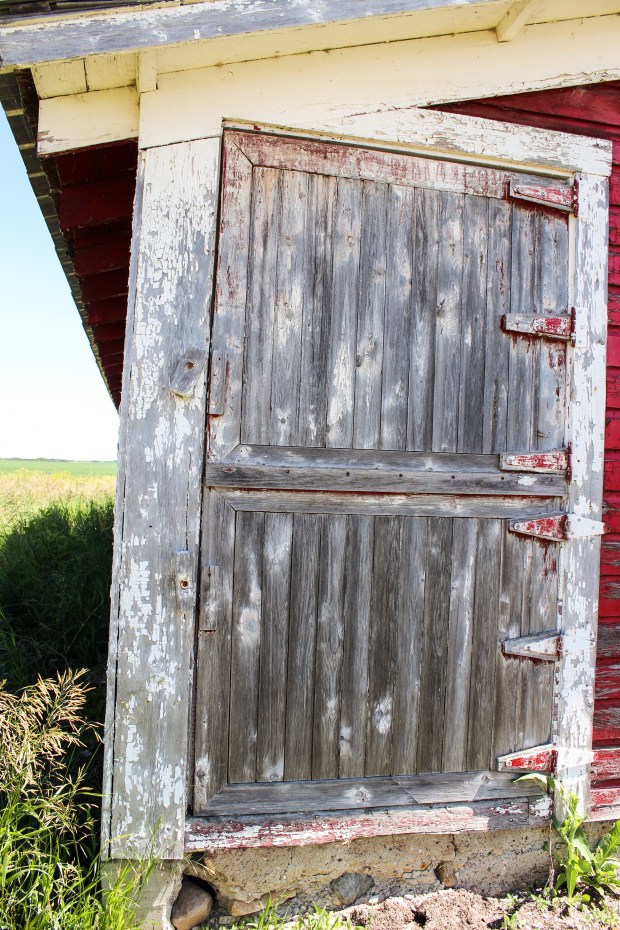
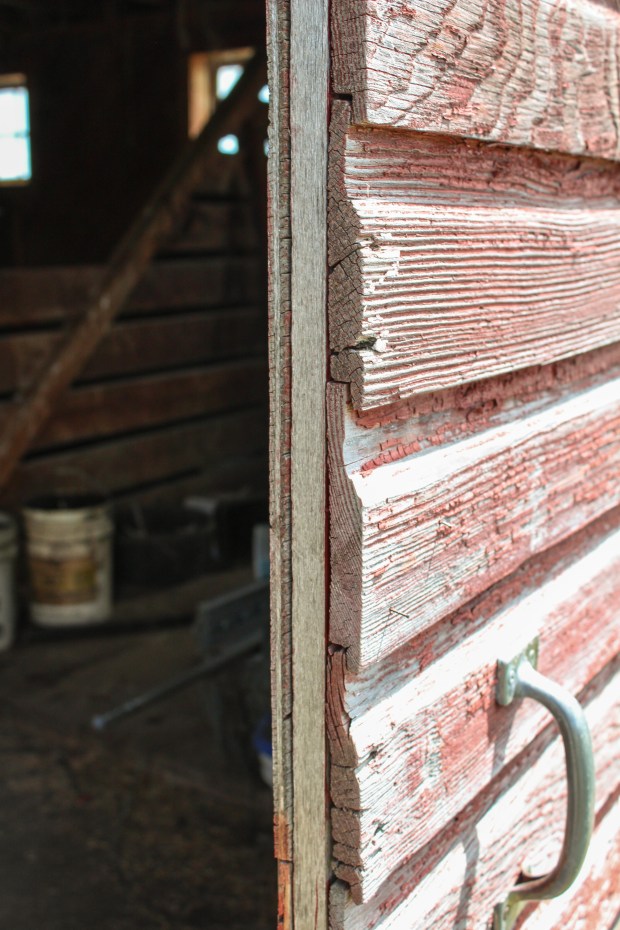
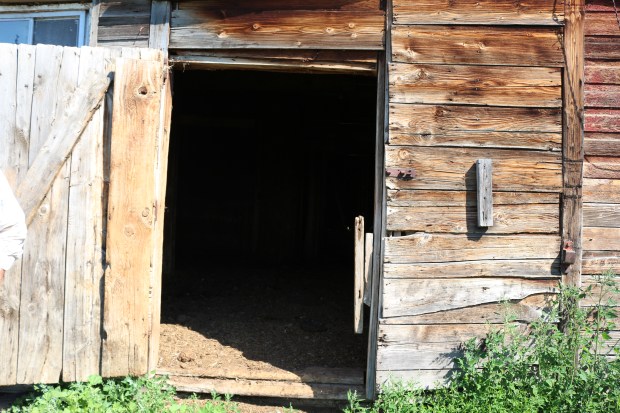
This door, on the southern half of the barn, was used for lifting bales out of the barn’s loft.

IMG_5627

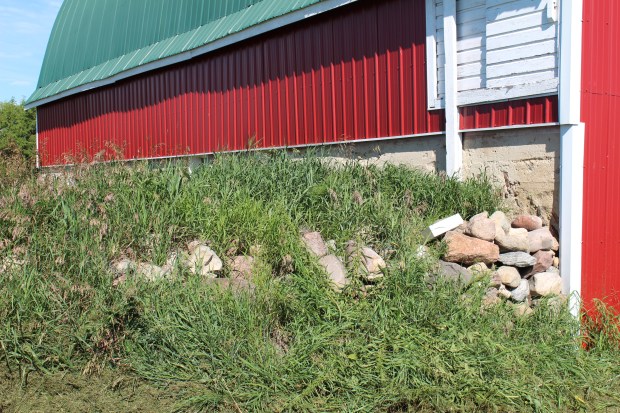
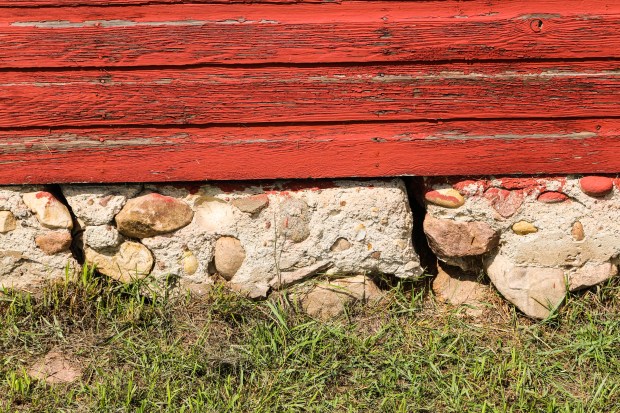
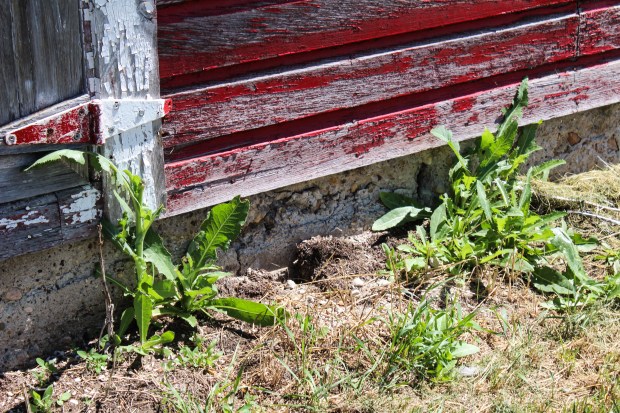
This rock pile was laid after the barn was constructed to help support the dirt around the foundation. It is visible in the older set of photos.

IMG_5623

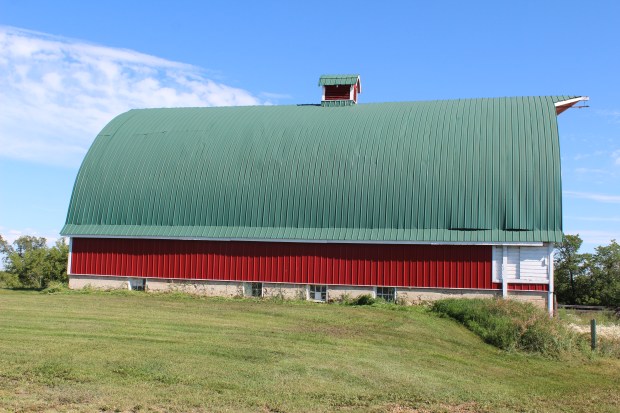
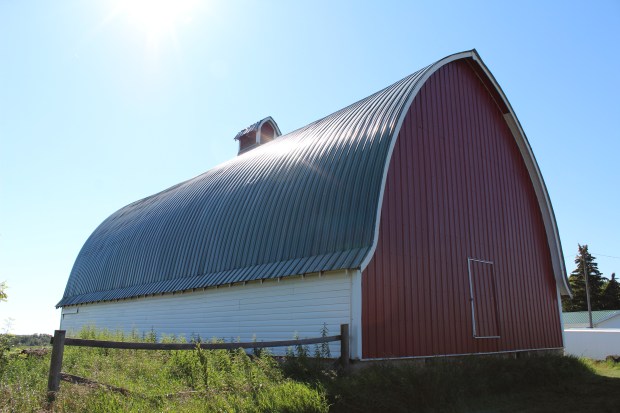
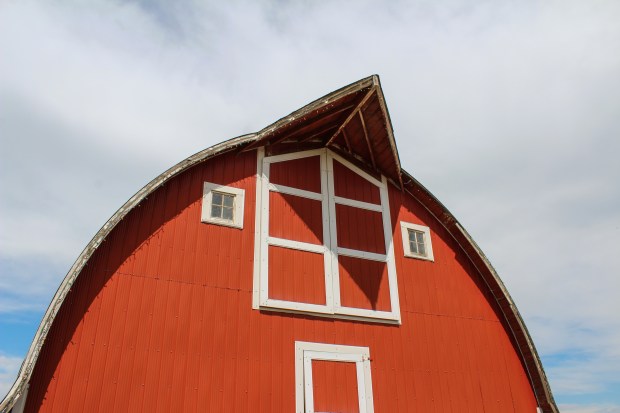
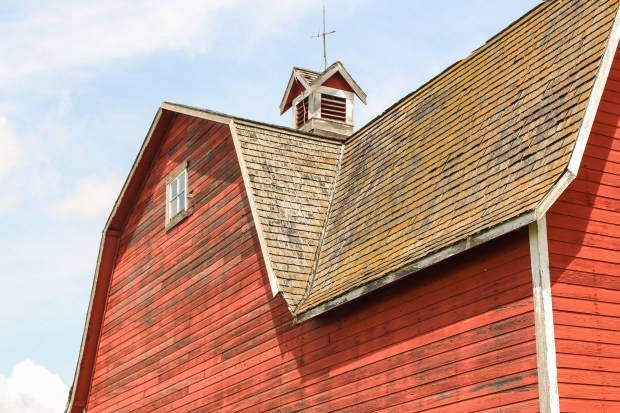
This frame shows the southern half of the barn’s roof.

IMG_5642

This frame shows the western face of the barn and the southern half of the barn’s roof.


IMG_5639

This frame shows the northern half of the barn’s roof.

IMG_5650

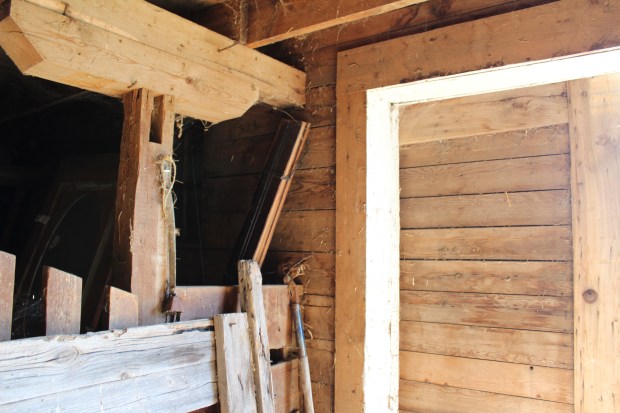
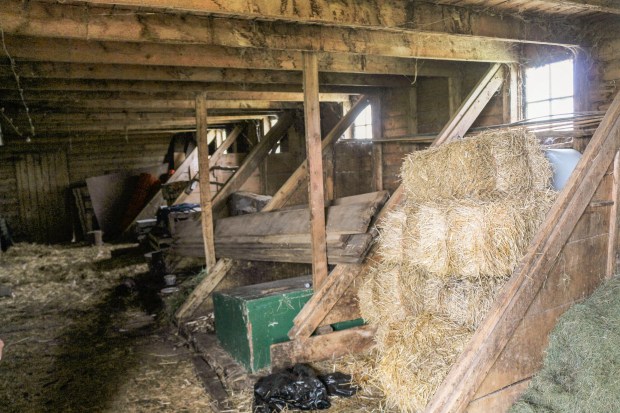
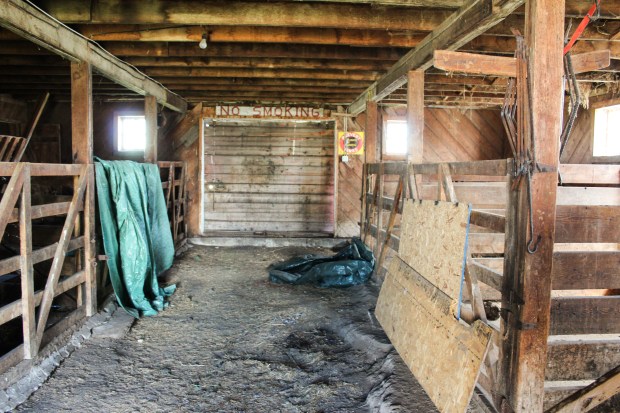
The barn was built by Ole Eivinson, a Norwegian immigrant, all by hand using large timbers.

IMG_5652

IMG_5653

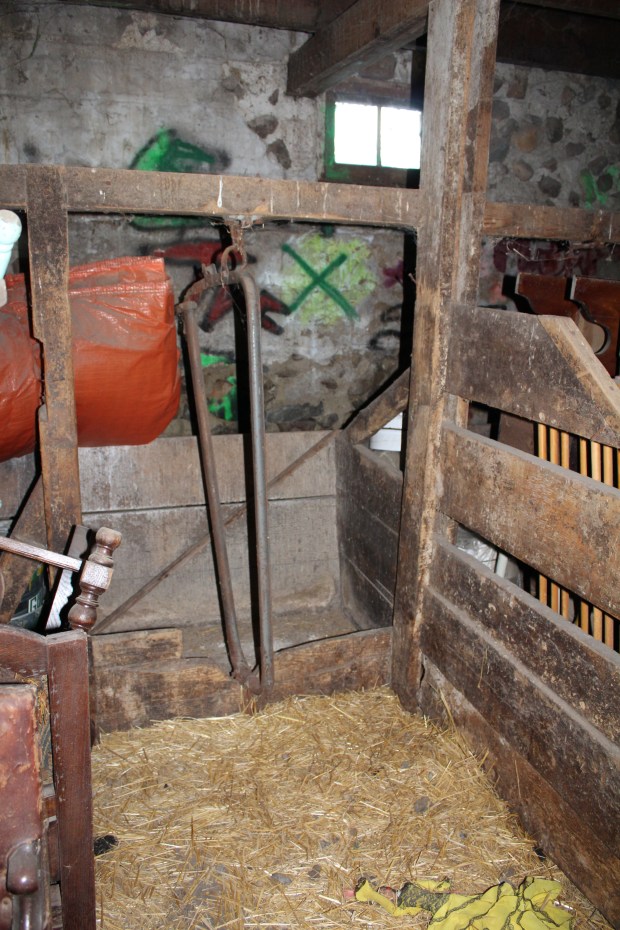
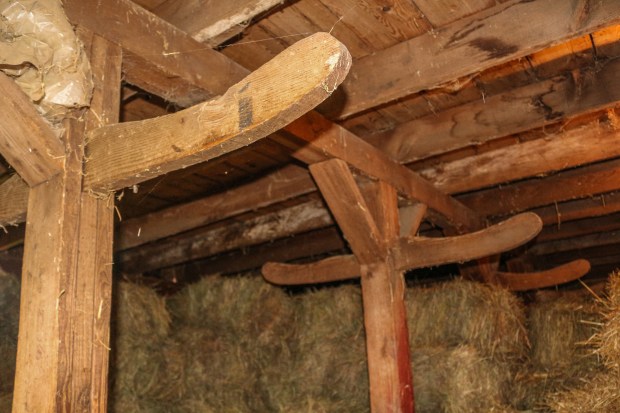
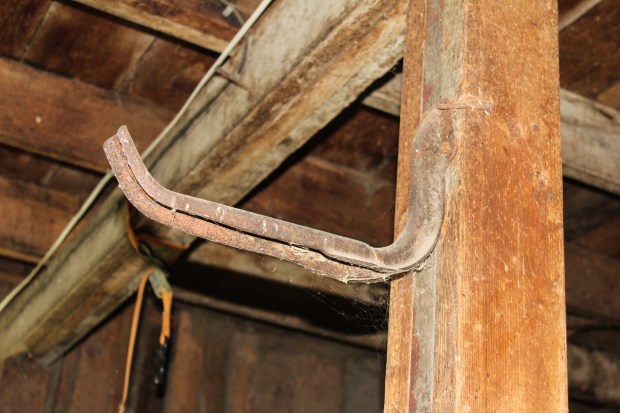
The tack hangers are all hand carved and very sturdy.


IMG_5662

IMG_5663

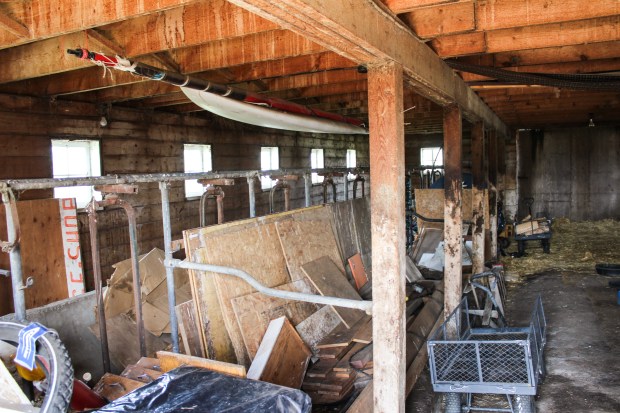
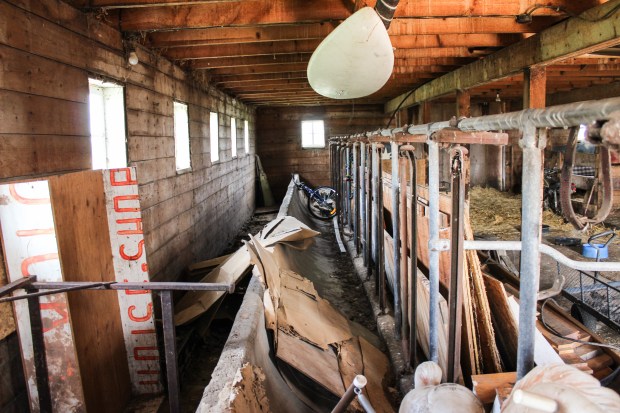
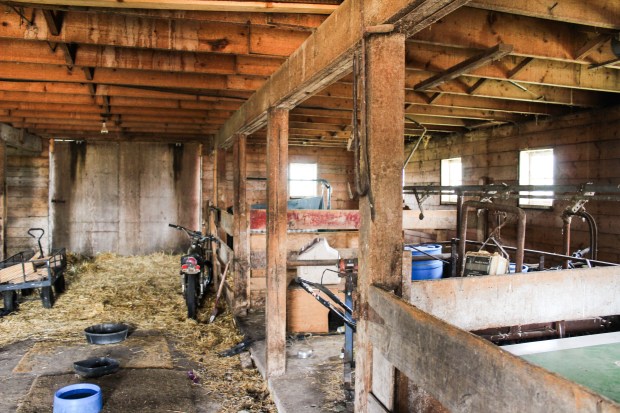
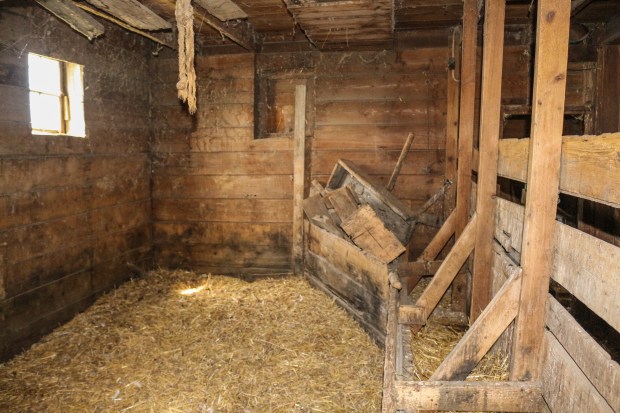
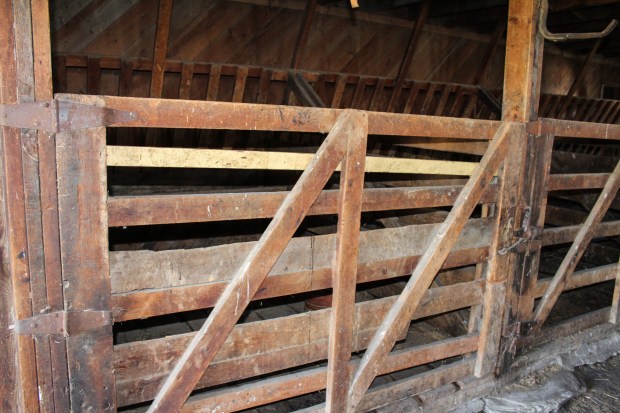
This frame was taken while inside the western half of the barn. The western half of the barn was used for milk cows. The stalls in that end run north-south. There is room for six cows in this section of stalls.

IMG_5666

IMG_5678

All of the stalls have mangers with their own hay chute.

IMG_5649

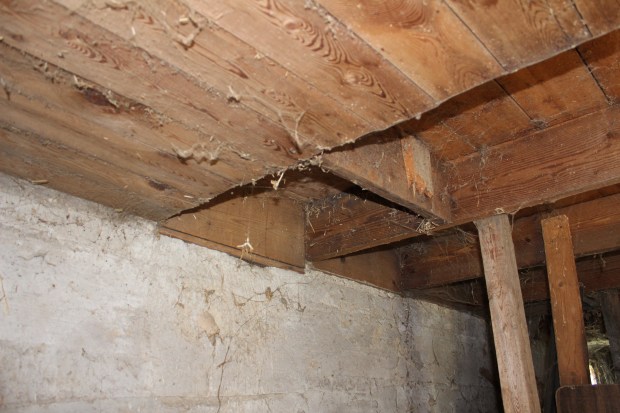
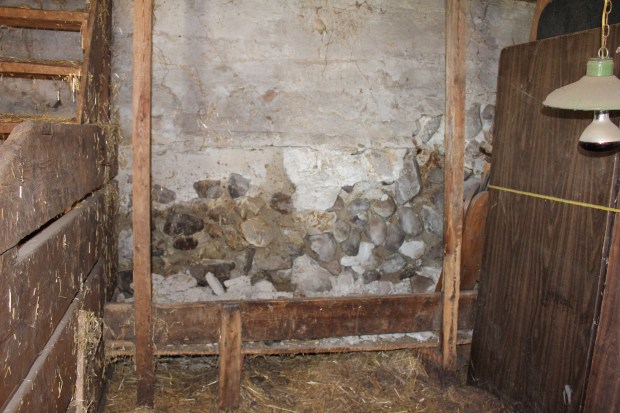
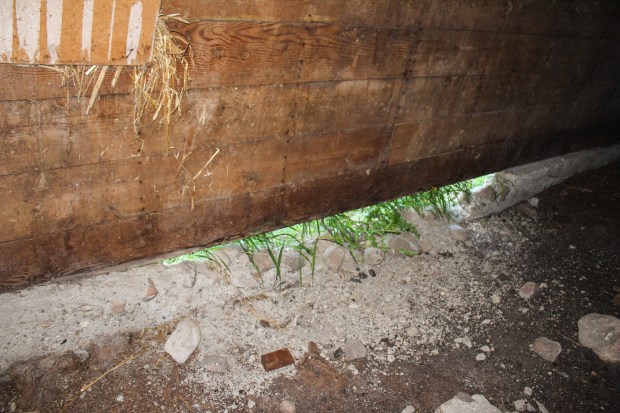
The foundation is starting to crumble due to its age.

IMG_5675

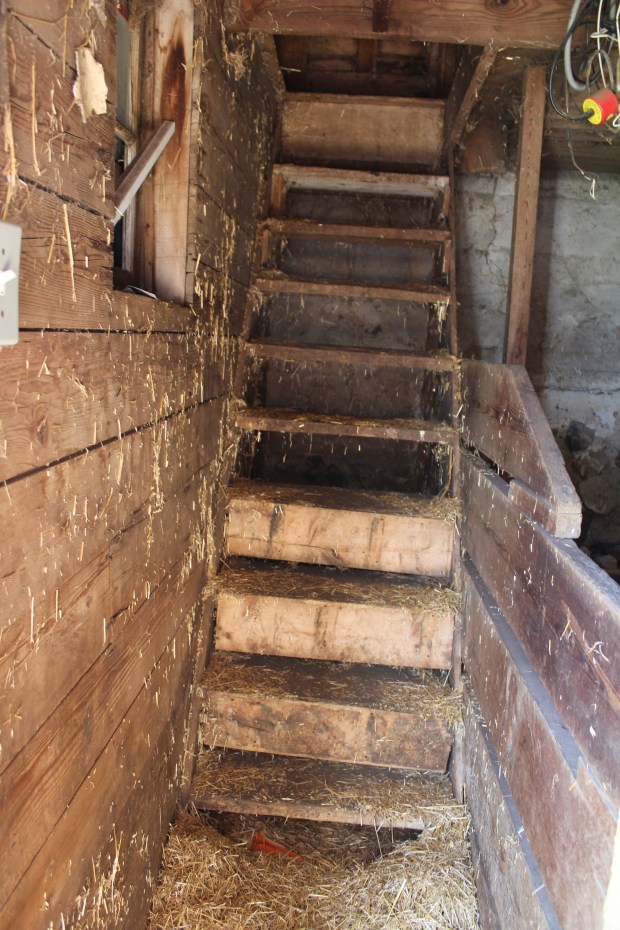
The stairs case to the loft is located in the south-eastern corner of the barn.

IMG_5679

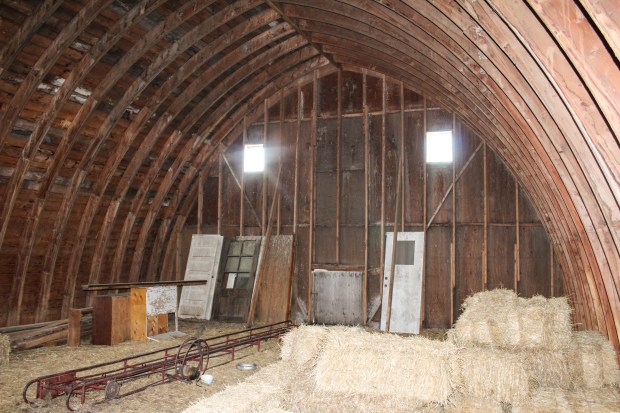
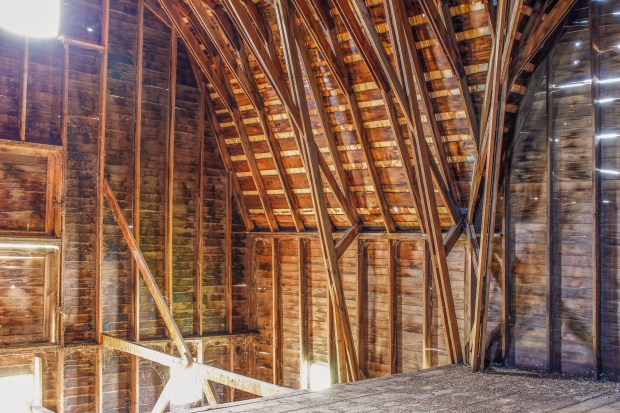
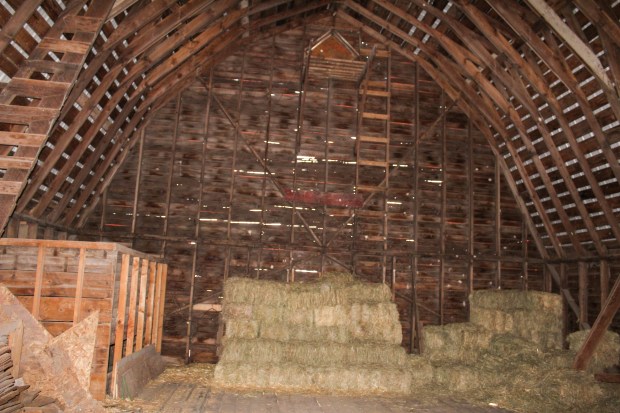
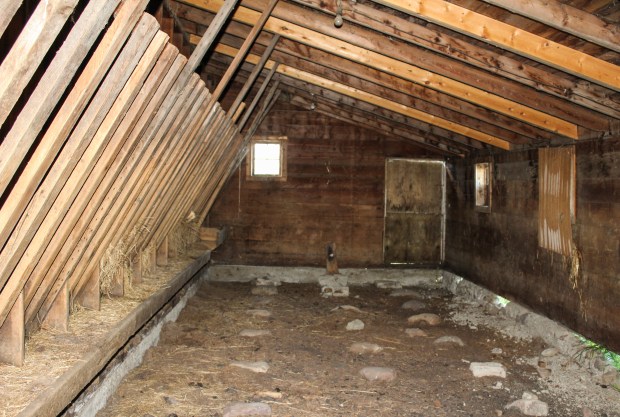
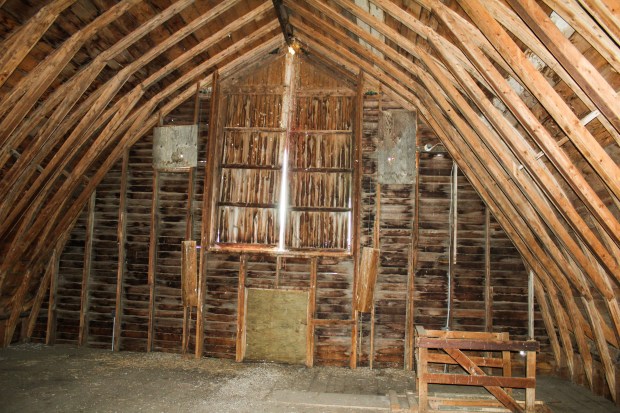
This frame was taken inside the loft of the barn from the east and looking west.

IMG_5684

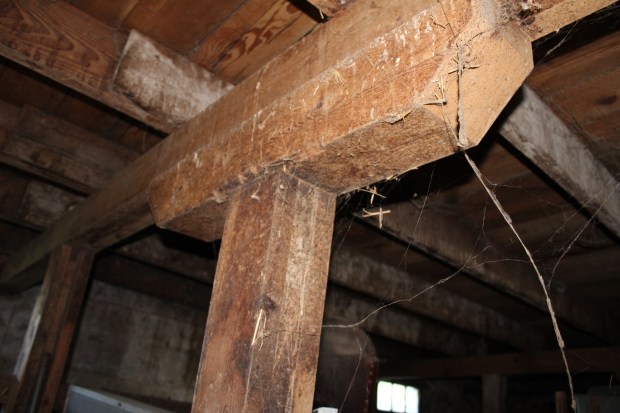
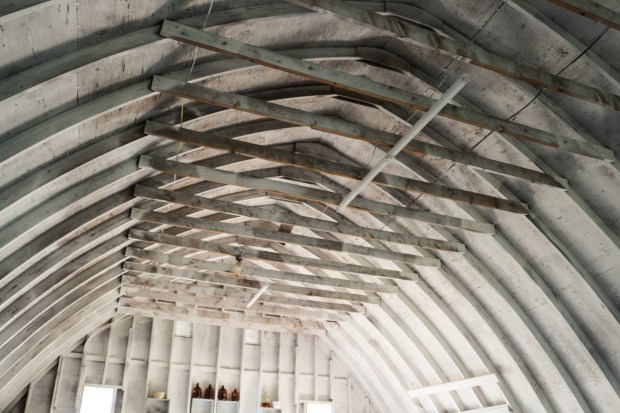
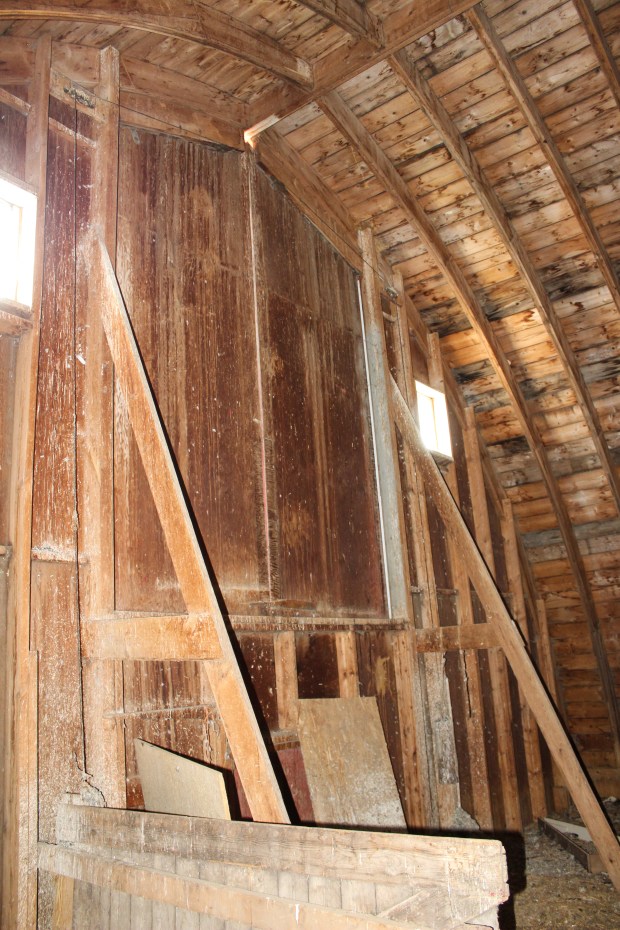
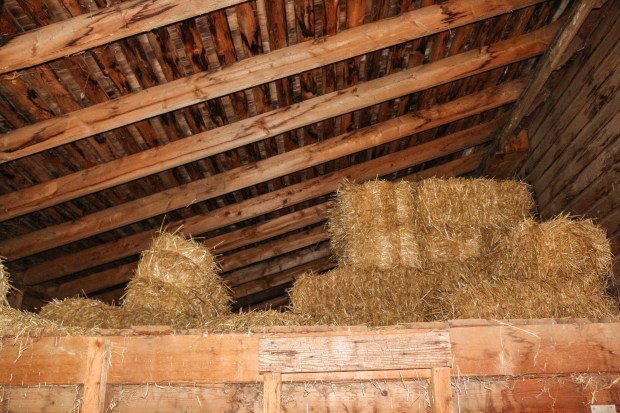
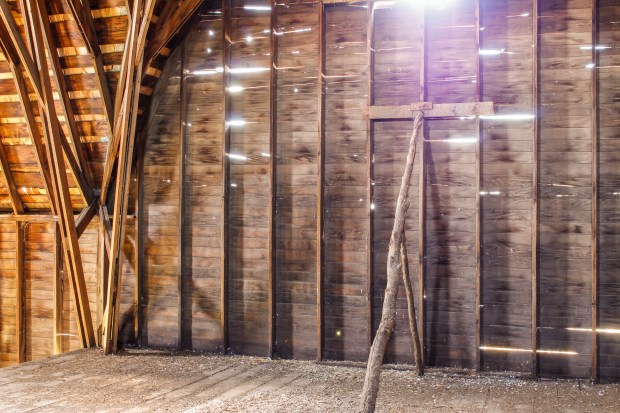
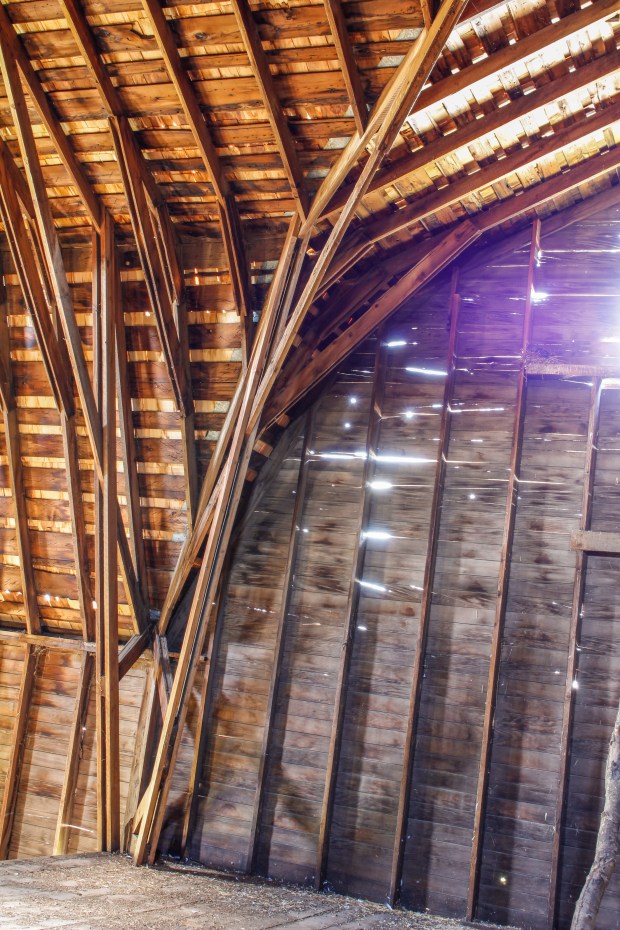
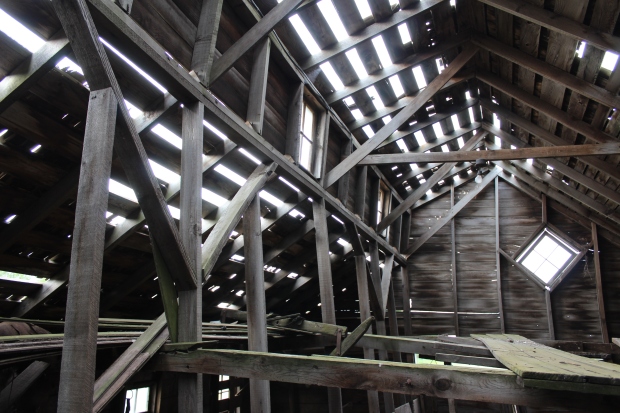
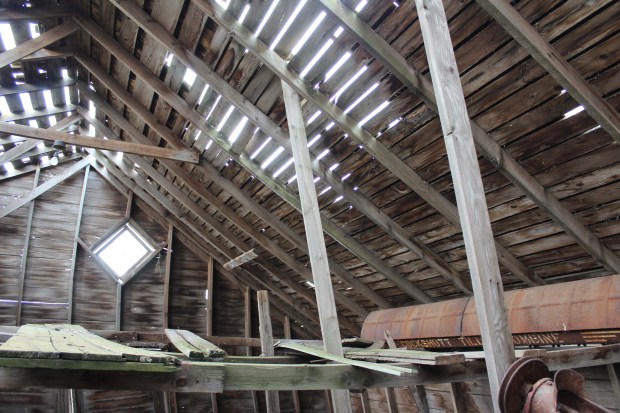
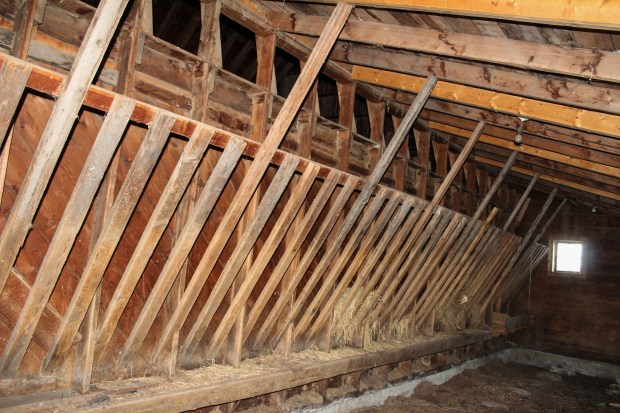
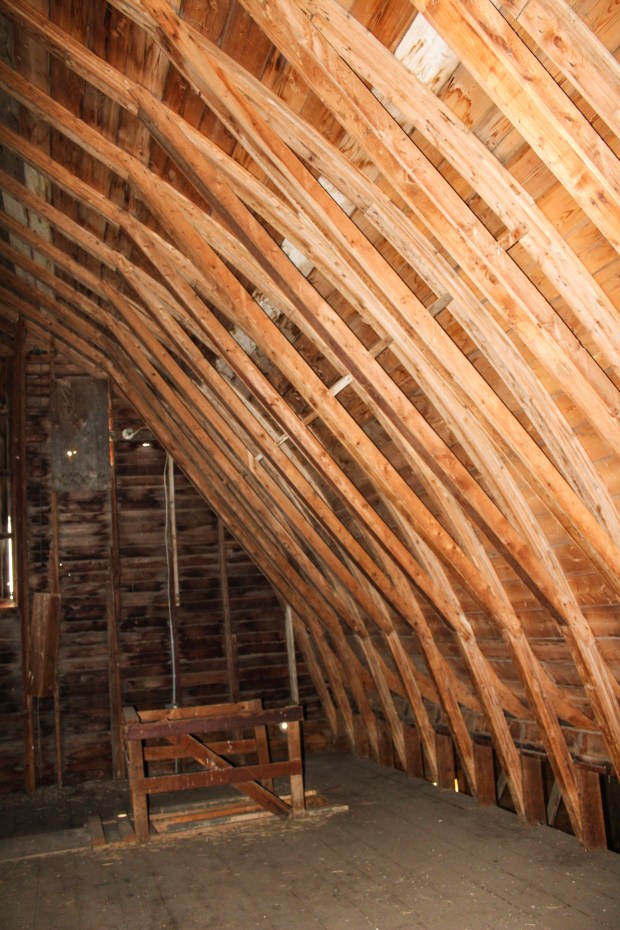
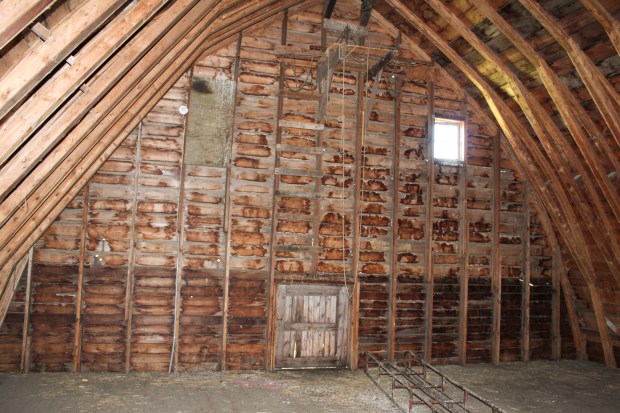
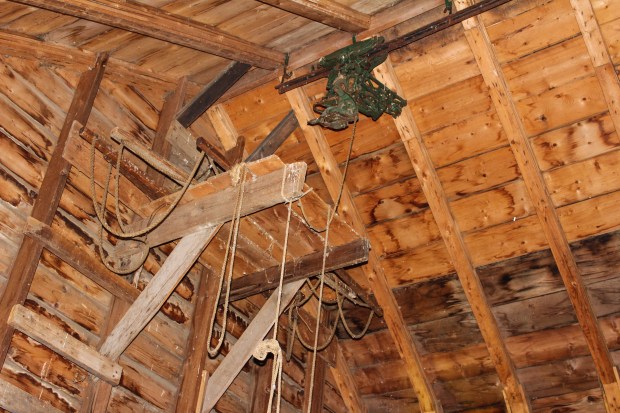
The barn’s roof is supported with curved timbers are cross bracing.

IMG_5680

It is very impressive that the barn has an arched roof shape when it was built in 1933. Arched roofs are very difficult to built without modern glued laminated timbers.

Location

52.918108, -112.224299                                         SW 35-45-16 W4

Characteristics

Barn Condition: Good

Construction Date:1930-1933

Features: Hay hood and hay track, one cupol

Roof Shape: Arched

Paint: Red

Decorations: No names or dates

Roof Covering: Metal

Siding: Metal

Foundation: Field stone

Hampshire

History

This barn was built in the late 1960s by Elmer Gascoyne. John (Jack) Hampshire used the barn for his draft horses, riding horses, and milk cows. Jack loved working with his horses and at one time he had horses and tack for two driving teams. Jack spent nearly everyday hauling feed and supplies by wagon in the summer or by sled in the winter. Overtime, Jack got rid of his draft horses, his cattle, and his own riding horses. However, Jack still milked cows in the barn up until the early 2000s.

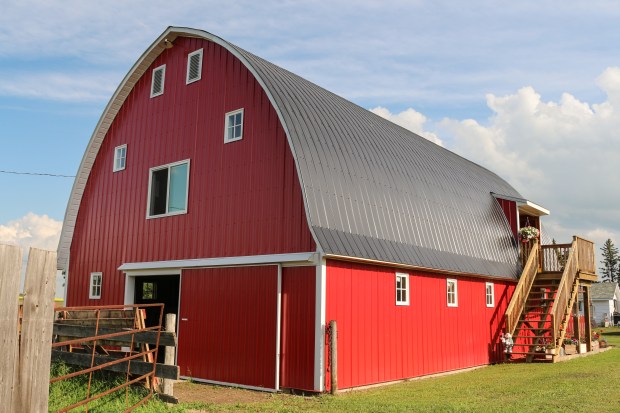
Although this barn is not extremely old it shows some of the innovations that barn builders developed over time. The barn is frame construction and uses a modified platform frame. The arched roof in the loft of this barn is created using glued laminated timbers. This is in contrast to traditional gambrel roofs constructed using wooden trusses.

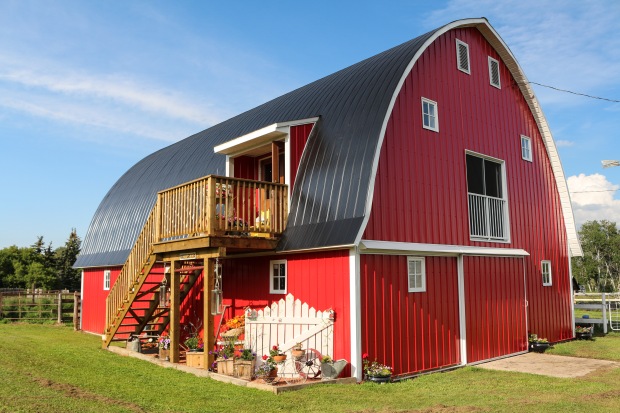
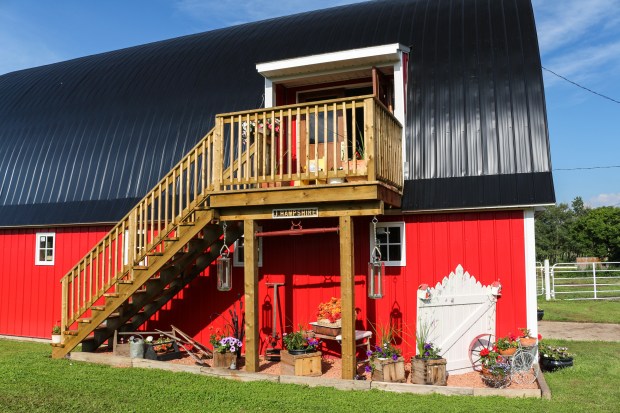
This barn started off its days with red wood siding and a green tin roof. After those coverings wore out, the barn was redone in white hardboard siding and grey asphalt shingles. In April 2016, it was given red tin siding and a black tin roof by Pedro’s Construction Inc out of Killam, AB. The loft was repainted and a new floor was put down. Additionally, Pedro’s Construction installed stairs on the west side of the barn and an entrance to make accessing the loft easier and safer.

Hampshire, Murray. Personal communication. 7 Jun. 2016.

IMG_3570

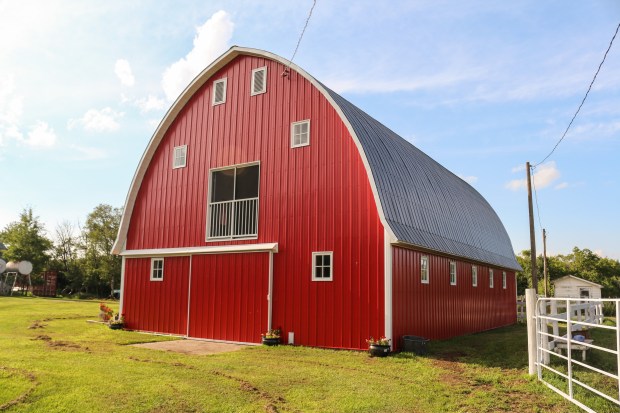
This frame shows the south face of the barn and the eastern half of the barn’s roof.

IMG_3572

This frame is of the southern face of the barn.

IMG_3575

This frame shows the southern face of the barn and the western half of the roof.

IMG_3578

The new staircase to the loft is installed on the western side of the barn.

IMG_3581

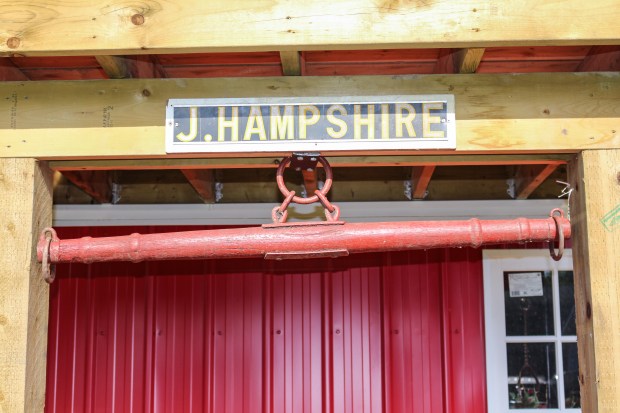
This frame is a close-up of a property sign for Jack Hampshire

IMG_3584

This frame is of the western half of the barn and the barn’s northern face.

IMG_3607

This frame was taken from the north looking at the eastern set of stalls.

IMG_3601

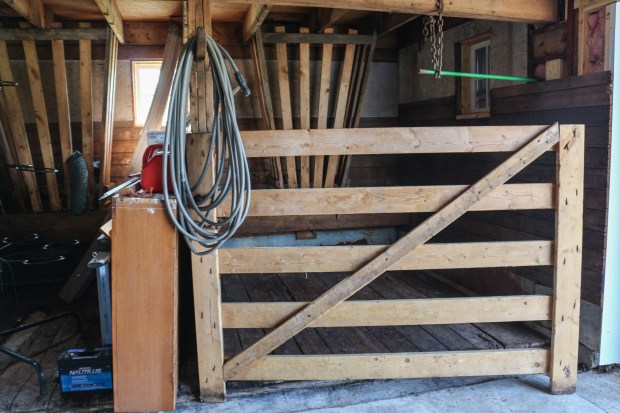
This frame was taken while standing at the northern end of the barn looking west. This barn has five stalls on the eastern half and six on the western half. One stall is lost due to the chop box and original staircase to the loft. Many of the stalls had these wooden gates for penning cattle and horses.

IMG_3603

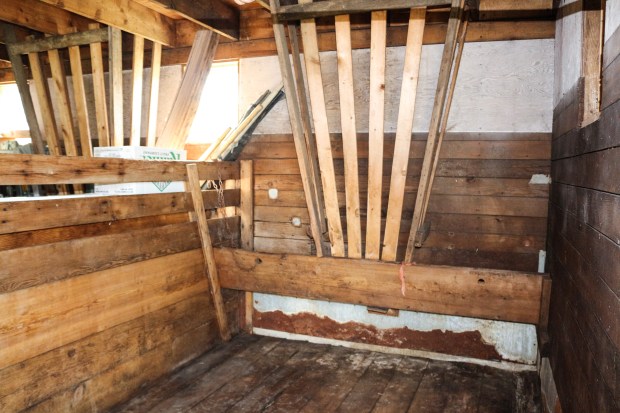
All of the stalls have the original hay chutes still installed. This stall was used for milking cows. There is still a chain, which would have been used to restrain the cow while milking, connected to the manger.

IMG_3588

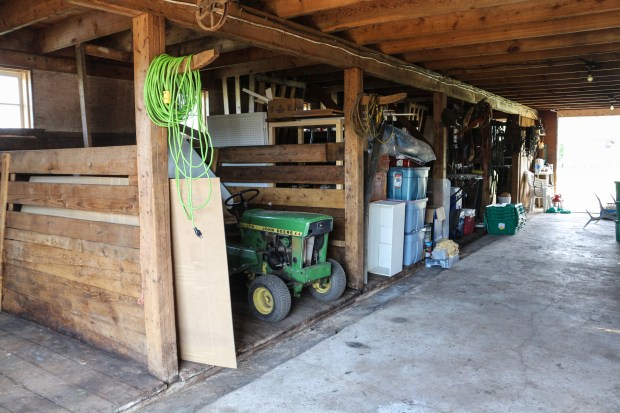
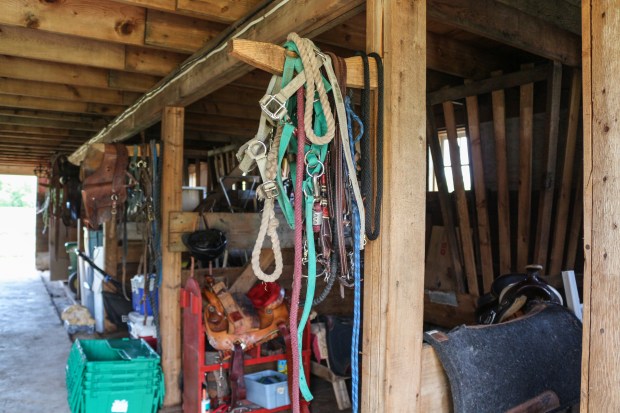
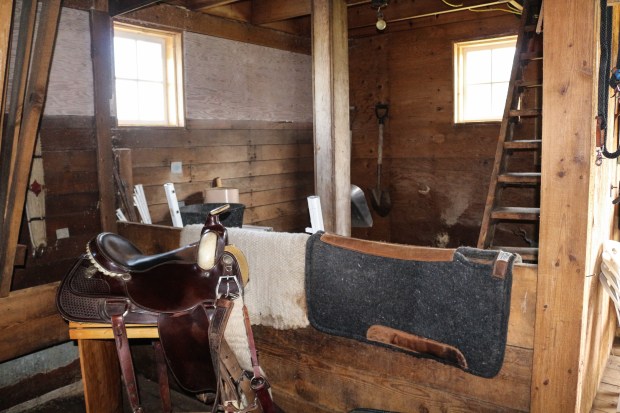
Present day users use the barn for storage of their saddles and other tack.

IMG_3590

This frame is of the south-eastern corner of the barn.

IMG_3596

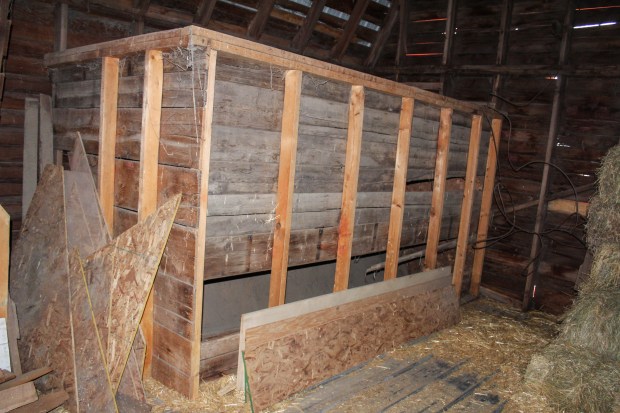
This frame is of the original staircase, which is not used anymore, and the chop box with its chute. This is located in the south-eastern corner of the barn.

IMG_3625

This frame is of the top of the staircase on the western side of the barn.

IMG_3657

The loft of the barn was cleaned and repaired so that the area can be used for entertainment.

IMG_3665

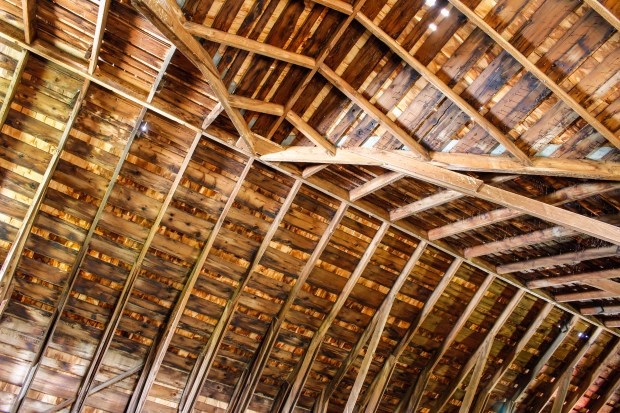
The roof is supported by glued laminated timbers, which create the arched roof shape.

IMG_3667

This frame is a close-up of the glued laminated timbers.

IMG_3651

Aerial photo of the barn circa 1985

IMG_3648

Aerial photo of barn early 2000’s.

IMG_3659

Award for John Summers Hampshire, father of Jack Hampshire.

Location

52.711571, -111.792792                                             NW 14-43-13 W4

Characteristics

Barn Condition: Good

Construction Date: 1967 or 1969

Features: Stairway entrance on western side of barn

Roof Shape: Arched

Paint: Red with white trimmings and a black roof

Decorations: No names or dates, white trim

Roof Covering: Metal

Siding: Metal

Foundation: Cement

Additional Information on the Property and Family

John Summers Hampshire and William E. Hampshire immigrated to Canada on the same boat as Harry Simpson, whose barn is also featured on this website.

“Hampshire Family History”. The Pleasant Country: Volume One Killam and District                                    1903-1993. 1st ed. Killam: Killam Historical Society, 1993. Print.

Kuefler

History

Gerald Kuefler remembers that when his father was planning on building this barn he was very particular with respect to what he wanted. Many of his father’s friends recommended that he should not build a large barn since they were starting to become obsolete. However, Mr. Kuefler was steadfast in his desire to have a milking barn with loft space for his feed. The barn was built in 1956 by neighbours and with the help of Freddie Kroetsch of Heisler, Alberta. Freddie had a special pattern that allowed him to create a rafter for an arched roof. This design was very unique and allowed farmers to build arched-roofed barns before glued-laminated timbers were available. The rafters meet in the peak of the roof where two large beams support the lateral weight. Gerald Kuefler mentioned that raising the beams would have been quite the feat since there were no machine lifts at the time.

The barn has built-in stations for milking cows and a vacuum system for the milking machine. There are twelve stalls with stanchions on the western side of the barn and six stalls with stanchions on the eastern side of the barn. The remaining area on the eastern side of the barn is penned space which was used for pigs. The barn was built using frame construction and platform framing.

Kuefler, Gerald. Personal communication. 14 Jul. 2016.

IMG_5509

This frame shows the southern face of the barn and a portion of the western face of the barn.

IMG_5511

The south face of the barn has a hay hood even though no hay track was ever installed in the barn.

IMG_5563

The western half of the roof.

IMG_5566

The western half of the roof.

IMG_5567

This frame shows the northern face of the barn. The ground level door on this face is the one the dairy cows would have been led through for milking within the barn.

IMG_5569

The eastern half of the roof. The foundation for this barn is concrete, which was mixed and poured by hand.

IMG_5572

This frame shows the eastern half of the barn’s roof and the southern face of the barn.

IMG_5512

The western half of the barn has stalls made of metal and metal stanchions. The company that built them was called Bettie Equipment and it was out of Ontario.

IMG_5517

The cement for the floor, foundation, and curved feeding troughs was all hand mixed and hand poured.

IMG_5515

The eastern side of the barn was originally only wooden pens. The Kueflers created six more stanchions later in order to milk more cows.

IMG_5519

There are still two wooden pens with wooden mangers in the eastern half of the barn.

IMG_5528

IMG_5524

The eastern stanchion stalls have a cement walkway in front of them

IMG_5537

Near the south door of the barn, is the chop storage room and the staircase to the loft.

IMG_5532

IMG_5538

The arched rafters meet at a large double beam in the peak of the roof.

IMG_5556

This frame shows the southern loft door.

IMG_5544

The rafters for this barn as especially unique. They were cut from a pattern that Freddie Kroetsch had made.

IMG_5548

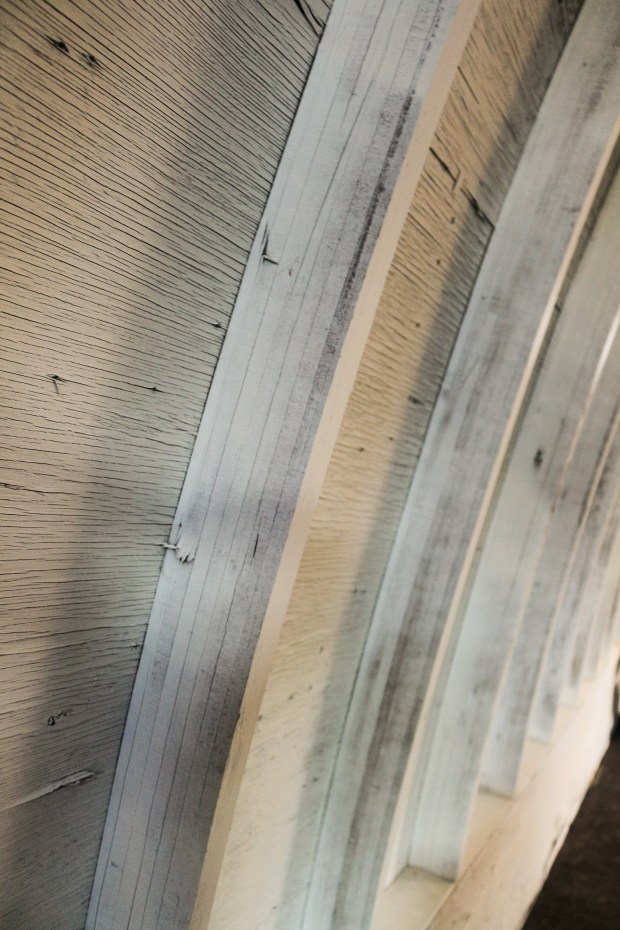
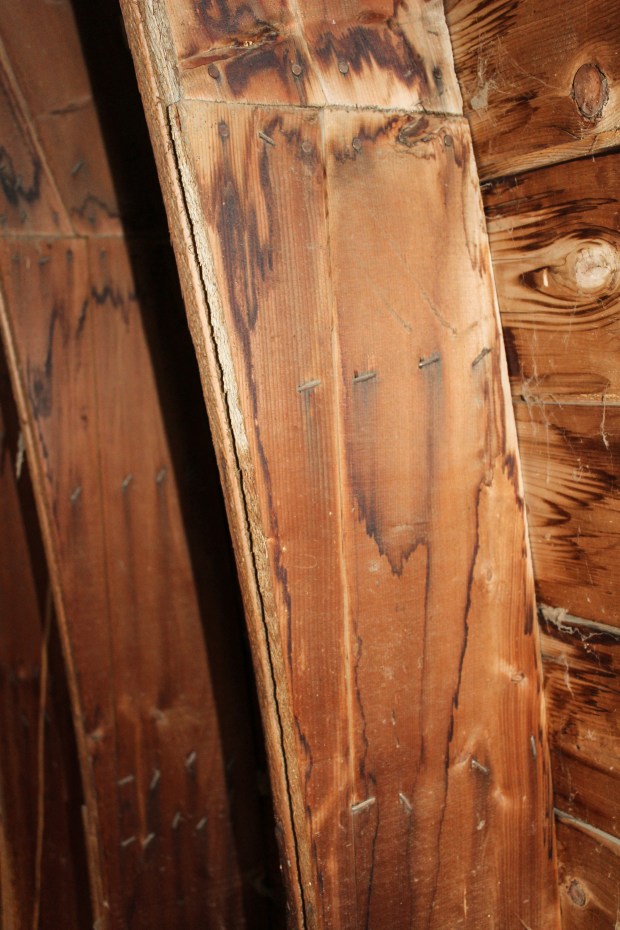
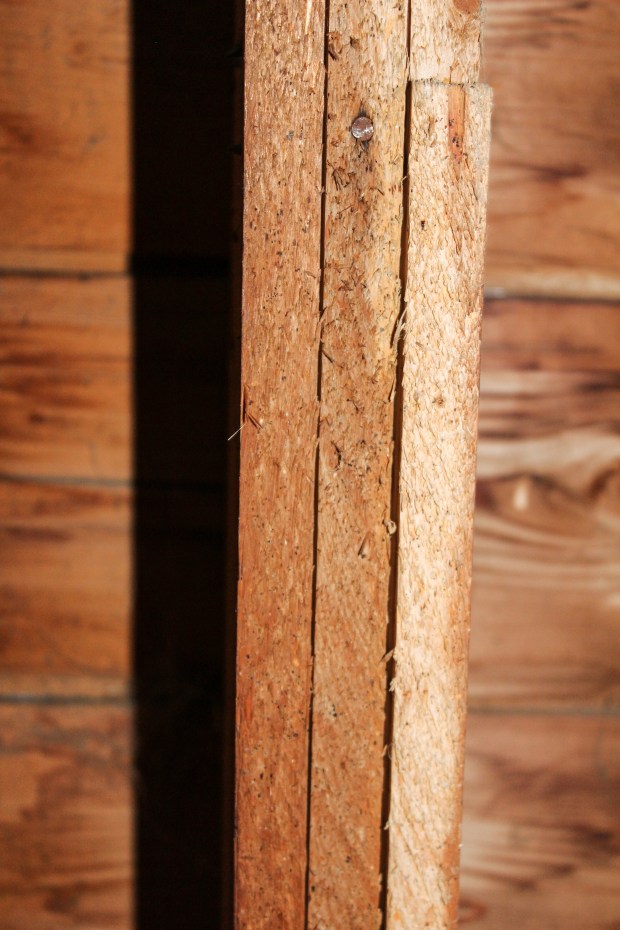
The rafters are made from two pieces of foot long lumber. The one timber is a whole piece while the other timber is cut with a curve and nailed onto either side of the first timber.

IMG_5552

The rafters are created by nailing three of the foot-long pieces together.

Location

52.507497, -111.898461                                        SW 12-41-14 W4

Characteristics

Barn Condition: Good

Construction Date: 1956

Features: Hay hood, cupola, lightning rod

Roof Shape: Arched

Paint: Red with white trim

Decorations: No names of dates

Roof Covering: Metal

Siding: Metal

Foundation: Concrete

Schares Family History

Bernard (Barney) Schares built many homes, barns, and buildings within the Flagstaff Region. As such, you may be curious about who he was.

Barney Schares was one of the five Schares brothers to come to the Heisler area. He and his two brothers, Michael and Jacob, were well-known carpenters in the area. It is known that Barney did the blueprinting, figuring of the lumber, and was foreman for the building of the St. Peter’s Church. Additionally, Barney was the builder on numerous other churches, houses, barns, and outbuildings in the Heisler area. Furthermore, Barney worked on the Longfellow and the McLeod Block in Edmonton before 1914. More information on, “the only terracotta-clad building in the city [of Edmonton]” can be found here and here.

Barney Schares married Catherine Beaton, originally of Cape Breton, Nova Scotia, in 1913. The history of the Schares family is presented in the Heisler history book below:

Dosen, Mary (Schares). “Schares Family.” Wagon Trails in the Sod: A History of Heisler                     and Area. 1st ed. Heisler: Heisler Historical Society, 1982. Print.

To learn more about the Sadlo family with whom Catherine Schares (nee Beaton) boarded with click here.


Additional Information

Barney Schares was married to Catherine Beaton, whose family history is listen below. Catherine’s father was Finlay Beaton of Black River, Nova Scotia. She is the descendant of Alexander Beaton, born 1700 abt in Isle of Skye, Inverness, Scotland. He left the Isle of Skye for Lochaber, Scotland and continued the Beaton clan as it is known today.

MacDonald, A.D. Mabou Pioneers: A Geonological Tracing of Some Pioneer Families Who                Settled in Mabou and District. 3rd ed. Halifax: Formac Publishing Company                         Limited. 2014. Print.

Simpson Barn

  History

In 1909 the Canadian Pacific Railway initiated the “Ready Made” farm initiative. Click here and see Page 12 and here to learn more about Ready Made farms. The Simpson family purchased their property, SE 03-42-12 W4, under this program in 1914. The barn on the property was not constructed until ten years later, in 1924, by Harry Simpson. Some residents in the area view the Simpson Barn as a local landmark. It lies east of “Simpsons’ Corner”, which was a well-developed shopping center for locals in the early 1900s. For more information on the Simpsons’ Corner scroll down to the bottom of this page.

The barn on the SE 03-42-12 W4 is valuable due to some key architectural characteristics. These characteristics and the life history of the barn are why the barn was designated a Municipal Historic Resource in 2016. The barn’s gambrel shaped roof has a double slope. This creates a larger capacity in the hay loft without increasing the height of the barn’s side walls. This type of roof reached the height of its popularity in the early 1900s. The gambrel roof on the Simpson Barn is further supported by a brace rafter frame. The barn was built using frame construction through platform framing. As well, the L shaped plan of this barn is very unique. Many who know the barn say they have never seen another barn shaped like an L.

The Simpsons used the barn from 1924 until the 1980s for their mixed farm. They had dairy cattle, pigs, horses, and chickens at various points and in varying numbers. The east-west-running part of the barn (the main barn) used to be a granary for a time. Currently the barn acts as a storage shed for feed and other equipment.

Simpson, Vernon. Personal communication. 12 Jul. 2016.

IMG_3468

This frame shows the south face and western half of the roof. The barn was originally designed as an “L” shaped. As such, where the two gambrel roofs join, valleys are created. One additional shed lean-to was put onto the north side of the barn in 1944.

IMG_3471

This frame is a close up of the cupola and the western face of the east-west-running barn.

IMG_3465

This frame shows the southern face of the barn. The thrashing machine used to load loose hay into the loft through the top door on the southern face. The space inside the southern half of the north-south running barn is an open air loft. This meant that hay could be stored from floor to ceiling in that portion of the barn.

IMG_3463

This frame is of the south-eastern corner which creates the barn’s “L” shape.

IMG_3406

This frame shows the eastern face of the east-west running barn and the eastern face of the shed addition. The east-west barn used to have stables and was where the horses and cows were housed.

IMG_3407

When the addition was put on in 1944, the stalls were used for dairy cattle, the loft space was used for hay, and the chop boxes were used for storing feed.

IMG_3412

This frame is a close-up of the barn’s eastern cupola.

IMG_3466

The foundation for the barn is made of field stone and concrete.

IMG_3413

The western door in this frame (ie) the right door) is an area for feed storage. The other door allows entry inside the shed addition.

IMG_3417

The stalls in this portion of the barn were for milking cows.

IMG_3420

The milking stalls have loft space above them that is used to store bales.

IMG_3421

The frame was taken inside the loft space in the addition. It is of the northern wall of the east-west running barn. This wall used to be part of the northern exterior of the main barn before the shed addition was built. There are windows all along this face that have been covered up. The door in this frame was cut to allow access between the shed loft and the main barn loft.

IMG_3427

There is still a single stall for cows inside the passageway between the shed area and the northern face.

IMG_3428

This single stall has a door to the outside. The door leads out to the western side of the barn and into the fenced yard.

_MG_6913

This frame shows the southern face of the “L” in the main barn.

_MG_6909

This frame is of the western side of the barn.

_MG_6912

This frame shows the western face of the main barn.

_MG_6916

This frame shows the valley in the roof (ie) the place where the two barns meet in an “L” shape). The wooden trusses meet at the peak of the roof and form a “V” shape.

_MG_6928

This frame shows where the valleys meet to form the “V”.

IMG_3458

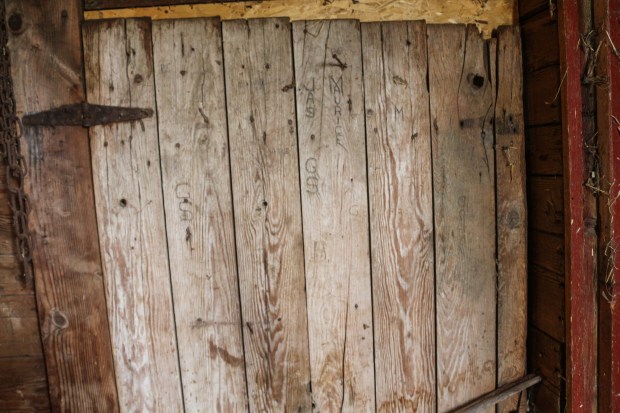
Inside of the east-west barn there is a chop box which has many different names and initials carved into it. Many of them are Simpson family members.

IMG_3459

The inside of the east-west barn is currently full of hay bales for Vernon Simpson’s daughter. Even though all of the stalls have been taken out, the handmade tack hangers are still present.

IMG_3350

Location:

52.580034, -111.639674                                                       SE 03-42-12 W4

Characteristics

Barn Condition: Good

Construction Date: 1924

Features: Three wooden cupolas and weather vanes

Roof Shape: Gambrel

Paint: Red with white trim

Decorations: No names or dates

Roof Covering: Cedar shingles

Siding: Wooden shiplap

Foundation: Field stone with cement

Additional Information On the Property

“The Simpson Families and Simpson’s Corner”

“The Simpson Families and Simpson’s Corner”. As the Wheel Turns: A History of Merna                   and District. 1st ed. Sedgewick: The Community Press, 1971. Print.

Simpsons’ Corner

The Simpson Barn is an outcrop of the real center of life in the Merna area – Simpsons’ Corner.

In 1882 Mr. and Mrs. George Simpson came to Winnipeg from England. They settled on NW 34-41-12 W4 in the Merna area of Alberta in 1914 after previously moving to Saskatchewan and Vancouver. Their five sons, Jim, Albert, Harry, Percy, and John, also came and made their homes nearby. Their sole daughter remained in England. Jim, Harry, and John Simpson started business near their father’s home and formed what would later be called Simpsons’ Corner.


Sadlo-Calon

History

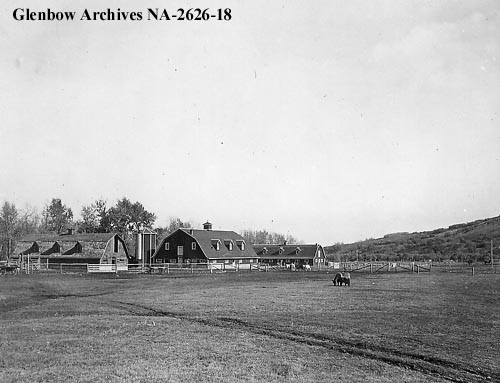
The George Calon family bought the property on which the barn sits in 1957 from the Sadlo family after Dave Sadlo died. The barn was built in 1917 and was modeled after the bull barn at the EP Ranch, or the Prince of Wales Ranch (link to an online version of the book “Prince Charming Goes West”), near High River, Alberta. You are strongly encouraged to click here and here for more information on the E.P. Ranch, which was designated a Provincial Historic Resource in 2004. Additionally, you can scroll to the end of the page for more photos and links.

Both the barn and the house on the Sadlo property were built by the Schares to the specifications of Joe Sadlo. The barn had steel stanchions on the dairy side, steel posts and tack hooks throughout the main floor, cement floors and foundation, a single rail manure carrier on the north-west side, and hardwood floors in the loft. Originally, the barn housed the Sadlo’s draft horses, which they used for their farming operation and for breeding. They also had milk cows and a grain cleaning “plant”. Slowly, the Sadlo’s farm dwindled until only Dave was left living on the property. You can read more about the Sadlo family at the bottom of this page.

Patrick Calon used the barn for milk cows for a time. He never had work horses and ceased his cattle operation in the 2000s. Pat poured a cement floor in the barn in 1979 so that the barn could be used as a granary. Shortly after, they stopped using it as a granary because they found that the weight of the grain was forcing the barn apart and would eventually cause it to burst.

In its day, the barn was bustling. Starting at the south-west and going North, there was a pen for foaling, stalls for three sets of horse teams each with hay chutes, the single rail manure carrier, the harness room, and a pen for calving. Starting at the south-east and going North, was the tact room, then a pen, stalls for two more sets of horse teams each with hay chutes, the door on the east side of the barn, the hay-carrier’s rope that led outside and attached to a horse, the oat bin, and, finally, nine steel cow stanchions. The barn was built with frame construction and platform framing.

Calon, Patrick. Personal communication. 12 Jul. 2016.
IMG_2565

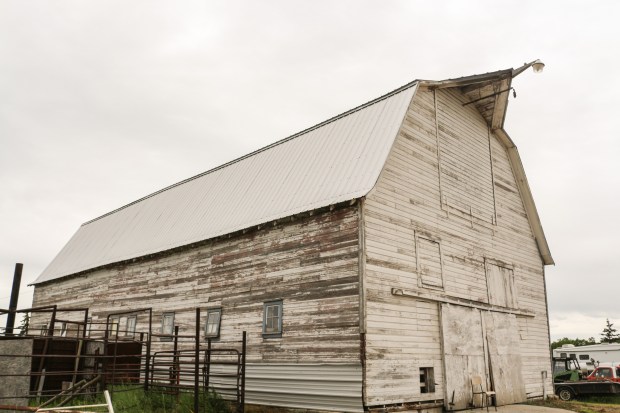
This frame shows the southern face and western side of the barn.
IMG_2563

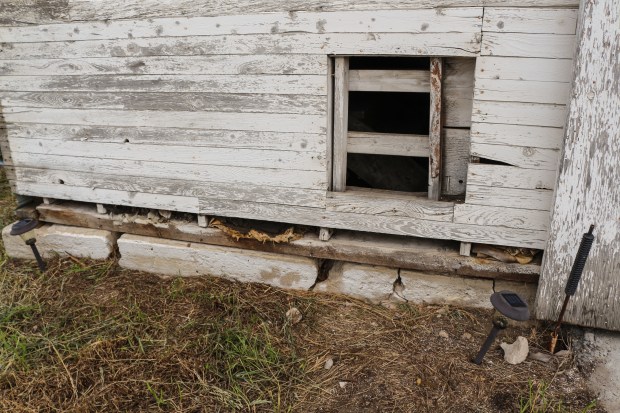
The foundation is mostly fully concrete with few instances of stones. It seems that paper was used as means of insulating. There are a few places where one can see paper sticking out of holes and cracks in the barn wood.
IMG_2560

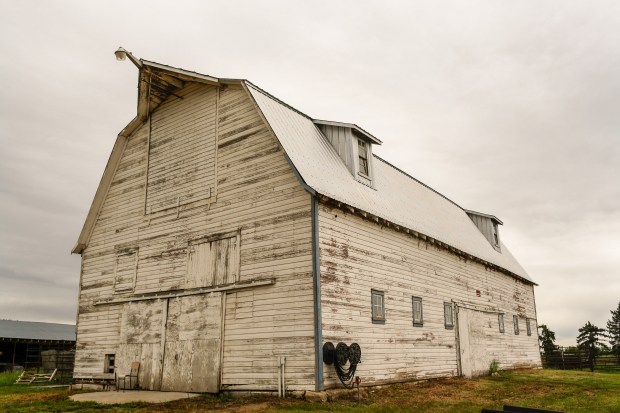
This frame shows the southern face and eastern side of the barn. One stall is lost on the east side of the barn due to the door and entry way, visible in this picture. The East side of the barn also has two shed roofed dormers.

IMG_2630

The southern face of the barn has a hay hood and hay track

IMG_2570

The property owner did some renovations to the stairs on the south-western corner of the building to allow easier access to the loft.

IMG_2579

The door on the northern face of the barn is visible in this frame. The features of interest are the metal posts used to support the wooden beams for the loft. The majority, if not all, of the barn’s stalls are metal.

IMG_2575

This frame shows the south-western corner of the barn.

IMG_2581

One of the steel posts that supports the barn’s beams.

IMG_2580

A beam with a platform for the steel post to support.

IMG_2584

Some of the posts have iron hooks for hanging gear on.
IMG_2590

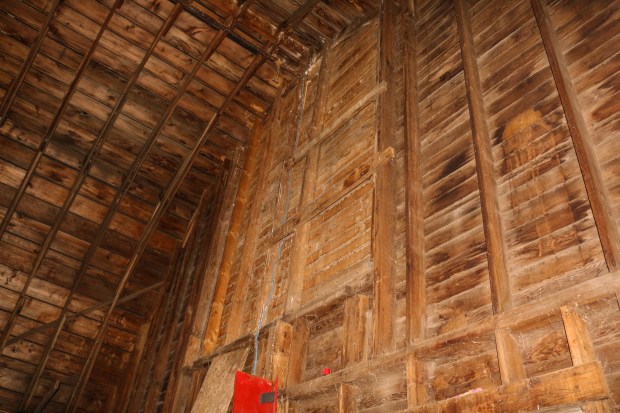
This frame shows the loft door on the southern face of the barn.
IMG_2587

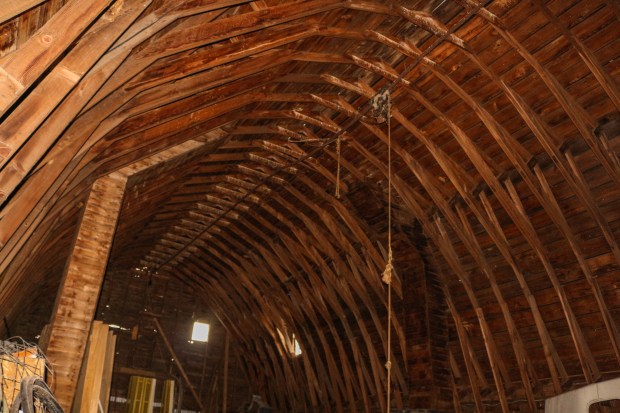
This frame was taken from the South whilst looking North and was taken from the top of the staircase. The hay track is visible in the peak of the roof. The ventilator chutes do not have the ability to circulate air since they are not connected to a metal ventilator or a cupola outside.
IMG_2593

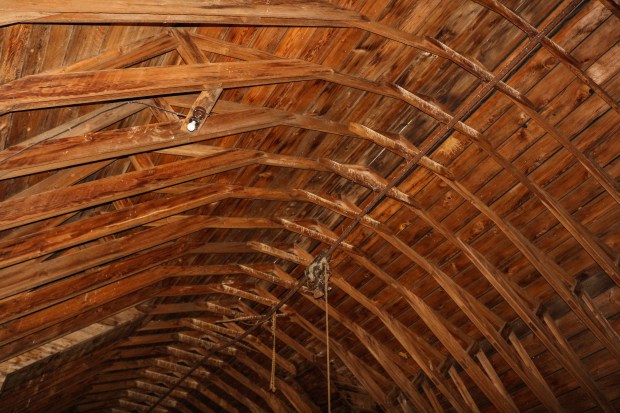
This frame shows the western half of the roof. The roof is a gambrel shape and this is due to the construction technique. The wooden trusses mean that each side of the roof has two slopes.

IMG_2629

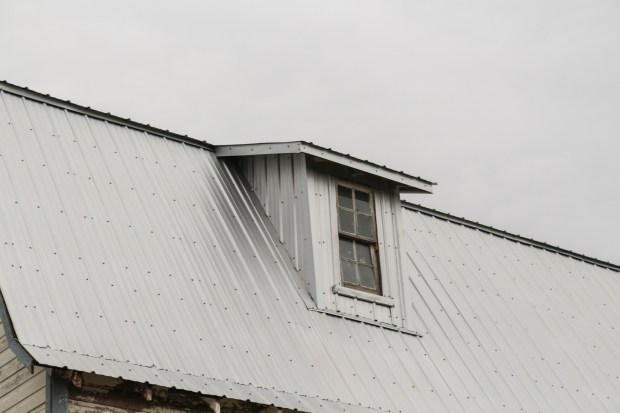
This frame shows the eastern half of the barn. The eastern half of the barn has two dormers that are covered in metal.
IMG_2631

The dormers on the east side are representative of the E.P. Ranch barn.

IMG_2638

This frame shows the northern face of the barn. Part of this face was recovered in metal siding to protect the face from the weather.

IMG_2643

This photo is a close up of the northern dormer.

Location

52.613619, -112.334626                                             SE 14-42-17 W4

Characteristics:

Barn Condition: Good

Construction Date: 1917

Features: Two dormers on east side, hay hood and hay track, used to have air circulation

Roof Shape: Gambrel

Paint: White with blue trim

Decorations: None

Roof Covering: Metal

Siding: Wooden tongue-and-groove

Foundation: Concrete

Additional Information on the Property

E.P. Ranch

To read more on the E.P. Ranch click here.

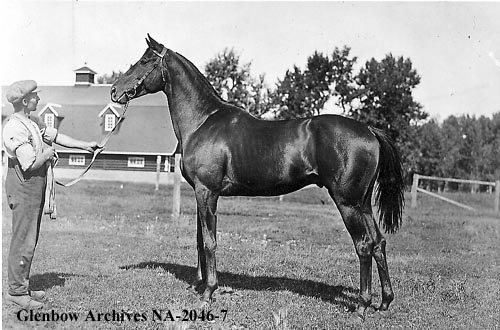
Please use the following image numbers and names to find the following images from the Glenbow Museum Archives.
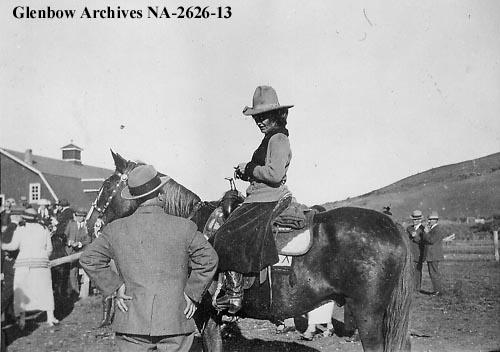
na-2626-13

Flores La Due at EP Ranch, Pekisko, Alberta. 
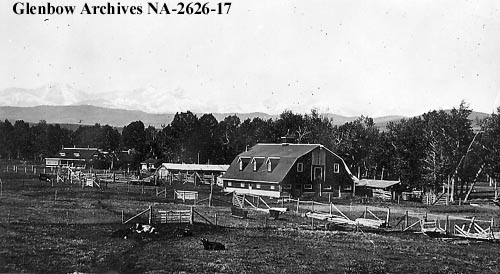
na-2626-17.jpg

View of EP Ranch, Pekisko, Alberta.

na-2626-18.jpg

View of EP Ranch, Pekisko, Alberta.

na-2046-7.jpg

“Will Somers”, thoroughbred stallion, EP Ranch, Pekisko, Alberta.
na-2046-6.jpg

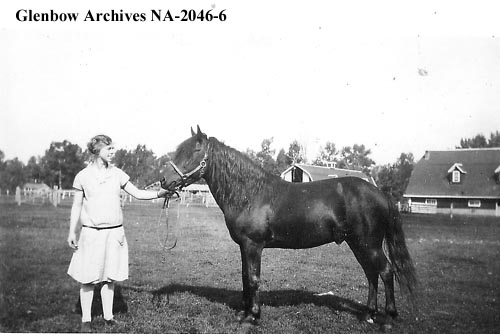
Helen Carlyle and Stallion “Tiny”, EP Ranch, Pekisko, Alberta.

The Calons

The following is a brief history on the Calon family.

Pat. “Calon, Patrick Sr., the Family”. Wagon Trails in the Sod: A History of Heisler and                        Area. 1st ed. Heisler: Heisler Historical Society, 1982. Print.

The Sadlos

The Sadlo’s owned the Calon property before George Calon. The following story starts with, “I would like to tell the Sadlo Story Story the way we heard it. . .”

Malpas, Arden. “Sadlo, Joe and Mary.” Wagon Trails in the Sod: A History of Heisler and                 Area. 1st ed. Heisler: Heisler Historical Society, 1982. Print.

Schares/Meyer

Please click to learn more about the Schares and the Meyer (Barn 1, Barn 2, Schares Family History) families listed in the Sadlo’s passage.
A Home On the Open Range: Ullrickson vs Dubois, Van Griethuizen, Vincett

History

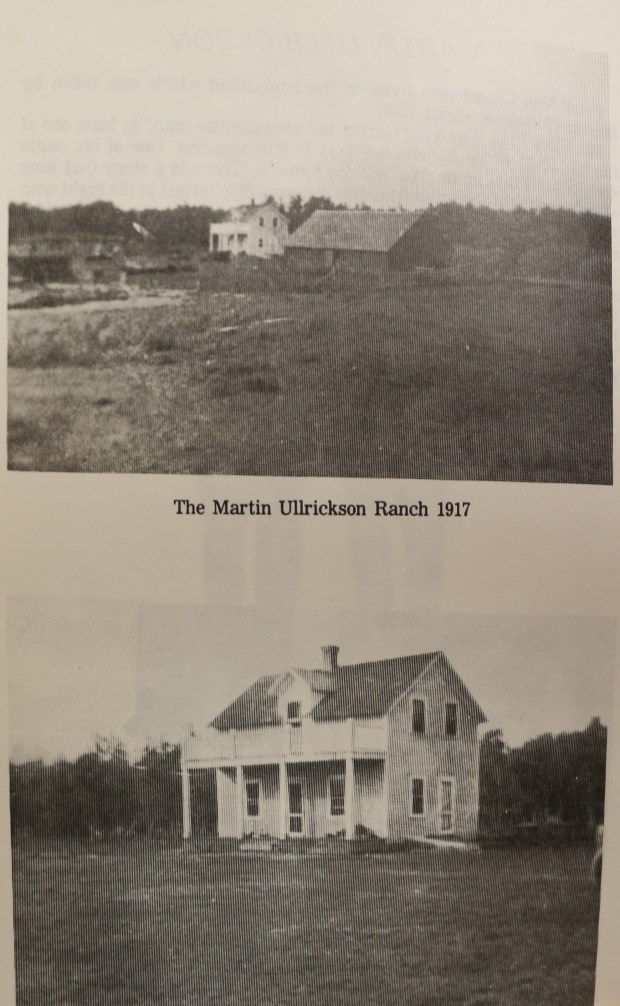
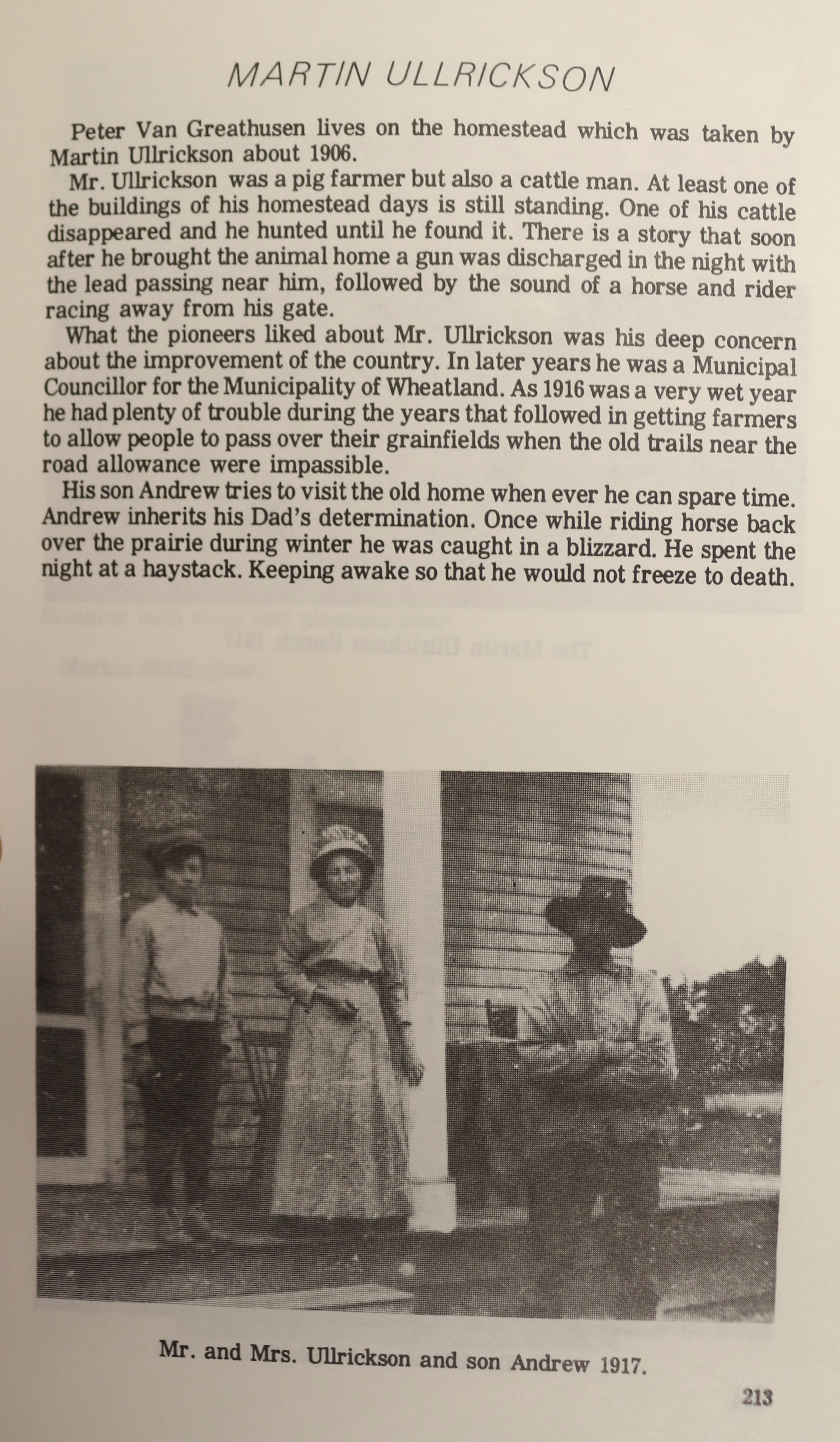
Ken Vincett is the current owner of the land that this barn stands on. He believes that this barn and the house on the quarter were both built in 1914. The previous tenant of the land, Andrew Ullrickson, remembers that his father, Martin Ullrickson, and family were well off at the time. Andrew believes that this stability meant the family could afford to build the barn and house. The Ullrickson’s sold the property and moved to Monte Creek, BC in the late 1910s as they tried to stay ahead of the railroad. Martin Ullrickson loved the open range and sought to live free of fences and rail.
Ken Vincett reasons that this barn housed pigs for the entirety of its use. Additionally, this property also has a larger barn, which housed cattle and horses, but that barn fell down many years ago.
Ken knows for certain that the last time the barn pictured below housed pigs was in the 1970s. Peter Van Griethuizen, who is Ken’s uncle, lived on the property at that time and raised hogs. Ken remembers coming over to the property to play and help his uncle with the pigs when he was a child. Ken said that, while he was growing up, the “loft” of the barn stored a big pile of junk. Ken’s grandmother acquired this junk from a neighbouring family.

During Ken’s grandmother’s time, a family, who was renting a property nearby, had to leave their home. The land they had been renting was most likely sold and so the family had to move on. The Van Griethuizen’s agreed to store a few possessions during their neighbour’s move. However, the neighbouring family never came back for their items. You can still find some of the aged gear in the barn. The barn uses balloon frame construction.

Vincett, Ken. Personal communication. 6 Jul. 2016.

IMG_5187

This frame is of the south half of the roof and a portion of the east face of the barn. The roof on this barn is a modified skillion-and-lean-to roof. It is modified because the skillion is not flat against the lean-to. Instead, the skillion has a lip with a separate slope which allowed for a bank of windows to be installed.

IMG_5190

IMG_5233

This frame is of the western face of the barn.

IMG_5232

IMG_5231

This is one of the doors that would be opened if the pigs were to be let outside into their pens. This door would have allowed the feeder pigs to enter and exit the barn.

IMG_5236

IMG_5238

The south half of the barn held most of the sows and piglets. Each sow would have its own pen inside and outside with a door in the side of the barn to connect the two.

IMG_5200

The only use of the barn that was recorded is of its use as a pig barn. The current pens where last in use in the early 1970s. This frame shows then north-eastern pens.

IMG_5202

This area, the middle of the barn, would have originally been a walkway because there are wooden timbers laid down on the floor.

IMG_5195

This frame is of the pens on the south side of the barn. The enclosed area nearest the photographer would have a been a storage area for chop, which would have been shoveled into the feeder in the center of this frame.

IMG_5213

IMG_5214

IMG_5211

This frame was taken in the middle of the barn looking west.

IMG_5221

This frame is of two of the north-west pens. The doors that slide up to allow access to the outside pens are visible. There is a feeding trough in the south-western corner of the barn.

IMG_5225

This frame is of two more pig pens in the south half of the barn.

IMG_5228

This frame shows the other side of the chop feeder trough that is part of the southern stalls. The chop would fall down the chute into the lip at the bottom. There is a different type of food trough resting on the top of the chop feed chute.

IMG_5229

This is where the chop would have been shoveled into so that it could fall into the feeding trough at the bottom.

IMG_5230

The last user of the pig barn (Ken Vincett’s uncle) created water troughs out of barrels. He fashioned the barrels with a cup and valve near the bottom of the barrel. He would fill the barrel with water from a garden hose and the pigs could drink from the cup at the bottom.

Ullrickson 2.2.jpg

This photo is from one of Forestburg’s earliest history books. It shows the barn and house built by Martin Ullrickson.

ullrickson-1.jpg

There is also a short history that goes along with the photos of the barn and house.

“Martin Ulkrickson.” The Early Devisors. 1st ed. Forestburg: Forestburg Historical                                   Society, 1977. Print.

Location

52.508195, -112.030760                                       SE 12-41-15 W4

Characteristics

Barn Condition: Poor

Construction Date: 1914

Features: None

Roof Shape: Skillion and lean to

Paint: None

Decorations: None

Roof Covering: Cedar shakes

Siding: Wooden shiplap

Foundation: Unknown

Additional History on the Property

Martin Ullrickson had a run-in with some of the most notorious dwellers of the Battle River of that time. “Alberta’s Cattle Rustler King”, Jack Dubois, and his gang of cattle rustlers stole many branded cattle in the Forestburg/Galahad area. Many local residents still remember the name Jack Dubois to this day. For those of you unfamiliar with the story, the following history is worth the time it takes to read. The run-in between Dubois and Ullrickson was like a real life western movie. Click here to read more of their story.

Zimmel-Gartner

History

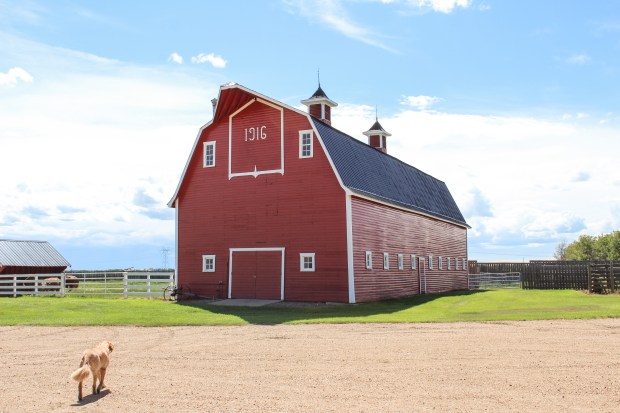
The property this barn stands on was first owned by Andrew Haden of Toronto, South Dakota. The barn was constructed in 1916 by Bernard (Barney) Schares using frame construction with platform framing. It was initially used as a horse barn. However, when Ed Fyten purchased the property in the mid 1940’s, the barn was renovated into a dairy barn. Due to this, the barn had all of the machinery and features necessary for milking.  In these years, it is known that the barn was used for barn dances.  Additionally, the door on the northern side of the barn was used as a separate entrance to the hayloft, where the dances were held.

In 1967, Rodney and Sherry Zimmel purchased the property.  They had four children:  David, Janet, Tracy and Dennis. While he had it, Rodney took the stalls out in order to create a hog barn. Eventually, Rodney turned the eastern part of the barn into a woodworking shop and the western part of the barn into pens for chickens and cattle.

In 2001, Rodney and Sherry’s daughter, Janet, and her husband, Mike Gartner, purchased the home quarter.  They too had four children:  Nicholas, Kevin, Amie and Jonathan.  They continued to use the eastern half as a shop and the western half for turkeys, chickens and 4H calves.  They kids used the loft to play badminton and hockey.  Presently the loft is used to store straw and hay bales.

Gartner, Janet. Personal communication. 4 Jul. 2016.

IMG_5110

This frame shows the north half of the roof and the eastern face of the barn.

IMG_5116

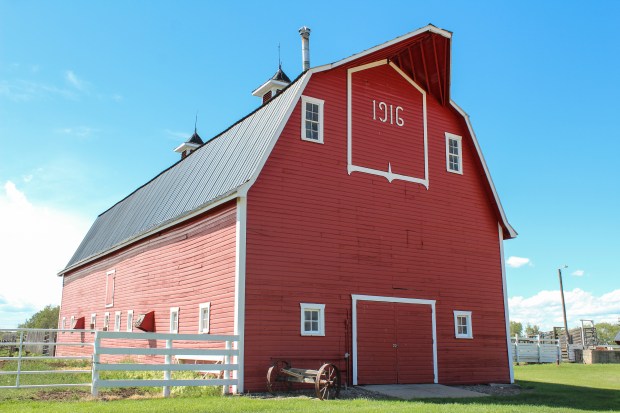
The eastern face of the barn has the date of the barn’s construction painted on it. The barn turned 100 years old in 2016.

IMG_5119

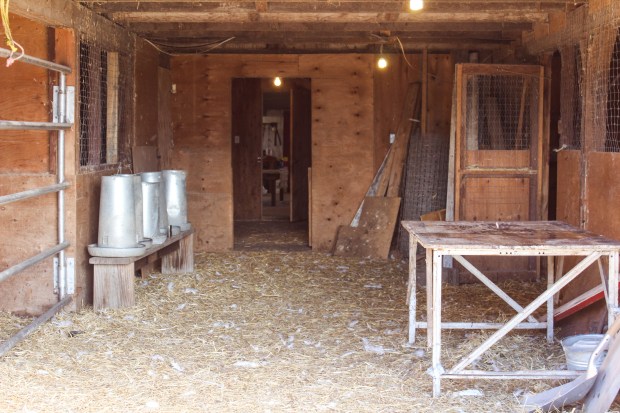
Inside the eastern half of the barn the stalls were taken out and the space was made into a shop.

IMG_5121

IMG_5122

This frame shows the south-western corner inside the shop area of the main barn.

IMG_5125

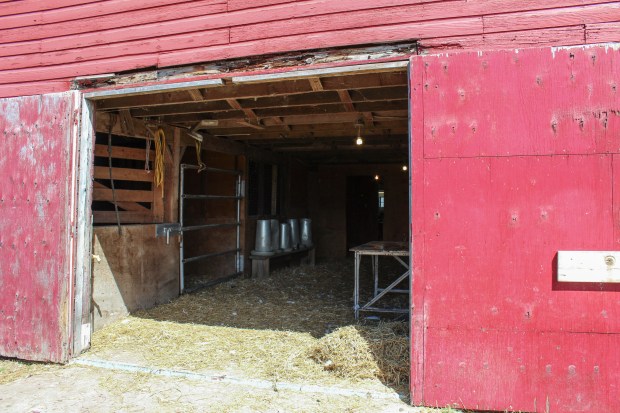
This frame is of the doorway in the western face of the barn.

IMG_5126

This frame shows the south-western stalls.

IMG_5127

This frame is of the turkey coop in the southern half of the barn.

IMG_5128

This frame shows the south-eastern corner in the corral area of the barn.

IMG_5135

This frame was taken from the western-most door looking east. The photo shows a view from the coops to the shop.

IMG_5138

This stall was created as a place for sick cattle, calves, or pregnant cows.

IMG_5130

This frame is of the western face of the barn.

IMG_5133

This frame is of the western face of the barn as well. There are two doors on this side of the barn.

IMG_5132

The barn opens up into corrals which house cattle and turkeys.

IMG_5141

Janet Gartner’s father created these feed chutes when he had pigs in this area.

IMG_5144

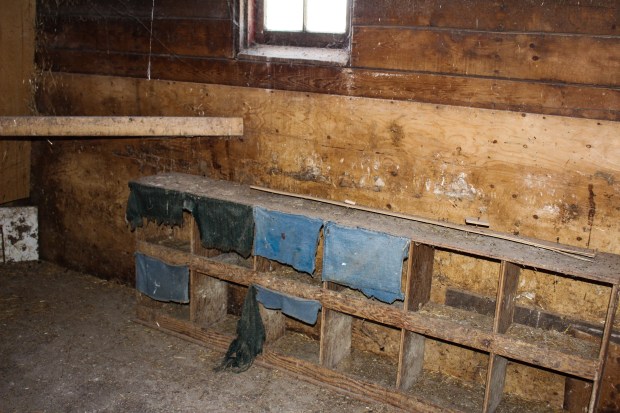
One of the other stalls in the western half of the barn was renovated to house chickens. The Gartners have since gotten rid of their chickens and now only grow turkeys.

IMG_5158

This frame was taken at the halfway point inside the loft. It is of the western face of the barn.

IMG_5146

The box in this frame was used to store the feed for the pigs. It would have been augured into a hopper and then dispersed.

IMG_5150

This frame is of the floor of the loft and the eastern face of the barn. There is a badminton and a hockey net set up in the loft.

IMG_5148

This frame shows the platform for the hay carrier system.

IMG_5167

The roof for this barn is supported by large trusses at the base (pictured here) and smaller trusses nearer the peak.

Location:

52.579990, -111.639692                                                       SE 33-43-15 W4

Characteristics

Barn Condition: Good

Construction Date: 1916

Features: Two wooden cupolas, hay hood and hay track, lightning rods

Roof Shape: Gambrel

Paint: Red with white accents

Decorations: The date of construction is painted of the loft door

Roof Covering: Metal

Siding: Wooden shiplap

Foundation: Cement

Link

History

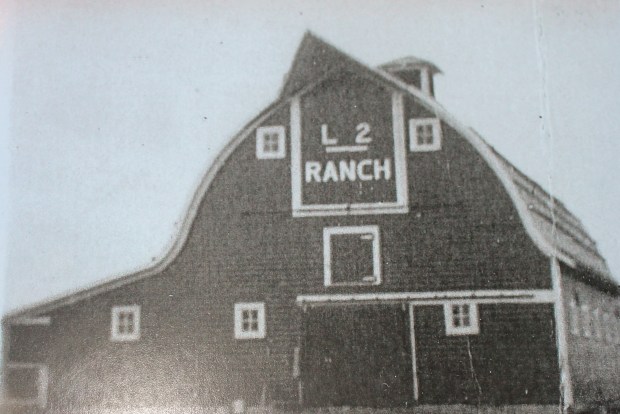
Ron Link’s grandfather bought the property that barn stands on in the early 1940s and started to build the barn, the house, and many outbuildings after that. This barn was built some time after the Second World War, assumed 1945 or 1946. The carpenter for the barn was Fred Kroetsch of Heisler. The stalls were built by Otto Bendfield, of Forestburg, using 3-inch-thick fir lumber. Ron’s grandfather used the barn for his draft horses and cattle. When Ron’s father owned the property, the barn was still being used for horses and Hereford cattle. The Link family’s use of draft horses stopped when automobiles and tractors became more popular; however, the family still had horses for cattle ranching that they would often keep inside the barn. Ron Link owns the property now. The whole Link family had a reunion in 1997 complete with a barn dance up in the loft. Ron stopped his cattle operation in 2000 but continues to use the barn as an area to hang meat. Ron would love to restore the barn one day and put the L2 brand back up on the western face of the barn like it was in the early days.

Ron remembers that the barn used to get painted every so often by the painters that came to paint the grain elevators in Forestburg. They would paint the elevators in the day and Ron’s Dad would contract them to paint his barn in the evening.

The barn was built using frame construction with platform framing.

Link, Ron. Personal communication. 4 Jul. 2016.

IMG_5027

This photo shows the barn in its early days.

IMG_5028

This photo is of the barn under construction. The wooden scaffolding is of interest.

IMG_5029

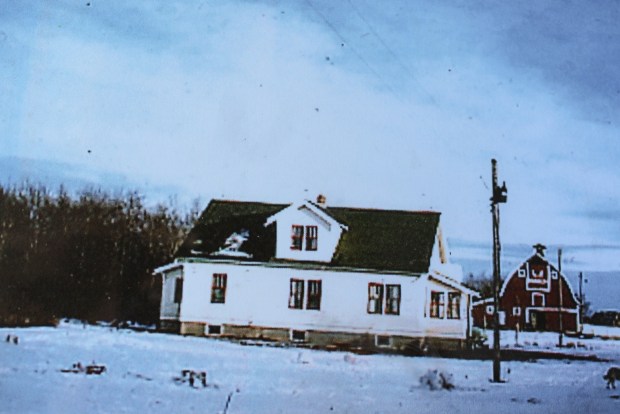
This photo is of the barn and original house.

IMG_5046

The roof over the shed had metal covering put on it after the cedar shakes started to deteriorate.

IMG_5039

This frame shows the southern half of the barn’s roof and the western face of the barn.

IMG_5040

This frame shows a close up of the hay hood, the hay rack, and the wooden cupola.

IMG_5050

The door on the west side of the barn gives access into the shed portion of the barn.

IMG_5049

The foundation on this barn uses a lot of field stones and small rocks. This was beneficial at the time of construction because less concrete was needed; however, it does shorten the life of the foundation.

IMG_5107

The siding on the barn is wooden shiplap.

IMG_5056

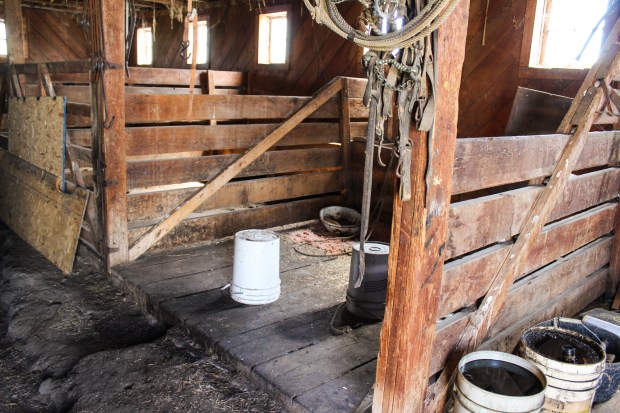
This frame shows one of the cattle stall gates inside the barn. Usually, the stalls with gates were used for cattle while those without were used for horses.

IMG_5059

This frame shows the walkway down the middle of the barn.

IMG_5062

This frame shows another stall that is open and does not have a gate. The timbers used on the floors of the southern stalls are hardwood. The owner states that they have lasted since the day they were put in. Conversely, the timbers for the northern stalls were not as high quality wood and have had to be replaced many times.

IMG_5064

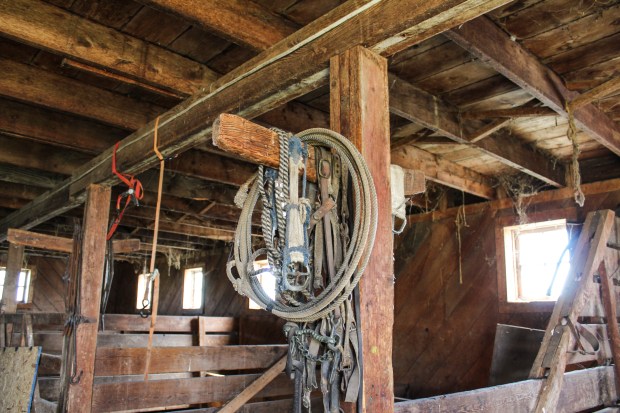
This frame shows a close-up of a tack hanger.

IMG_5074

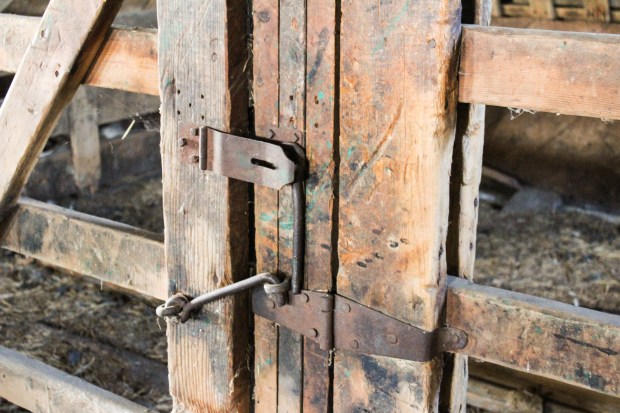
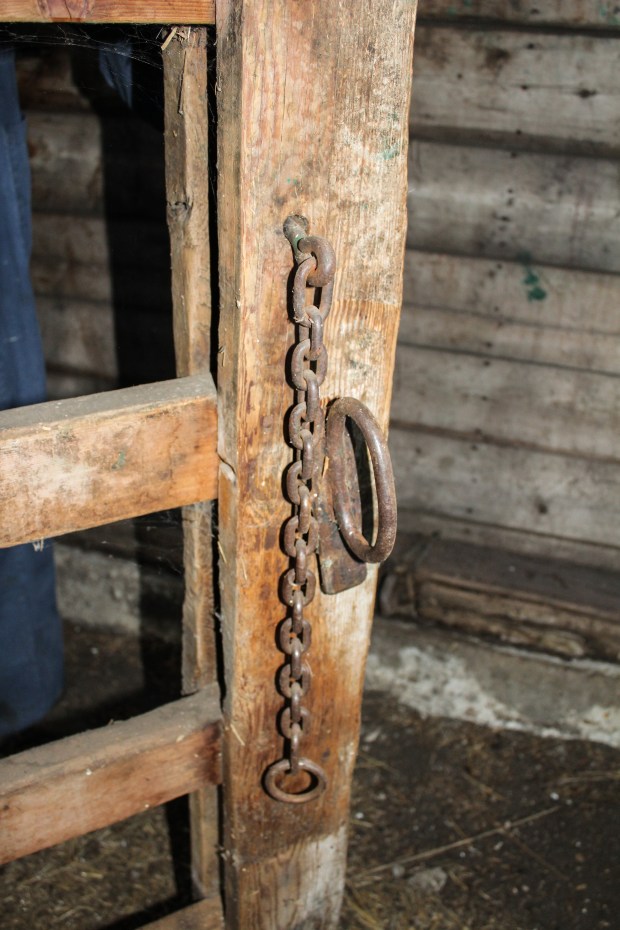
There are many interesting metal locks, hooks, and hinges throughout the barn. Ron Link says that they were most likely poured by his grandfather who was a skilled blacksmith.

IMG_5078

A latch.

IMG_5093

A tack harness.

IMG_5079

This frame was taken from the eastern side of the barn while inside the shed portion of the barn. The door in the far right corner of this frame is the door on the western face of the barn. The floor inside the shed is now dirt; however, you can still see the field stones that the wooden floor planks used to lay on.

IMG_5083

The shed was used for cattle after they had birthed. The feed mechanism inside the shed is very interesting because the builders created chutes from the loft that enabled the farmer to feed cattle hay out of the loft.

IMG_5089

The foundation underneath the shed is in poor condition and needs to be repaired.

IMG_5090

This frame shows the other door that allows passage between the main barn and the shed. This one is on the western side of the barn and passes right by the staircase to the loft.

IMG_5094

This frame is of the staircase and the door that was in the previous frame.

IMG_5104

This frame is of the western face of the barn from inside the loft.

IMG_5105

The roof in this barn is arched; however, the arch is interesting because of how it is constructed. It seems to be an intermediate between trusses for roofs and glued laminated timbers for roofs. Usually trusses create gable or gambrel roofs and glued laminated timbers create arched roofs.

IMG_5106

This photo is of the eastern face of the barn. The hay components and bale elevator are visible.

IMG_5100

The hay carrier for this barn was painted green originally.


Location:

52.562804, -112.066057                                                       NW 26-41-15 W4

Characteristics

Barn Condition: Good

Construction Date: 1945 or 1946

Features: Wooden cupola, hay hood and hay track

Roof Shape: Arched

Paint: Red with white trim

Decorations: No names or dates

Roof Covering: Cedar shakes with metal roofing over the shed roof

Siding: Wooden drop siding

Foundation: Concrete with field stones.

Drager

History

Robert Drager was born on this property in 1939. His family moved to the property in the late 1910s or early 1920s, when his father purchased the property. Robert said that his father lived there before his father and his mother got married. Robert’s father moved to this area from Wetaskiwin, bought a place south of Lougheed, and then purchased this property. The house in the yard is a Canadian Pacific Railway-built house.

While Robert was growing up the barn was used for all types of livestock: horses, cattle, pigs, chickens. In later years Robert Drager retrofitted the barn so that he could house chickens inside and did so until about 2010. He continues to use the barn presently as a cattle shelter. The barn uses frame construction with platform framing.

Drager, Robert. Personal communication. 29 Jun. 2016.

IMG_2935
This frame shows the east face of the barn. This barn had eight large stalls arranged in a very unique way. The sliding door on the more northern portion of this face allows access to four stalls that run east-west.
IMG_2934

This frame shows a close up of the barn’s loft. There was no hay storage above the stalls that run east-west but there was hay storage above the stalls that run north-south. Meaning that there was hay storage in the loft space where the 3-pane window is. The two cut-outs above the yard light were part of the original barn design. Robert Drager says that they lead to a wire coop for chickens or even pigeons.

IMG_2931

IMG_2898

This frame shows the rest of the east face of the barn and some of the southern half.

IMG_2900

The southern door gives access to the stalls that run north-south. The door used to be a sliding door like the one on the eastern face.

IMG_2903

IMG_2908

This frame shows one of the stalls that runs north-south. The wall in background of this frame is the eastern wall of the barn and the wall to the right in this frame is the southern wall. This stall is, for the most part, original. The stall just north of this one has been enclosed and modified for chickens. It is one of the two chicken coops in the barn.

IMG_2907

This frame shows a portion of both of the stalls that run north-south on the western side of the barn. The area to the right, that is enclosed with a piece of plywood is the retrofitted chicken coop that will be pictured in the next frame.

IMG_2914

The “chicken coop” was made from the western half of the east-west running stalls. The stalls still have complete mangers from the original construction. The piece of red plywood in the center of this frame is used to cover the entry door into the barn that is on the north side of the barn.

IMG_2916

This frame shows the rest of the east-west stalls. It is the east-west running stalls that create the saltbox roof shape.

IMG_2923

The white portion of this frame is where the sliding door on the east face of the barn is. The wall to the right in this frame is the north side of the eastern stalls that run north-south. Above those stalls is the hay loft.

IMG_2901
This frame shows the west and south faces of the barn from the outside again. The shed on the west side of the barn was an addition made many years after the barn was built and is for use as a cattle shelter.
IMG_2926
This frame is a close up of the loft door on the west side of the barn. This is the door that would have been used to bring hay up and into the loft.
IMG_2940
This frame is of the northern side of the shed and the eastern face of the barn.
IMG_2938
The north side of any barn is more prone to deterioration due to weather.  The door on the right side of this frame allows entry into the north set of stalls and the walkway in front of them. The walkway would have been used to take hay from storage, out in this grassy area, into the mangers inside the barn.

Location

52.786290, -111.429020                              SW 17-44-10 W4

Characteristics

Barn Condition: Poor

Construction Date: Unknown. Before

Features: One yard light.

Roof Shape: Saltbox

Paint: Red

Decorations: None

Roof Covering: Wooden shingles

Siding: Wooden shiplap

Foundation: A few blocks of concrete with field stones.