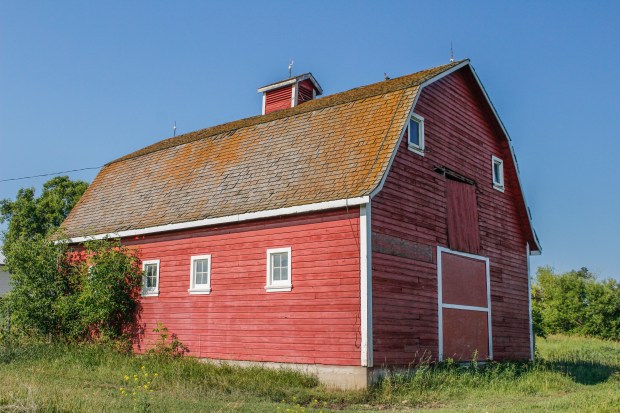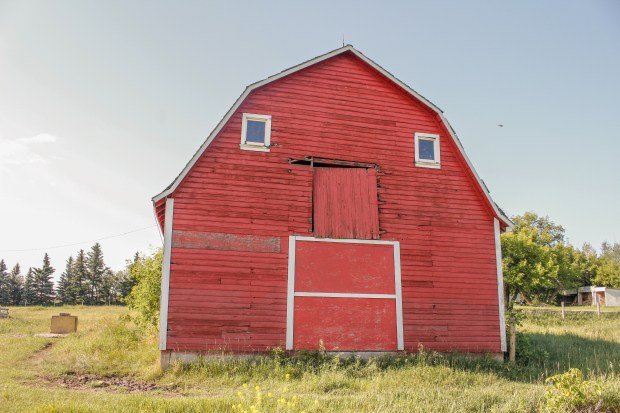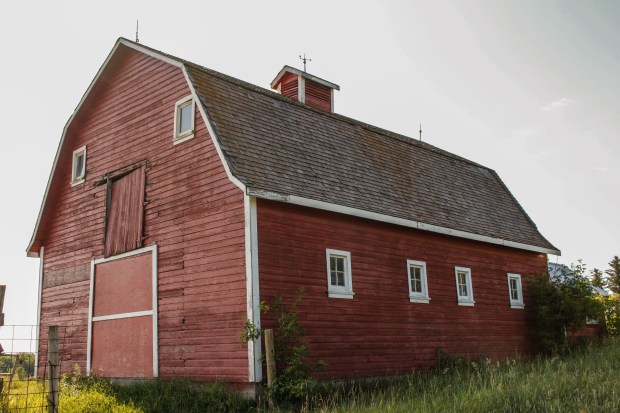
Candlish-Lichak

History

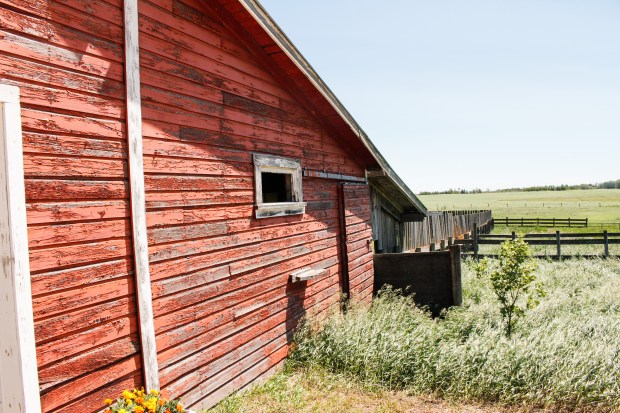
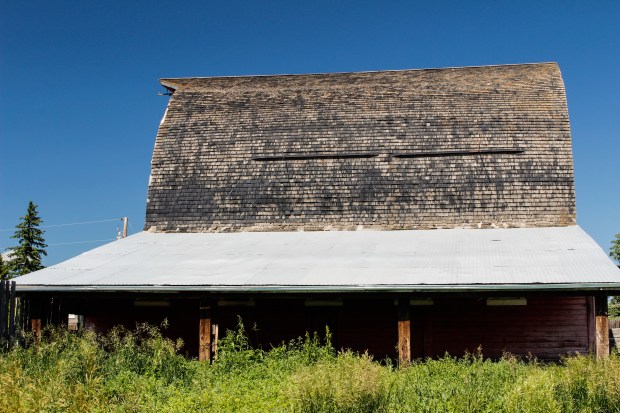
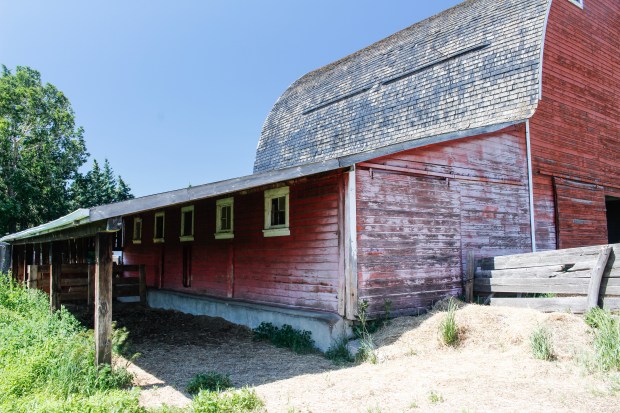
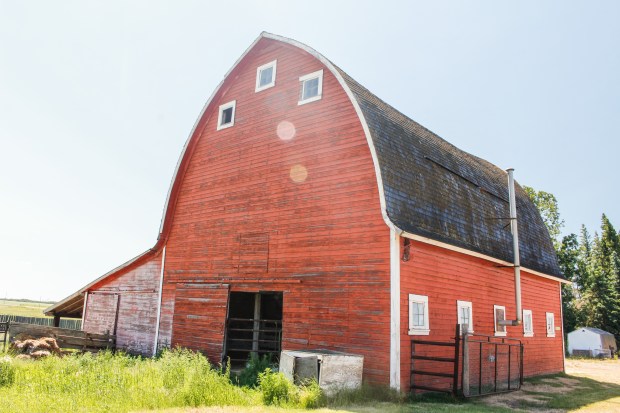
The property this barn sits on was homesteaded by the Nicholson family.

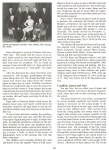
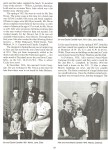
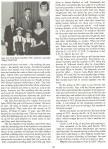
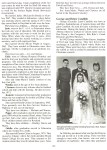
In 1931, Jim Candlish came to the Daysland area to escape the Great Depression in Saskatchewan. In 1932, his brother, Alex Candlish, joined him. In 1933, Jim sent for the rest of the family as conditions in Saskatchewan were not getting better. They rented the Nicholson place for their parents to live on. Jim and Alex’s families lived together in a house the Bank of Montreal built on NW 21-45-16 W4. This worked quite well until their families got too big. So in 1945, Alex and Jim bought a place for their parents in Daysland. From there, Alex and his family moved to the property this barn sits on – just North of their previous residence. In 1973, Jim’s wife, Cecile, bought this quarter from Alex and lived here until the 2000s.

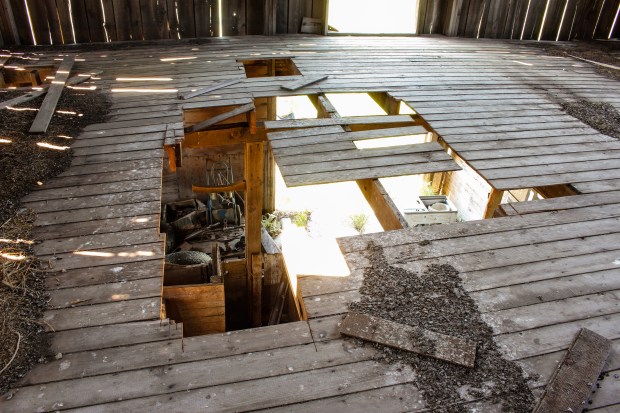
In 2012, Tom and Val Lichak purchased this property. They immediately loved the barn. In the years since, they have upgraded the loft floor and installed a new window on the southern face of the barn.

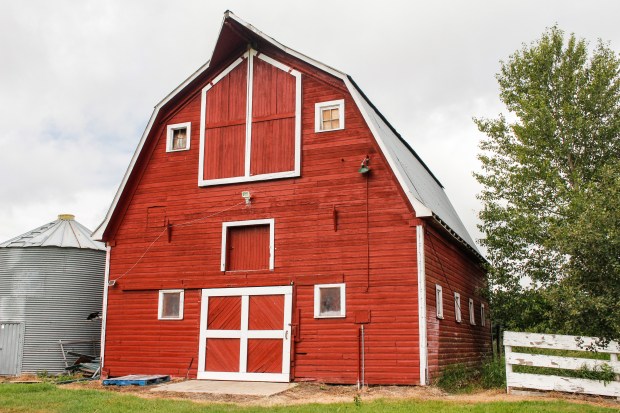
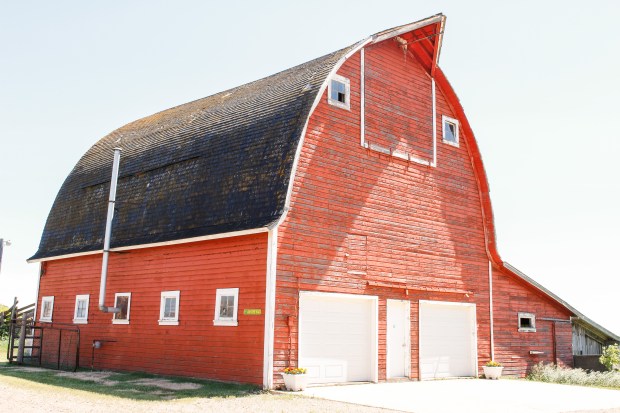
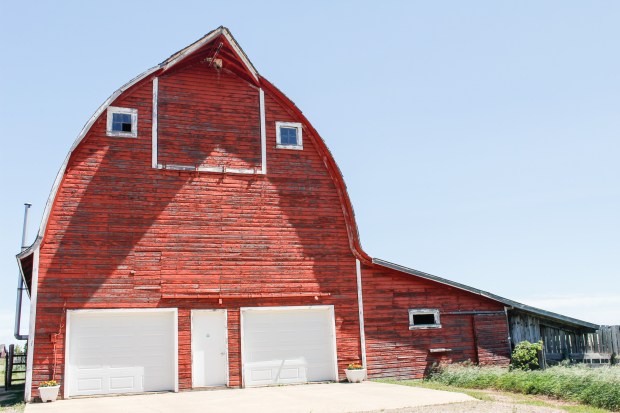
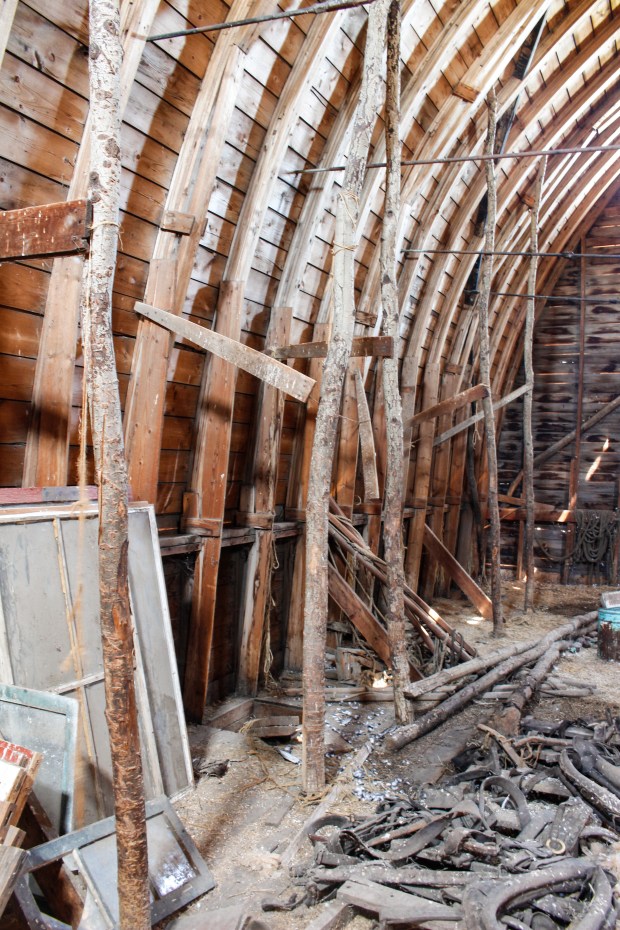
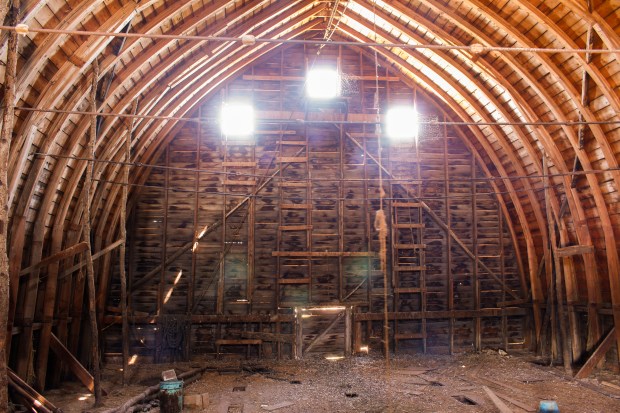
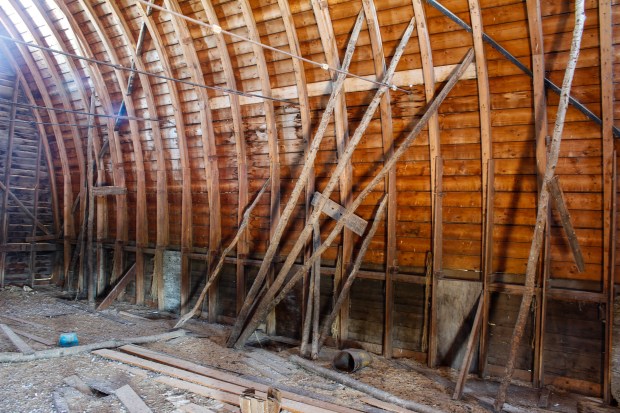
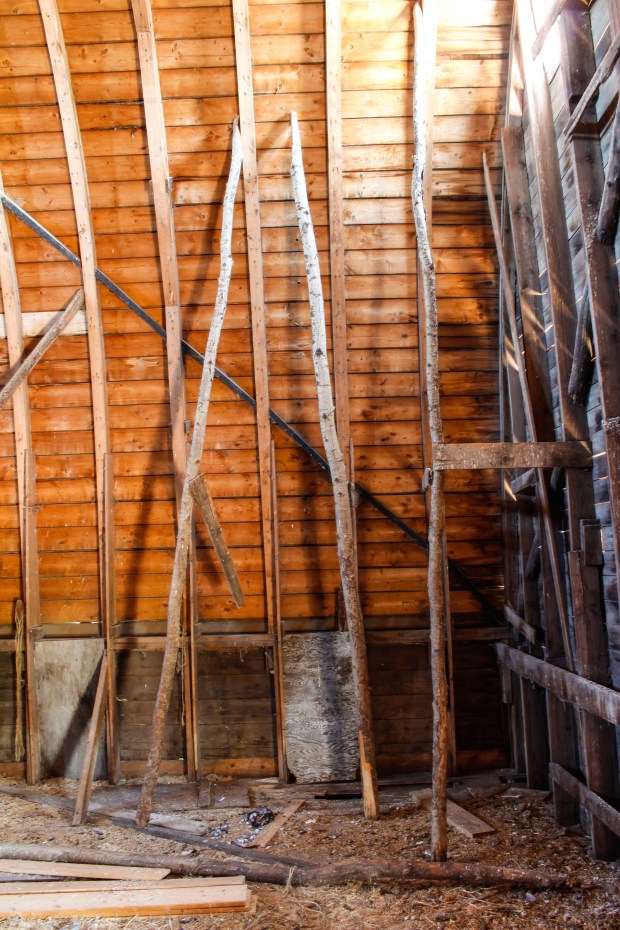
The barn was built by Sam Wirth in 1956. The barn was built using frame construction and balloon framing. It was first used for livestock and then as a granary in 1978. To accommodate this use, augers were put installed inside the barn, these can be viewed in the pictures below.

Lichak, Valerie. Personal communication. 17 Jul. 2017.
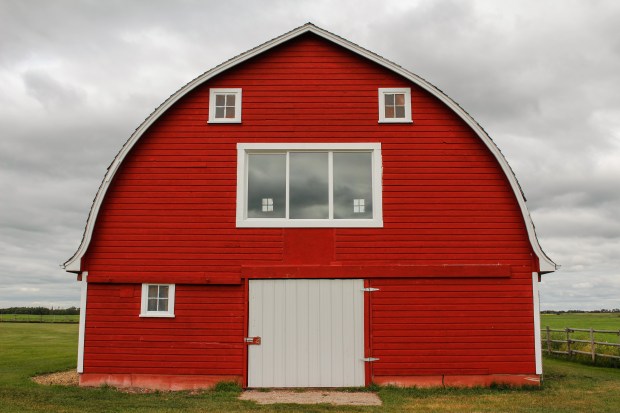
_MG_8918

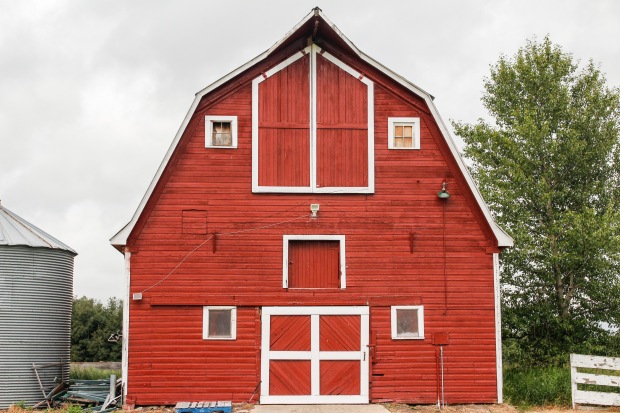
This frame shows the southern face of the barn .
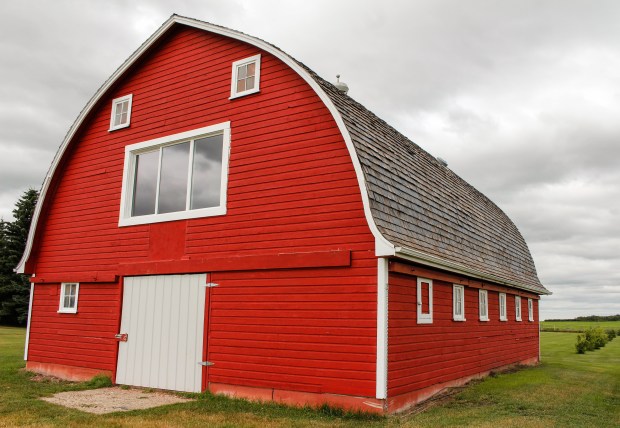
_MG_8919

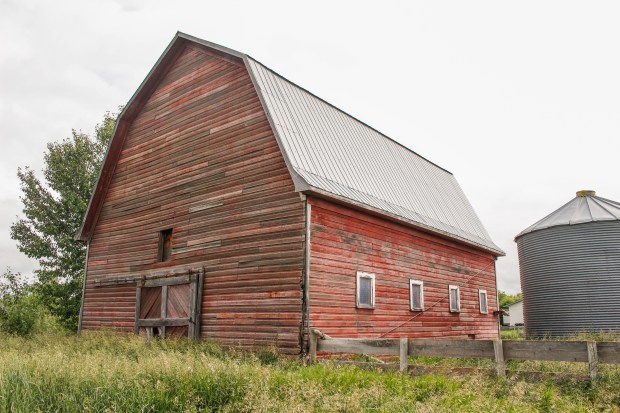
This frame is of the southern face and eastern side of the barn.
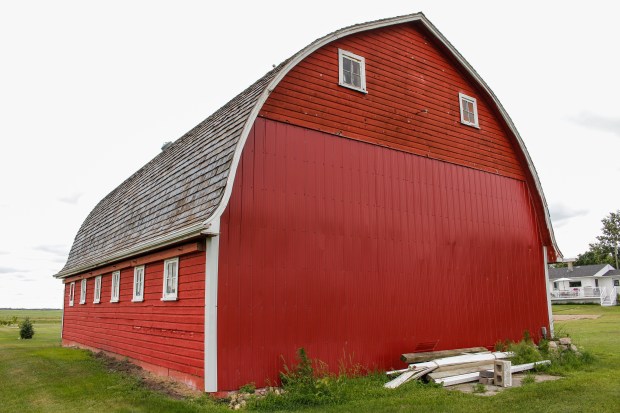
_MG_8921

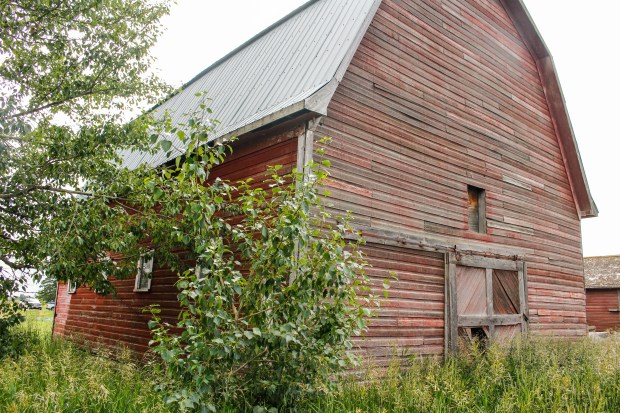
This frame is of the western side and northern face of the barn.
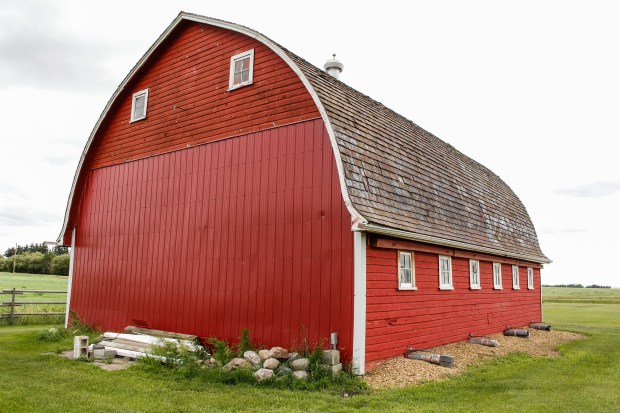
_MG_8922

This frame is of the northern face and western side of the barn.
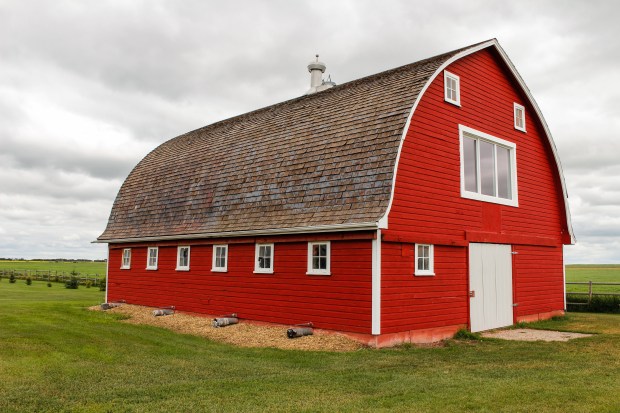
_MG_8915

This frame is of the eastern side and southern face of the barn. Notice the pipes coming out of the eastern side.
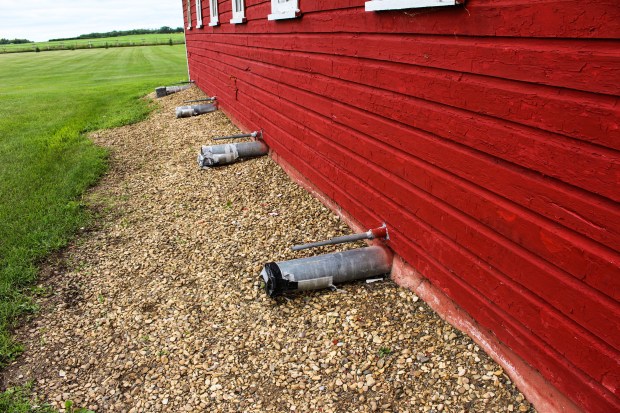
IMG_8934

This is a close-up of the pipes coming out of the eastern side of the barn. These pipes are actually grain augers from when the barn was used as a granary.
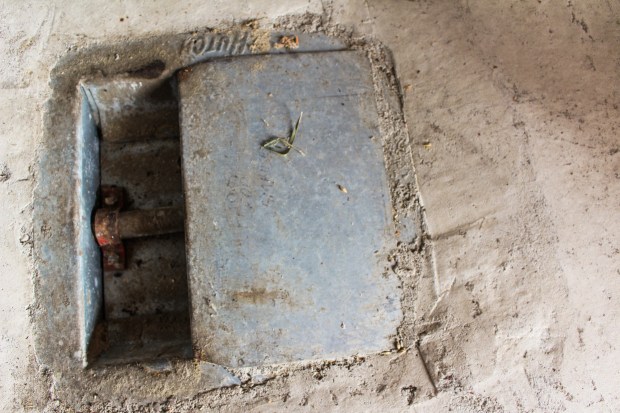
IMG_8933

This frame shows the start of the auger.

_MG_8929

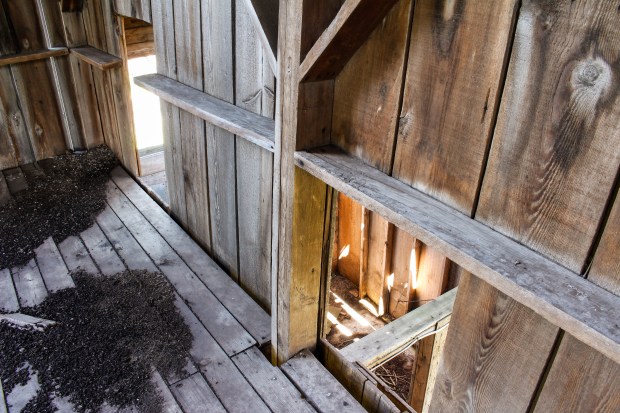
When the augers were installed, more concrete was poured so that there would be a slope to the floor. This made it easier to funnel grain into the auger.
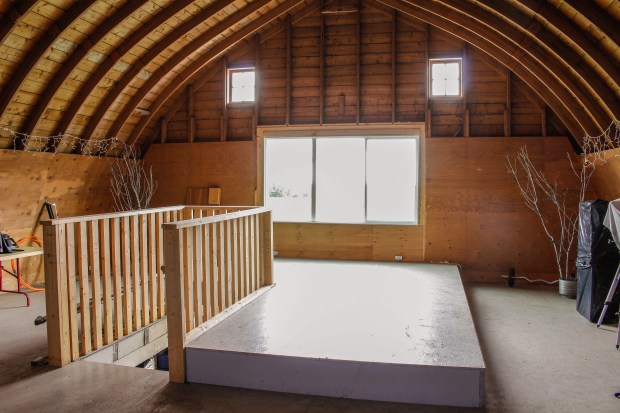
_MG_8927

The Lichaks created this stage and the staircase because the loft was removed when the barn was a granary.
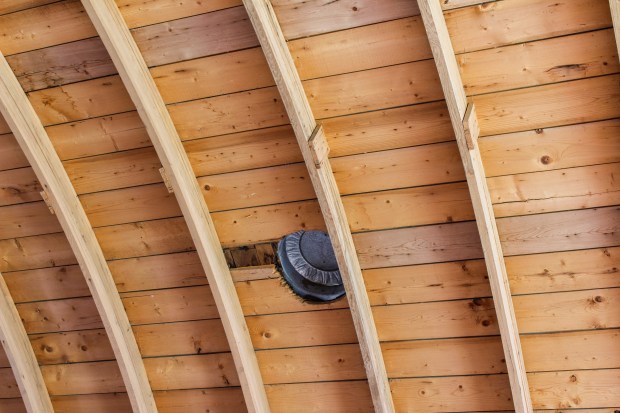
_MG_8923

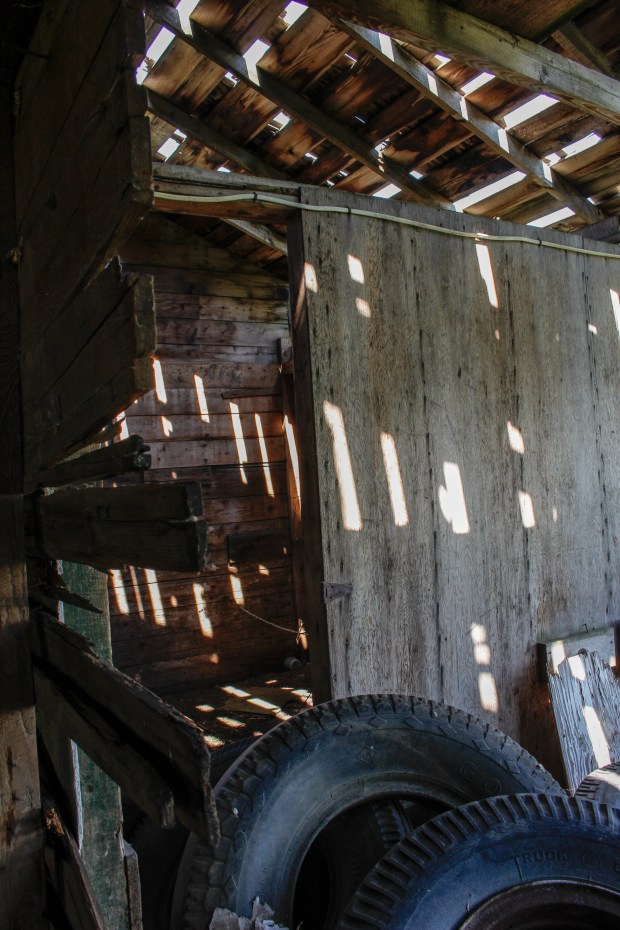
This hole in the roof used to be used to auger grain into the barn.

Location

52.902253, -112.258964                                        SE 28-45-16 W4

Characteristics

Barn Condition: Good

Construction Date: 1956

Features: Single ventilator

Roof Shape: Arched

Paint: Red with white trim

Decorations: No names of dates

Roof Covering: Metal

Siding: Wooden shiplap

Foundation: Concrete

Additional History on the Property

Candlish Family History
 

Schenk, Jessie. “Candlish Family History”. Along the Crocus Trail: A History of Daysland                 and Districts. 1st ed. Daysland: Daysland Historical Book Society, 1983. Print.

Sam Wirth Family History
“Sam and Olga Wirth”. Along the Crocus Trail: A History of Daysland and Districts. 1st                     ed. Daysland: Daysland Historical Book Society, 1983. Print.


Zwack-Roth

History

This is a large 32 x 50 gambrel roof barn with an attached shed on the northern face measuring the width of the barn x 20’ long. It was built on a field-stone and mortar foundation. The barn has a hay hood and the hay carrier system, still intact. A set of stairs lead the the loft. A large door is intact with a rectangular window on each side. The large rectangular cupola is about 4 ft long and 3 ft wide with wood slated louvres. The roof has cedar shingles. The floor is heavy hard-wood planks and the siding is wooden drop siding. Five windows line both sides of the barn, each above a double stall. This barn was built for at least 10 work horses. There is a side entrance to the barn on the western side of the barn as well as a smaller side door to the loft. The main entrance to the barn is a big sliding door on the southern face of the barn. On the northern side, there is a door to the shed addition. The barn was painted red with white trim.

Louis Kilmer was the head carpenter for this barn and built it in 1913 for Mike Zwack. Mike retired to Daysland in 1942. Joe and Adrienne (Brausen) took over the farm in 1945 and they likely used the barn for some livestock – perhaps milk cows. Joe and Adrienne retired in 1973. They had one infant son who passed away in 1947. After that, it was sold to Gary and Dorothy Meyer who resided elsewhere and so they did not use the barn. This land was sold to Ken Roth in 1990. The barn continues to remain empty and is falling into disrepair. It would once have been a beauty, as it still is today – even in its neglected state.

Please check out the other barn owned by Ken and Kathy Roth, which is also featured in this database.

Roth, Kathy. Personal communication. 26 June 2017.

Ken and Kathy Roth. Wagon Trails in the Sod: A History of the Heisler Area: Volume           II. 1st ed. Heisler: Heisler Community Historical Society, 2017, pg. 670. Print.

_MG_8031

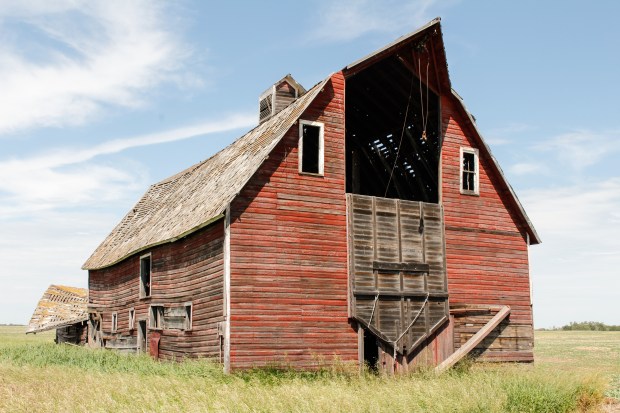
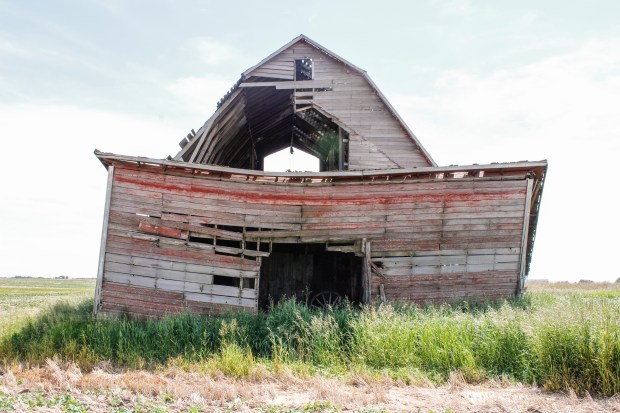
This frame shows the southern face of the barn and part of the western side of the barn. Note the loft door which folds down instead of opening in halves or sliding down.

_MG_8034

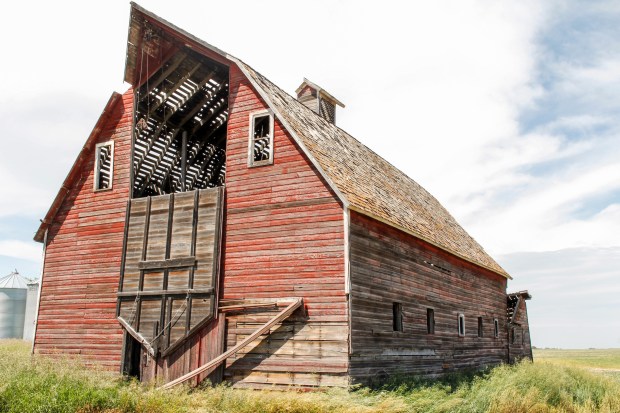
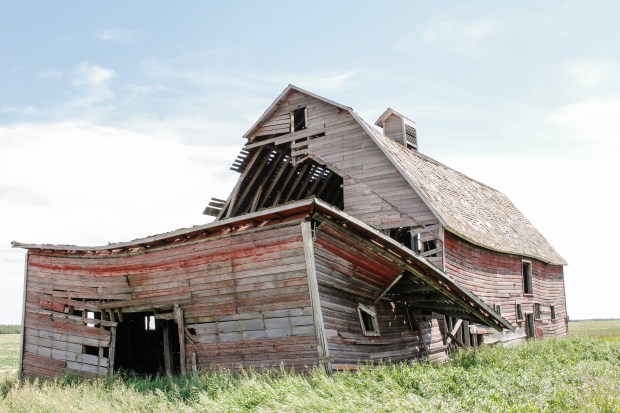
This frame shows the southern face and eastern side of the barn.

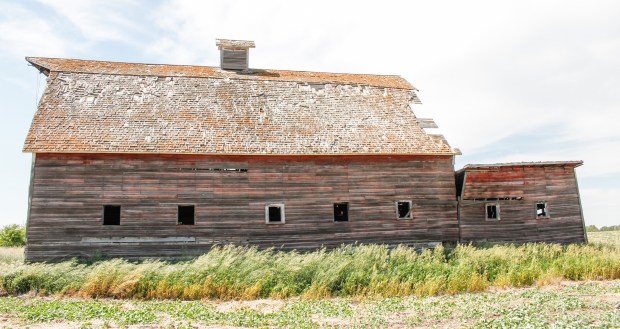
_MG_8036This frame is of the eastern half of the barn. This barn had four additional stalls inside the addition on the North side of the barn.
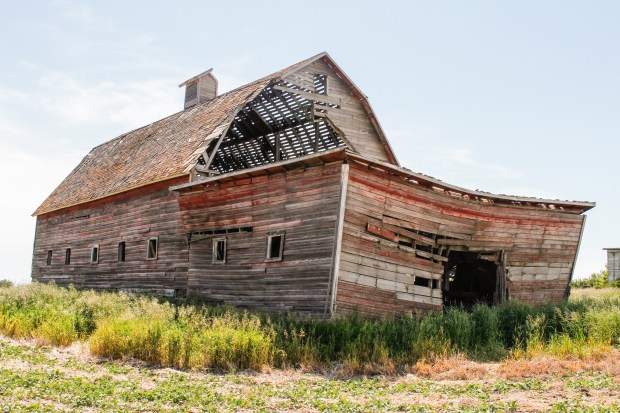
_MG_8042

This frame shows the northern parts of the barn and the addition.

_MG_8044

This frame is of the northern face of the barn and the addition.

_MG_8046

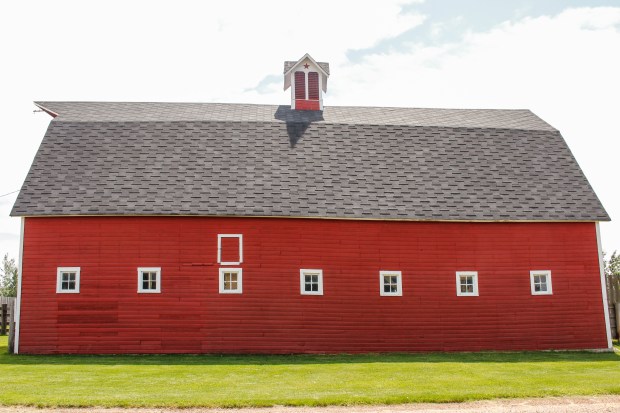
The addition on this barn is unique because it had a flat roof instead of a shed roof and it was built onto the face of the barn and not the side of the barn.
_MG_8053

This frame shows the north-western corner of the addition.


_MG_8054

This frame is of the western side of the addition.

_MG_8048

This frame shows the south-eastern corner of the addition. The addition was added onto the existing barn. As such, the original red paint is still in great condition inside the addition.

_MG_8080

This frame is of the north-eastern corner of the main barn. It shows the other side of the wall in the previous image. Notice the large gates which were used to keep stock inside their stalls.

_MG_8073

_MG_8075

This frame shows the northern door on the North side of the main barn. Notice the main beam from a cart which lies on the dirt floor in this frame.

_MG_8077

This frame shows the stalls which exist in the north-western corner of the main barn.

_MG_8057

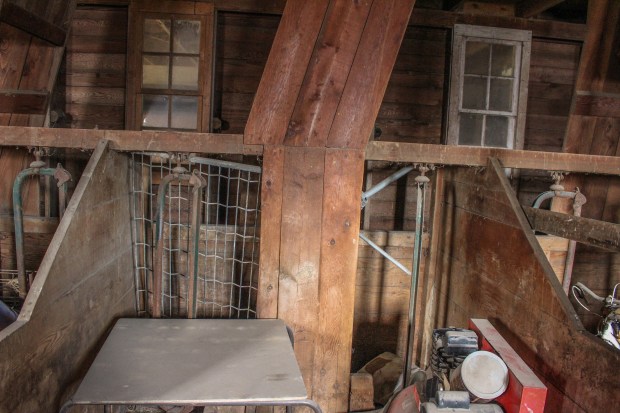
This frame shows the stalls on the western half of the main barn. Notice the tack hangers and the enclosed stalls. The open door in the center-left of this frame leads up to the loft.

_MG_8056

This frame shows the eastern half of the main barn. Notice the broken hay sling in the center-right of the frame. It hangs from the ceiling.

_MG_8065_edited

This image shows how close this barn is to its end. This post, which helps hold up the loft floor and supports the beams inside the barn, has been split, likely by a strong wind. Soon it will no longer be able to perform its function and this area of the barn will collapse.

_MG_8096

This frame shows the doorway to the loft and the doorway to the exterior of the barn on the western side.

_MG_8089

This entryway was also used as a storage area.

_MG_8098

Underneath the staircase to the loft is a small storage area.

_MG_8102

The electrical wiring inside this barn was very simple: knob-and-tube wiring.

_MG_8106

This frame shows the south-western corner of the main barn. This pen was not part of the original barn. It most likely housed pigs.

Location

52.773820, -112.202187                SW 12-44-16 W4

Characteristics

Barn Condition: Poor

Construction Date: 1913

Features: Hay hood, hay carrier, and hay track, one cupola, shed addition on northern face

Roof Shape: Gambrel

Paint: Red with white trim

Decorations: No names or dates

Roof Covering: Cedar shingles

Siding: Wooden shiplap

Foundation: Fieldstone and mortar

Vos-Roth

History

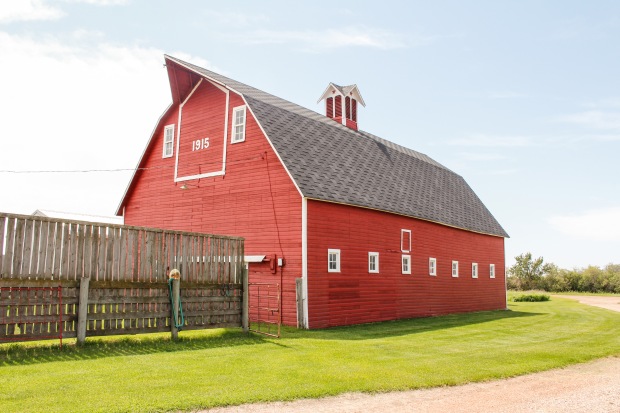
Henry and Catherine Vos (Slattery) were the original owners of this barn. They married in 1907 and came to Canada to homestead. Originally, Henry was from Minnesota and Catherine from Masonville, Iowa. Their Canadian home was eight miles from Strome, ten miles from Daysland, and two miles from Spring Lake village. Which was a community that had, at that time: a store, post office, creamery, Catholic Order of Foresters Hall, and blacksmith shop. There were 13 kids born to Henry and Catherine, 9 girls and 4 boys. Their names were: Florence, Helen, Mary, Mabel, Cecelia, Anthony, Irene (Sister Rose of Lima), Leo, Brother Alfred, Agnes, Kathleen, Henry and Genevive. The barn was built in 1915, the same year as Anthony was born.

Catherine passed away in 1954 and Henry in 1959. Leo stayed on as the farmer of the home place and married Jean (Malone) Moessner, who had five children: Trudy, Kevin, Michael, Theresa and Greg. Leo and Jean had two children of their own: Joan and Dave. Leo and Jean built a house in Daysland in 1986. Kevin helped Leo farm until 1992 when Leo slowed down. At that point, Joan (Vos) and Mark Kuziak took over farming with Joan’s brother Dave. Mark and Joan had three children: Katie, Michael, and Matthew. Leo passed away in 2013. Jean is currently living at Providence Place in Daysland. Mark did extensive work to the inside of the barn and calved out his cows in there as well.

Mark and Joan sold the home quarter to Ken and Kathy (Cail) Roth in 2004. Ken and Kathy have two children, Carley and Jordan. Ken is originally from the Daysland area and Kathy from the Camrose area. Although we do not know much about the barn’s origins, builders, etcetera, it has been suggested that the lumber may have come from the Spring Lake Village. Lou Kilmer lived directly to the West of the Roth Barn and he built other barns in the area. So one could surmise that he, and his crew, may have built the Roth barn as well.

Ken Roth built footings for support for the beams inside the barn and, in a few areas, added additional woodwork to increase the barn’s integrity. The barn is without a proper foundation, as most of the barns of its era. Instead, field-stone and mortar hold up the giant structure. The North side of the barn has been, over time, sliding off its foundation. Joan Kuziak said that Leo told a story about the barn being blown off its foundation while under construction and they had a difficult time moving it back into place. This may be the trouble area today. Ken took siding from the Zwack/Roth barn to replace some of the rotten boards on the western face and northern side of this barn. He also built a new sliding door on the western face and had the shingles replaced. Although the barn has been painted often in the past, it is due for another coat. In 2015, Ken built a chop bin to hold the chop for the Roth family’s calves. The door to this chop shed holds some names of the horses that used to work on this farm. Some of the names date back to 1917 – a lovely piece of history which can be viewed below. He also replaced the broken windows and added braces inside the cupola. This barn has a hay hood and hay carrier system. The hay slings are laying in an old chop bin today. The Roth family hopes that this barn stands for another hundred years.

Roth, Kathy. Personal communication. 26 June 2017.

Ken and Kathy Roth. Wagon Trails in the Sod: A History of the Heisler Area: Volume           II. 1st ed. Heisler: Heisler Community Historical Society, 2017, pg. 669. Print.

_MG_7973

This frame shows the eastern face and northern side of the barn.

_MG_7976

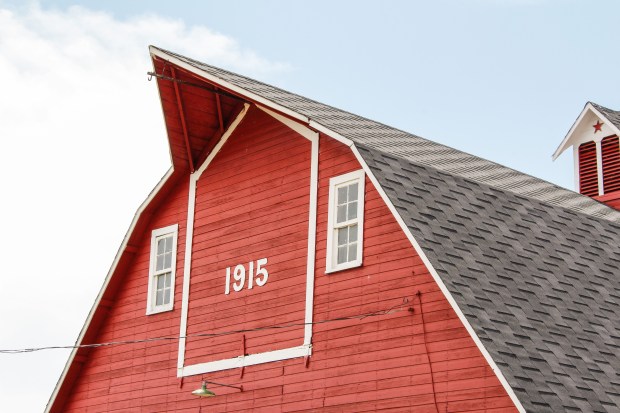
Close up of the wooden date on the eastern face of the barn and the hay hood.

_MG_7979

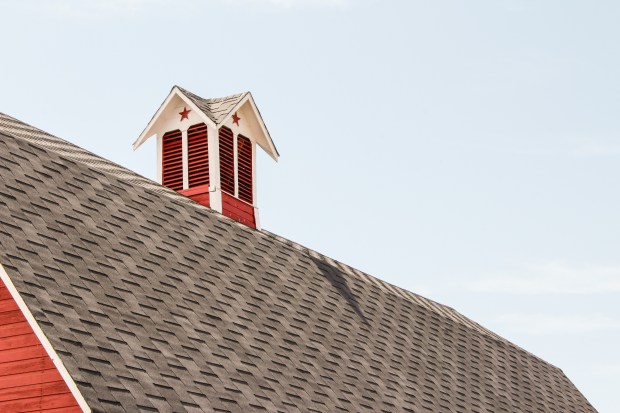
Close up of the wooden cupola.

_MG_7984

This frame shows the northern side of the barn.
_MG_7985

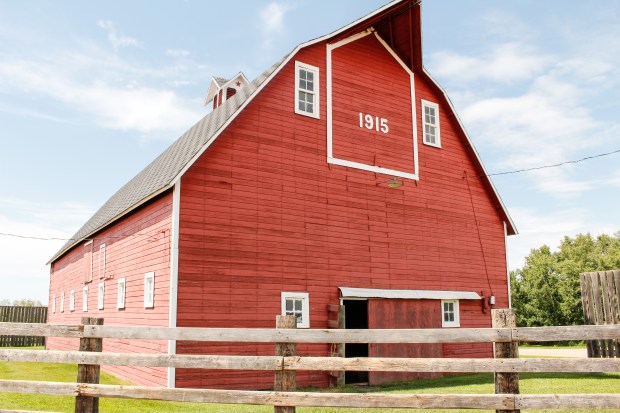
This frame is of the western face and part of the northern side of the barn.

_MG_7996

This frame shows the eastern face of the barn.

_MG_8006

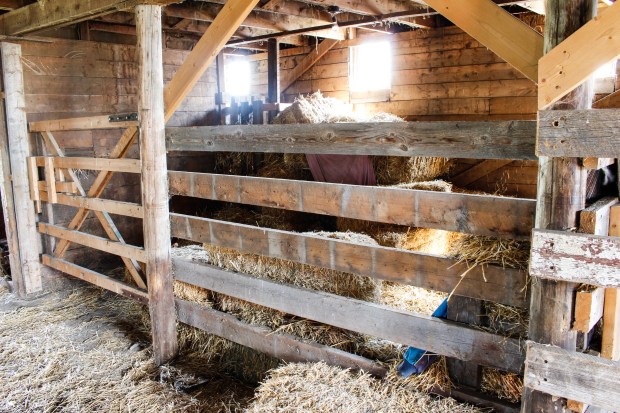
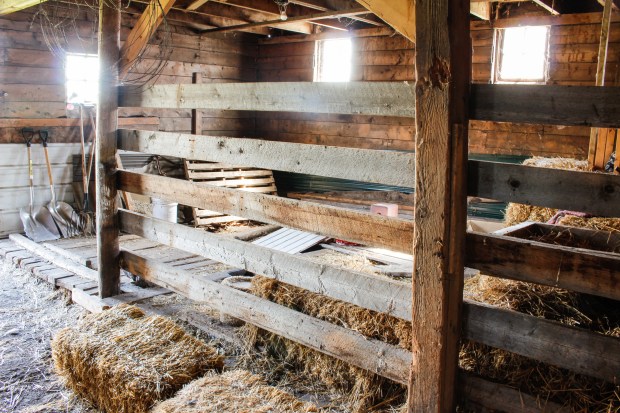
This frame is of the pens in the middle of the barn. These pens are in the northern half of the barn.
_MG_8010

This frame is a continuation of the last photo but moving towards the West.

_MG_8019

This frame shows the penned area in the southern half of the barn in the western corner.

_MG_8021

This frame is of the south-eastern corner of the barn.

_MG_8004

This frame shows the names of the horses that used to live in the barn. The names and dates were written in pencil on the back of the chop-room door.
_MG_8024

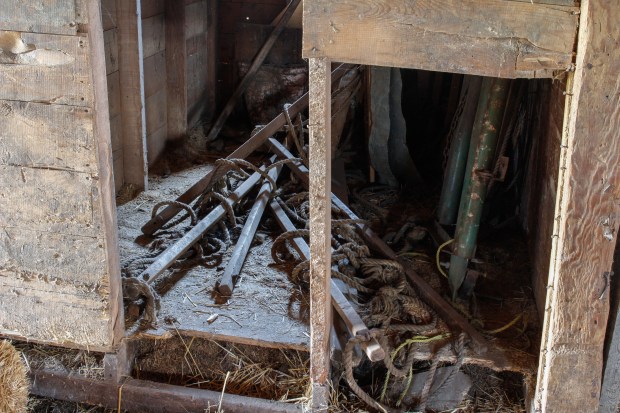
This frame is of the hay sling for this barn. It would have been used to carry loose hay from the ground into the loft of the barn using the hay carrier and hay rack.

Location

52.754462, -112.180185                            NW 31-43-15W4

Characteristics

Barn Condition: Good

Construction Date: 1915

Features: Hay hood, carrier, and track, single cupola

Roof Shape: Gambrel

Paint: Red with white trim

Decorations: The year “1915” in wooden numbers is nailed to the eastern face of the barn

Roof Covering: Asphalt shingles

Siding: Wooden shiplap

Foundation: Fieldstone and motar

Taylor-Ponto-Geier

History

The property this barn sits on was homesteaded by Hugh Taylor in 1906. Hugh was a teacher for Loveland School, a secretary for the Municipality of Wheatland, and later employed with the Union Trust Company. He commissioned the barn to be built in 1919 out of fir from British Columbia. The barn was built using frame construction and balloon framing.

Ken Ponto came to own the property starting in the late 1940s. Ken and his wife, Helen, lived here for 10 years before leaving the region. Ken poured cement in the center wing of the barn.

Leonard and Mary Geier lived on the property from the 1980s until 2013. The family used the barn to store grain in 1980. Early in their time there, they had a mixed farm and milked cows in the eastern wing of the barn. The family also had sheep from 1987-1991 but they stopped keeping livestock in the barn after 1991. From then on, the family used the barn to store bales for their cattle. A few weddings and dances were held in the barn through those 30 years that Leonard and Mary lived here.

In 2013, Dwight Geier received the barn. He had new tin put on the barn’s roof in 2016 and painted the barn in the spring of 2017.

Geier, Dwight. Personal communication. 18 Jul. 2017.

_MG_8981

This frame shows the western side and southern face of the barn. Notice the drop between the main barn and the shed roof. This is what creates the monitor roof.

IMG_8936

This frame shows the southern face and eastern side of the barn.
IMG_8937

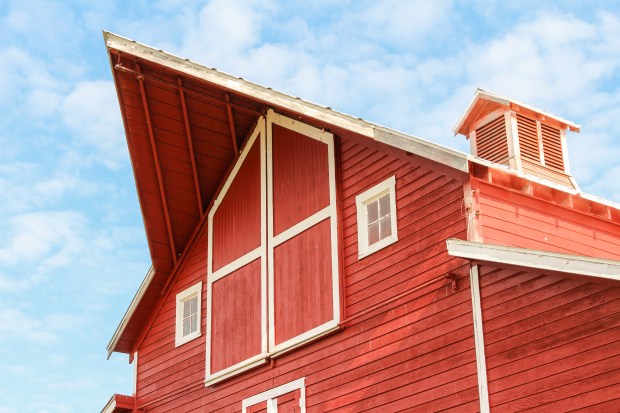
This frame is a close-up of the two wooden cupolas on the roof of the barn.

IMG_8938

This frame is a close-up of the hay hood and loft door on the southern face of the barn.
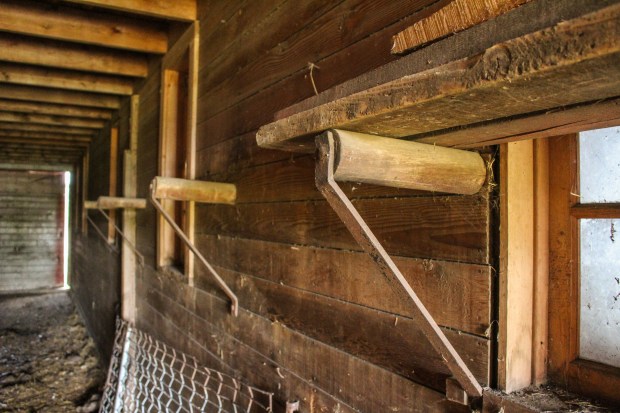
IMG_8939

This frame shows the inside of the center of the barn on the ground floor. The door in the background is the door in northern face of the barn.
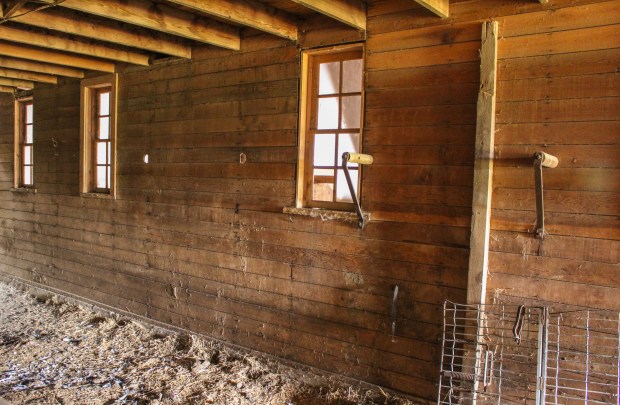
IMG_8951

These rollers were used as shelves.

IMG_8949

The eastern wall inside the center wing of the barn has windows in it.

IMG_8948

The penned area in the center of the barn was used for sheep in the late 1980s.

IMG_8944

This frame shows the chop bin along the northern wall in the center wing of the barn.

IMG_8942

This frame is a close-up of the chop bin. The lid on this box could be lifted up and grain could be scooped out. Notice the water well in the bottom-left corner of this frame.

IMG_8952

This frame shows the stalls in the eastern wing of the barn.

IMG_8965

This frame shows the North-South walk-way inside the eastern wing.

IMG_8963

These stalls would have been used for milk cows.

IMG_8958

This frame shows the hay chutes and the metal stanchions.

_MG_8975

This frame shows the inside of the western wing of the barn.

_MG_8980

This frame shows one of the hay chutes opening inside the western wing of the barn.

_MG_8979

This frame shows feed doors which open into the center wing of the barn. Feed could have been thrown down from the loft into the mangers in the western wing and then from the manger into the center wing pen.

IMG_8967

This frame shows the loft of the barn. The wall in the background is the northern face of the barn.

_MG_8974

This frame shows the cupola chute for the northern cupola.

_MG_8973

This frame shows the cupola chute for the northern cupola.

Location

52.522571, -111.922832                                       SW 14-41-14 W4

Characteristics

Barn Condition: Good

Construction Date: 1919

Features: Two cupolas

Roof Shape: Monitor

Paint: Red with white trim

Decorations: No names or dates

Roof Covering: Metal

Siding: Wooden shiplap

Foundation: Concrete

Additional History on the Property

Hugh Taylor

Hugh Taylor History

“Mr. Hugh Taylor”. Golden Echoes: A History of Galahad and District. 1st ed. Galahad:                                Galahad Historical Society, 1980. Print.

Ken Ponto


“Ponto Family History”. Golden Echoes: A History of Galahad and District. 1st                                         ed. Galahad: Galahad Historical Society, 1980. Print.

Toppe-Baker-Lewis

History

This property was homesteaded by Nels Toppe in 1906. He farmed and lived here until 1946 when he went back home to visit his native Norway. Nels got ill while there and recovered enough to come back to Alberta; however, he passed away not long after. Nels had the barn built but it is unclear if he hired any help to complete the job.

In 1946, James A. Baker purchased the property after he returned home from the war. James had been overseas with the army from 1941 to 1946. He married Alene Gosnell in November 1947 and the two lived on this property until 1960. In 1962, James’ parents moved here and this was where Mrs. Baker resided until she got ill.

Randy Lewis now owns the property and farms the surrounding land. This barn was built using frame construction and balloon framing. The eastern shed of the barn was created as a workshop. This shed must have been an addition because the shiplap siding is not continuous with the rest of the barn. The western shed has three milking stalls and a penned area. The center of the barn does not have a loft and would have been used for storage of feed. The barn was built using frame construction and balloon framing.

Lewis, Daniel. Personal communication. 13 Jul. 2017.

_MG_8867

This frame shows the southern face of the barn.

_MG_8873

This frame shows the southern face and eastern side of the barn.

_MG_8876

This frame shows the eastern side of the barn’s roof.

_MG_8879

This frame shows the northern face of the barn.

_MG_8882

This frame shows the northern face and western side of the barn.

_MG_8914

This frame shows the western side and southern face of the barn.

_MG_8894

This frame is of the inside of the northern face of the barn.

_MG_8893

The doorway in the center-right of this frame passes into the eastern shed of the barn.

_MG_8895

It is unknown whether this barn ever had a loft. If it did, it was removed long ago. The feed would have been tossed through the wooden flaps in the center of this frame to the mangers on the other side.

_MG_8892

This is a close-up of the flaps used to toss feed into the mangers on the other side.

_MG_8900

This frame shows the stalls in the western shed of the barn. Notice the wooden stanchions.

_MG_8901

This frame shows the work bench in the eastern shed of the barn.

_MG_8886

There is a hexagonal grain bin to the North of the barn.

Location

52.626887, -111.751645                                        SW 24-42-13 W4

Characteristics

Barn Condition: Fair

Construction Date: 1925

Features: None

Roof Shape: Bonnet

Paint: None

Decorations: No names or dates

Roof Covering: Cedar shingles

Siding: Wooden shiplap

Foundation: Concrete

Additional History on the Property

This homestead map shows many original settlers in the surrounding area. Some of their barns still stand and some of those are featured in this database.

Homestead Map - Merna - As the Wheel Turns

“Homestead Map.” As the Wheel Turns: A History of Merna and District. 1st ed.                                 Sedgewick: The Community Press, 1971. Print.

Nels Topy

“Nels Toppe”. As the Wheel Turns: A History of Merna and District. 1st ed. Sedgewick:                     The Community Press, 1971. Print.

Baker Family

“Mr. and Mrs. Alan A. Baker and family”. As the Wheel Turns: A History of Merna and                     District. 1st ed. Sedgewick: The Community Press, 1971. Print.

“James A. Baker”. Sedgewick Sentinel: A History of Sedgewick and Surrounding                                    Districts. 1st Ed. Sedgewick: Sedgewick Historical Society, 1982. Print

Erickson-Li

History

This land was originally owned by Sam and Clara Erickson. Sam and his six brothers: Nels, Chris, Eric, Lars, Ted, and Alberta, and two sisters: Ida and Tilda, came to the Killam area in 1905 from Westbrook, Minnesota. Sam and Clara had five children: Rolf, Harold, Ester, Wilfred, and Walter. Walter Erickson farmed the original homestead starting in 1947. The barn was built using frame construction and platform framing.

Comso Li moved the acreage in August of 2012. Upon arrival, they cleaned out the loft, created a cold room, covered some of the walls in plywood, and painted the eastern face red. They have used the barn for storage and as a work space since they arrived.

Li, Cosmo. Personal communication. 12 Jul. 2017.

_MG_8750

This frame shows the eastern face of the barn.

_MG_8755

This frame shows the eastern face and southern side of the barn.

_MG_8762

This frame shows the southern side and western face of the barn.

_MG_8764

This frame shows part of the western face and northern side of the barn.
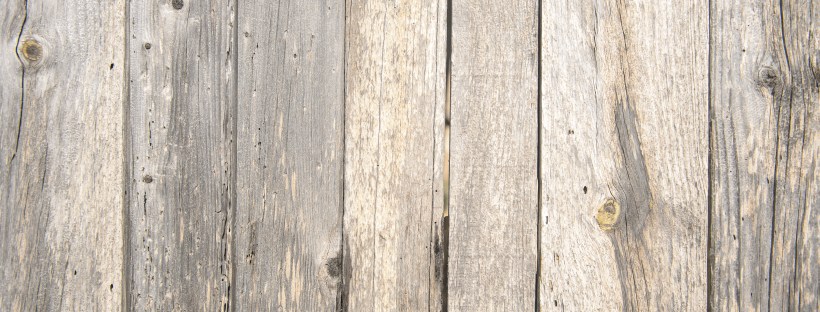
_MG_8756

This frame shows the northern side and the eastern face of the barn.
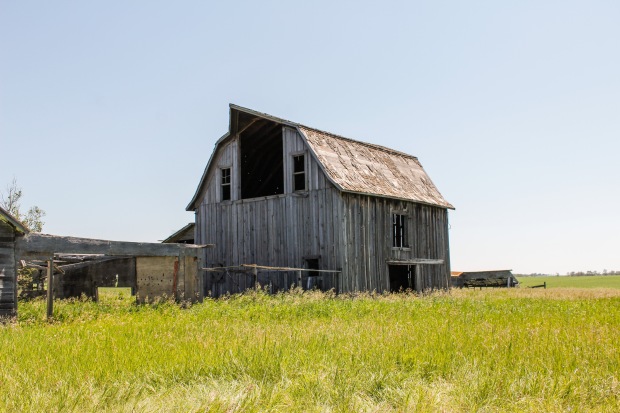
_MG_8767

This frame shows the inside of the door on the western face of the barn.

_MG_8769

This frame shows the cold room that the Li family made in the northern half of the barn.
_MG_8773

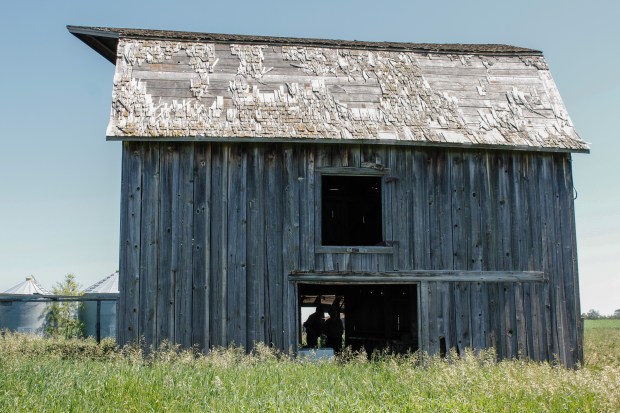
This frame shows the staircase to the loft in the north-eastern corner of the barn. Notice the few inches that the added wooden bracing creates on the staircase.
_MG_8775

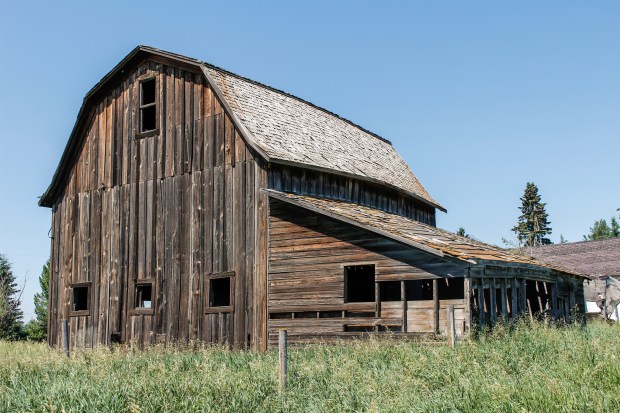
This frame shows the chalk name written on the beam in the middle of the barn on the southern side of the barn.
_MG_8777

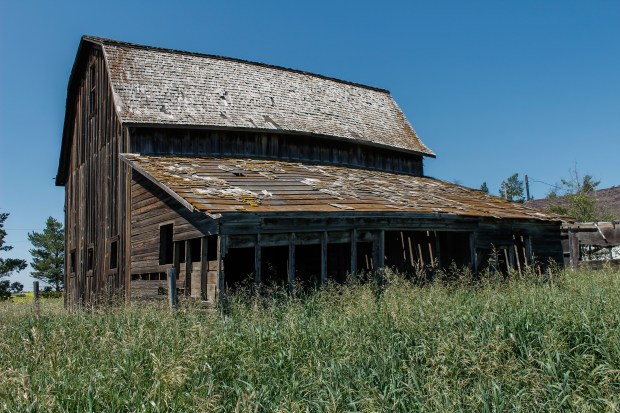
This frame shows another name written in chalk on the beam supporting the southern half of the loft floor.

Location

52.769155, -111.892505                                     SE 12-44-14-W4

Characteristics

Barn Condition: Good

Construction Date: 1937

Features: Hay hood, hay track, hay carrier

Roof Shape: Gambrel

Paint: Red with white trim

Decorations: No names of dates

Roof Covering: Metal

Siding: Wooden shiplap

Foundation: Cement

Lewis

History

This property was homesteaded by P.E. (Rollie) Maddox in 1905. Mr. Maddox was the nephew of Mrs. James A. Colvin. Unfortunately, Mr. Maddox died during a drive home from the coal mines one winter between 1906 and 1913.

After her husband’s death, Mrs. Maddox sold the property to Mrs. R.J. Woodhill and Mr. William Wood. Mrs. Woodhill was well-known in the Lawn Hill area for providing sweets to children at all community functions. Mr. Wood and Mrs. Woodhill were not married, they simply wanted to farm in Western Canada and decided to take up the challenge together. The pair of them cleared some 200 acres of push and planted the large evergreens on the home quarter.

In the spring of 1948, Mr. and Mrs. Warren Anderson bought the property. Mrs. Helena (Lena) Anderson was the sister of Vernon Simpson, whose barn is also featured in this database.

In about 1955, Daniel and Gertrude Lewis bought the property with Mamie Lewis. The Daniel Lewis family lived here until 1982, raising their four sons. Mamie Lewis’ home barn is also featured in this database. The property the following barn sits on now belongs to Randy Lewis.

This barn is thought to have been built by C.P. (Carl) Colvin using frame construction and platform framing. Early in the life of the barn, the barn housed horses, milk cows, and pigs. The barn had three large stalls on either side of the main walkway. An addition was added to the eastern side in 1929 to create more pens and a storage area. Slowly, horses were no longer needed and cattle were kept out in the pasture. This barn was last used by Daniel Lewis to house the family’s pigs and gamefowl.

Lewis, Daniel. Personal communication. 13 Jul. 2017.

_MG_8805

This frame shows the northern face and western side of the barn.
_MG_8809

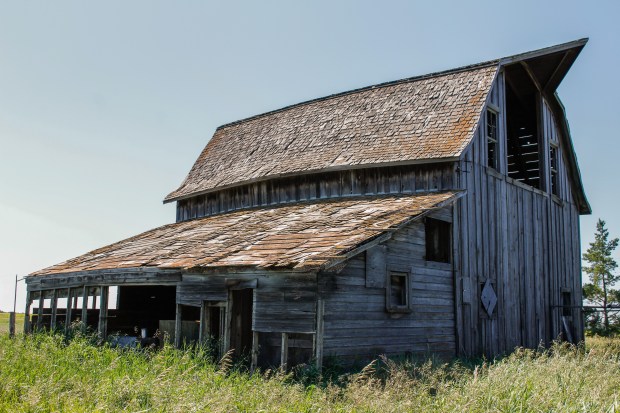
This frame is a close-up of the loft door and hay hood. Notice that the wood for the main barn is vertical. This siding is called board-and-batten.

_MG_8812

This frame shows the western side of the barn and roof.

_MG_8832

This frame shows the southern face of the barn. The platform for the frame starts where the split exists between the batten siding in the main barn.
_MG_8829

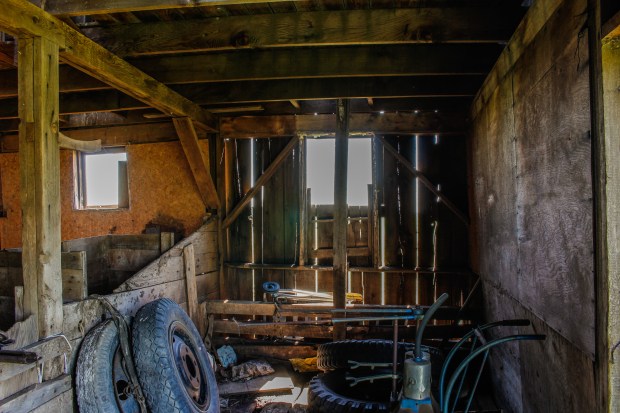
This frame shows part of the southern face and eastern side of the barn. The main barn had a shed roof addition installed in 1926.
_MG_8827

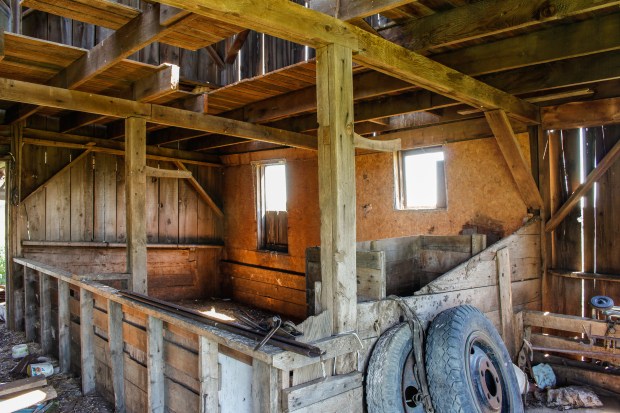
This frame shows the eastern side and northern face of the barn and addition.

_MG_8816

This frame shows the stall that exists in the south-western corner of the main barn. It is the only stall that is still intact as the rest of the barn was renovated for pigs and chickens.
_MG_8815

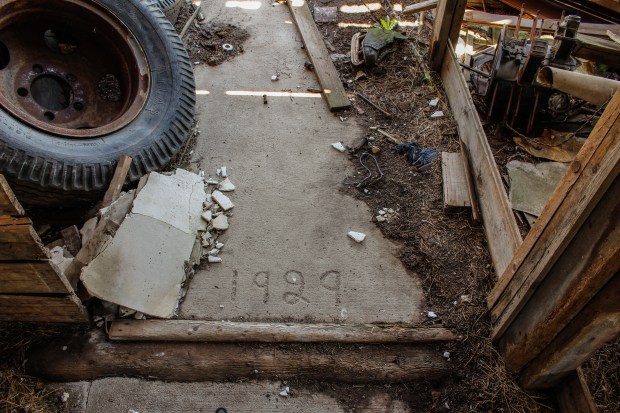
This frame shows one of the pig pens inside the main barn. The south-eastern corner of the main barn is visible.
_MG_8818

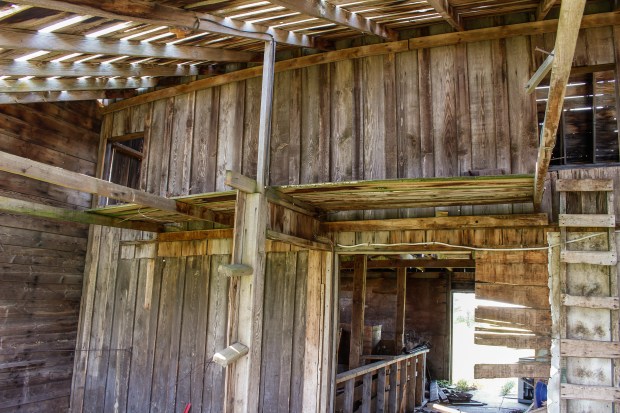
This frame shows the cement floor inside the shed addition. The year “1929” is written into the cement on the western side of the floor of the addition.

_MG_8824

This frame shows the south-western corner of the shed addition. The ladder to the loft is visible in the right aspect of this frame.

_MG_8844

This frame is of the southern face of the barn’s loft.

_MG_8839

This frame shows the southern face and western half of the barn’s roof. Notice the transition area between the walls and the roof. The platform in this barn is much higher than in most other barns. This loft has more space than if it would have been built with a lower platform.

_MG_8840

This frame is of the western half of the barns roof.

_MG_8854

This frame is of the western half and northern face of the barn.
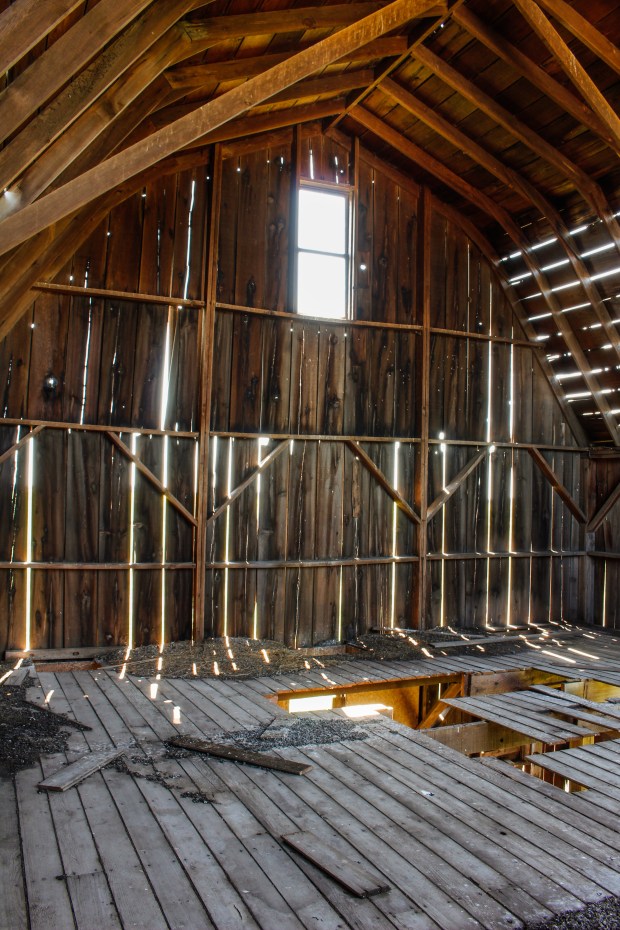
_MG_8856

This frame shows the southern half of the loft floor and ground-floor stall.

_MG_8861

This frame is of the entry to the loft. The ladder up into the loft leads to the south-east cut-out, which is the whole in the right portion of this frame.

_MG_8835

This frame is of the north-eastern storage area in the shed addition.

Location

52.666698, -111.755429                                        NW 36-42-13 W4

Characteristics

Barn Condition: Poor

Construction Date: Pre 1920

Features: Hay hood

Roof Shape: Gambrel

Paint: None

Decorations: No names or dates

Roof Covering: Wooden shingles

Siding: Board-and-batten

Foundation: Cement

Additional History on the Property

Mr. William Wood and Mrs. R.J. Woodhill Story

Wood, Rosa. “The William Wood Story”. Sedgewick Sentinel: A History of Sedgewick and             Surrounding Districts. 1st Ed. Sedgewick: Sedgewick Historical Society, 1982. Print

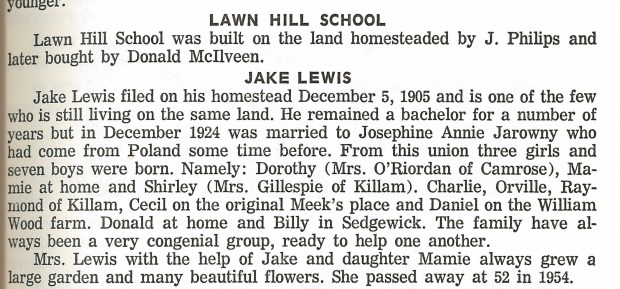
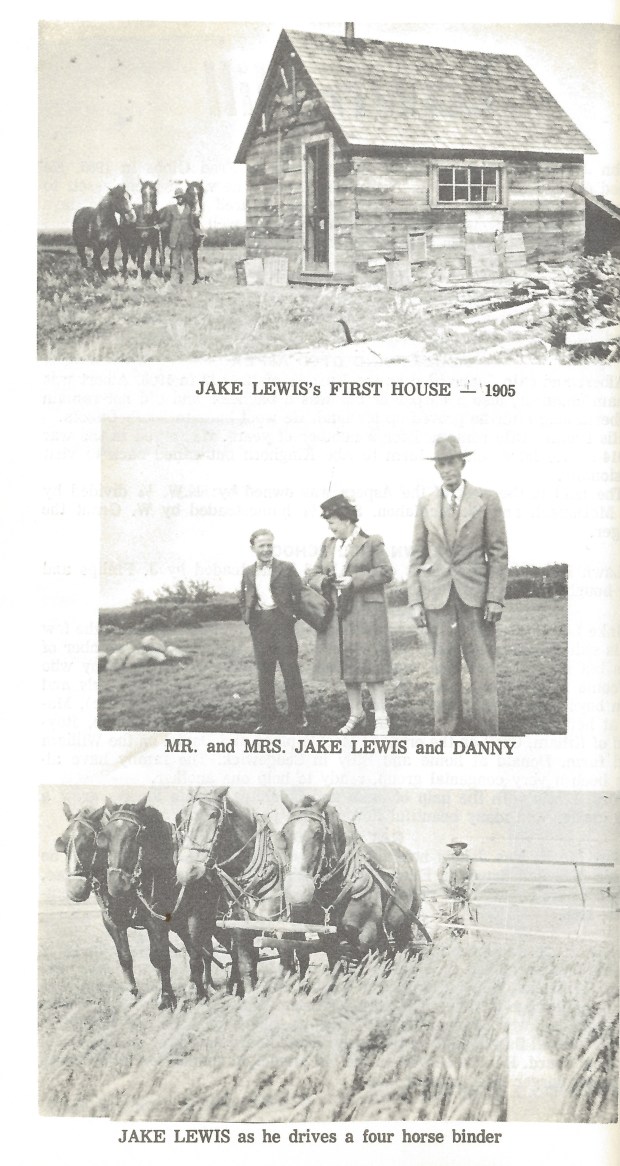
Jake Lewis Family

lewis-1.jpgLewis 2

“Jake Lewis”. As the Wheel Turns: A History of Merna and District. 1st ed. Sedgewick:                         The Community Press, 1971. Print.

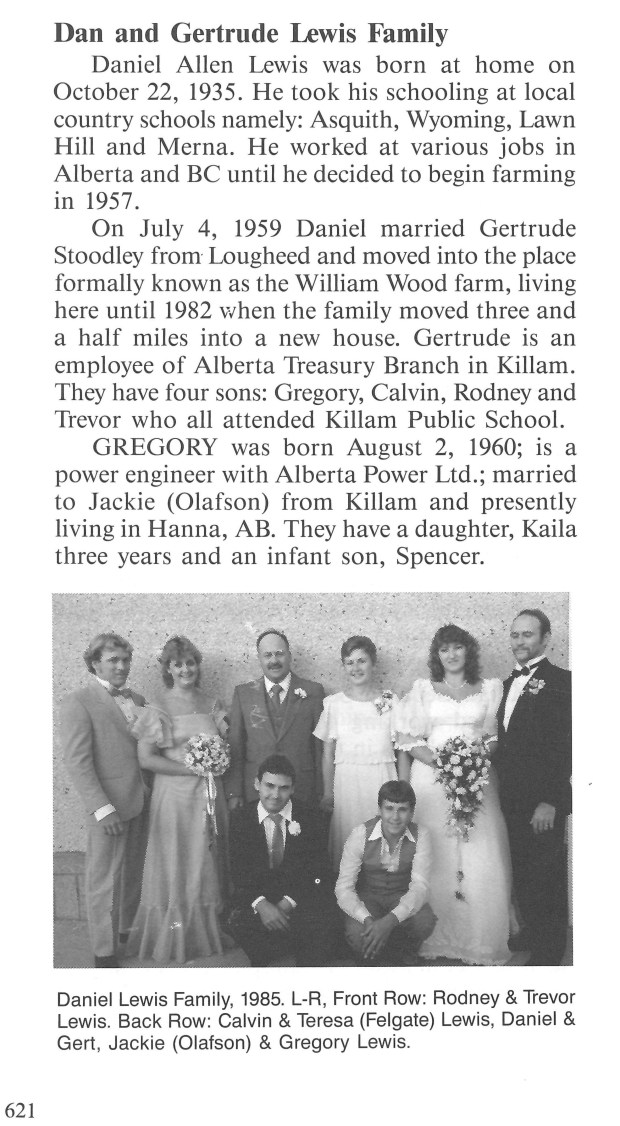
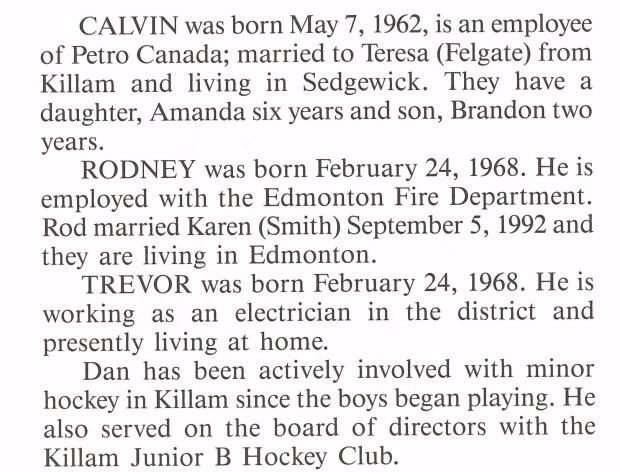
Daniel and Gertrude Lewis

daniel-lewis-family-history-1-e1500313462823.jpgdaniel-lewis-family-history-2-e1500313740926.jpg

“Dan and Gertrude Lewis Family”. The Pleasant Country: Volume One Killam and District                          1903-1993. 1st ed. Killam: Killam Historical Society, 1993. Print.

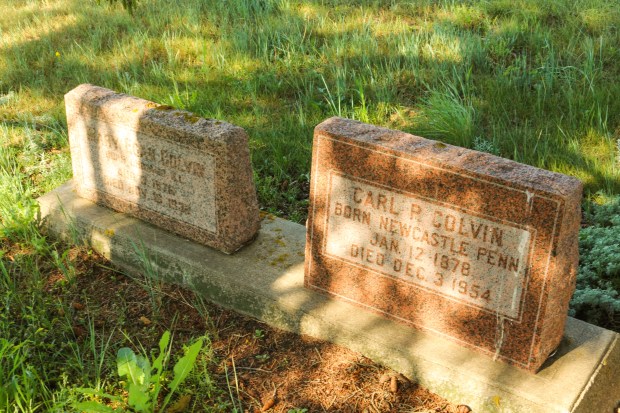
C.P. Colvin

“Carl P. Colvin”. As the Wheel Turns: A History of Merna and District. 1st ed. Sedgewick:                     The Community Press, 1971. Print.

“James A. Colvin”. Sedgewick Sentinel: A History of Sedgewick and Surrounding                                    Districts. 1st Ed. Sedgewick: Sedgewick Historical Society, 1982. Print

IMG_0205

Grave of C.P. Colvin in Merna United Church cemetery.

You can learn even more about all of the individuals mentioned in the above passages in the “Sedgewick Sentinel” and “As the Wheel Turns” – two of our local history books.

Inglis-Roggensack-Cheram

History

The barn pictured below is the second barn that has stood on this property. The first barn was constructed on the request of John Inglis who first lived on this land. The barn was built using frame construction and balloon framing. In 1947, Glen and Myrtle Roggensack bought the property and the original barn from the Inglis family.

In July of 1951, there was a fire which destroyed the original barn. The afternoon of the fire, all the milk cows were out in the pasture except for the Brown Swiss bull and a family pigs, which were still in the barn. When Glen Roggensack noticed the flames, he had enough time to release the bull and most of the pigs before the fire engulfed the barn. Neighbors from all around came to try to put the blaze out but failed because they did not have sufficient equipment. However, that same year, the Roggensack family had a new barn built with the help of the Groveland District families.
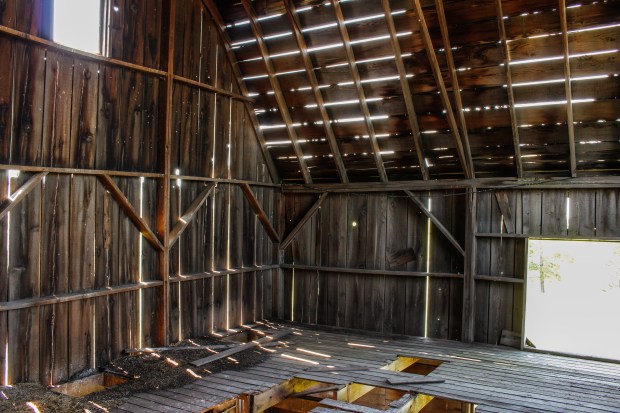
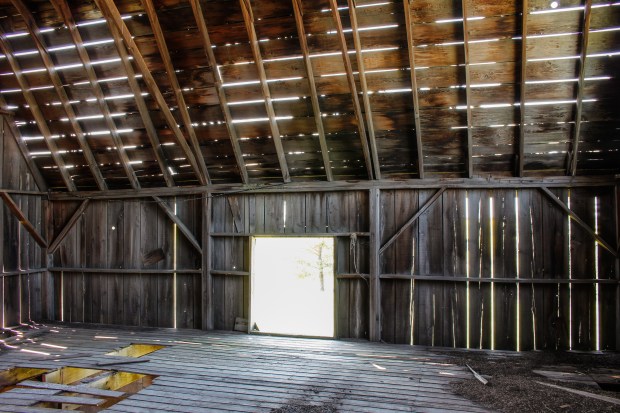
The Roggensack’s neighbours helped seventeen-year-old Noel Guenard, then of Hardisty, build a new barn before the snow hit the ground. There was a grand dance after the raising of the new barn. The family hauled Myrtle’s piano down from the Roggensack’s house for the event. Myrtle played the piano while John Heron played the fiddle, Cliff Ness played the accordion, Conrad Ingvaldson played the drums, and Angus Grieve called the dance.

The Roggensack family used the barn for milk cows and pigs in the time that they owned it. The new barn does not have a hay hood or hay carrier because the family never stored loose hay in the new barn. At the time of construction of the barn, farmers had square balers and bales are much easier to handle than loose hay.

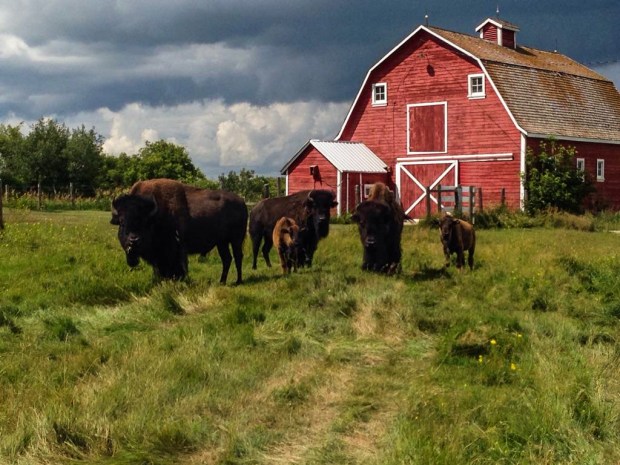
In 1975, Patrica Cherum and Bob Roggensack began living on the property with Glen and Myrtle. Glen and Myrtle moved away in 1979 and currently the property is owned by Pat. Very few animals were kept in the barn in recent years. From 1979-1982 the family had a few pigs and one cow but the livestock were gone by 1982. Since 2004, the barn has been used to store hay for the small bison herd on the property. In August 2006, the barn was repainted red. The barn was built using frame construction and platform framing.

Cheram, Patricia. Personal communication. 13 Jul. 2017

Tanton, Helen. Personal communication. 13 Jul. 2017

_MG_8778

This frame shows the southern face and western side of the barn. Notice the bison in the center of the frame.

_MG_8779

A close up of the bison.

_MG_8780

This frame shows the southern face and western side of the barn. Notice the addition on the southern face of the barn. It is a milk room.

_MG_8783

This frame shows the southern face of the barn.

_MG_8788

This frame shows the southern face and eastern side of the barn.

_MG_8790

This frame is a close up of the barn’s cupola. The weather vane was reinstalled when the barn was painted in 2006.

_MG_8793

This frame shows the eastern side and northern face of the barn.

_MG_8795

This frame shows the northern face of the barn. Notice that this barn does not have a hay hood.

_MG_8799

This frame shows the southern face and western side of the barn.

_MG_8801

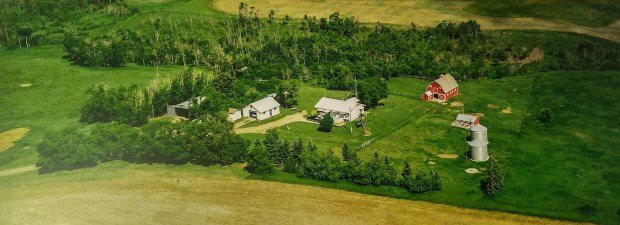
The barn is situated on top of a brilliant hill.

Aerial Photo 1 - circa 2007

This frame is an aerial photo of the whole farmyard.

Buffalo 1

This frame is a close up of the bison in their pen next to the barn.

Buffalo 2

This frame shows the bison and the barn.

Location

52.773791, -111.464237                                    SE 12-44-11 W4

Characteristics

Barn Condition: Good

Construction Date: 1951

Features: One cupola

Roof Shape: Gambrel

Paint: Red with white trim

Decorations: No names or dates

Roof Covering: Cedar shingles

Siding: Wooden shiplap

Foundation: Cement


Brennan

History

This barn was built in the 1920s by Norman (N.A.) Brennan. N.A. Brennan came to the area in 1906 and bought this property. He married Mary Wynes in Ontario on February 2, 1915 on a trip back East in the winter of 1914-15. They had four children: Alan, Lorne, Marrion, and Kenneth. Norman used the barn for horses and it was said that at one time he had about 30 horses in the barn. This was accomplished by adding the lean-to shed onto the southern side of the barn.

The barn was then owned by Alan (A.W.) Brennan. In 1941, Alan married Dorthy Johnson and they had four children: Keith, James, Stanley, and Carol. Alan used the barn for mixed livestock early on and as a granary in the later years.

Jim (James) Brennan purchased the property the barn sits on in 1973 from his father A.W. Brennan. Jim used the barn to store grain. However, in the 1980s, he renovated the barn and turned the majority of the ground floor into a heated garage. The eastern few feet of the barn were left untouched and livestock were kept here at various points. The garage area was lined with two-by-sixes for insulation and a cement floor was poured. This barn was built using frame construction and balloon framing.

Brennan, Jim. Personal communication. 27 June 2017.

_MG_8127

This frame shows the northern side and western face of the barn.

_MG_8131

This frame shows the western face of the barn and shed addition. The main barn was renovated into a garage in the 1980s.

_MG_8153

This frame is a close-up of the shed addition from the West.

_MG_8150

This frame is of the southern half of the barn. The wooden beams on the roof of the main barn are used to mount steel cables inside the barn.

_MG_8146

This frame shows the addition on the southern side of the barn. This area was used to house livestock until the Brennan family stopped raisiing livestock.

_MG_8135

This frame is of the eastern face of the barn and the northern side of the main barn. The eastern stalls in the main barn were left as stalls after the barn was made into a garage.

_MG_8162

This frame shows the northern half of the barn’s roof. The aspen trees are being used to hold the barn’s roof up. However, the steel cables are much more effective.

_MG_8159

This is of the eastern face of the barn. Notice the steel cables which transverse the space between the rafters,

_MG_8157

This frame is of the southern half of the barn’s roof. Notice the doors on the southern side. These wooden boards would have been used to cover the hay chutes going down to the original mangers,

_MG_8158

This frame shows the south-western corner of the barn’s loft.

_MG_8163

This frame shows the loft door on the western face of the barn. Notice the hay carrier and hay track in the peak of the roof.

Location

52.528748, -112.186543                             NW 13-41-16 W4

Characteristics

Barn Condition: Good

Construction Date: 1920s

Features: Hay hood, hay carrier, and hay track

Roof Shape: Arched

Paint: Red with white trim

Decorations: No names or dates

Roof Covering: Cedar shingles

Siding: Wooden drop siding

Foundation: Cement

Additional History on the Property


Brennan, Alan. “Norman A. Brennan (1886-1973)” Yesterday and Years Ago: A History of                 Forestburg and District. 1st ed. Forestburg: Forestburg and District Historical                    Book Committee, 1983. Print.

Demonstration Farms – Sedgewick, Alberta

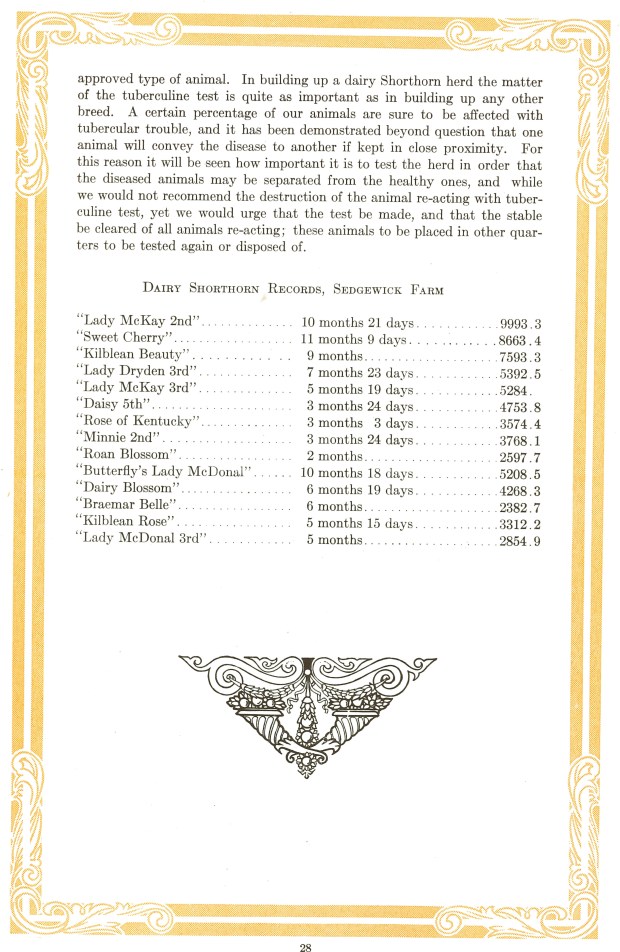
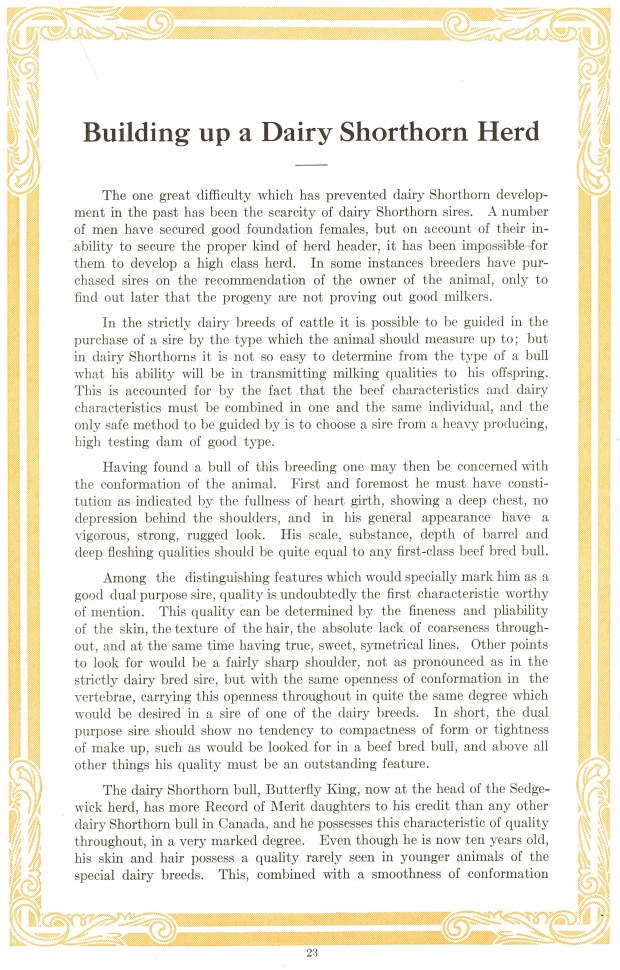
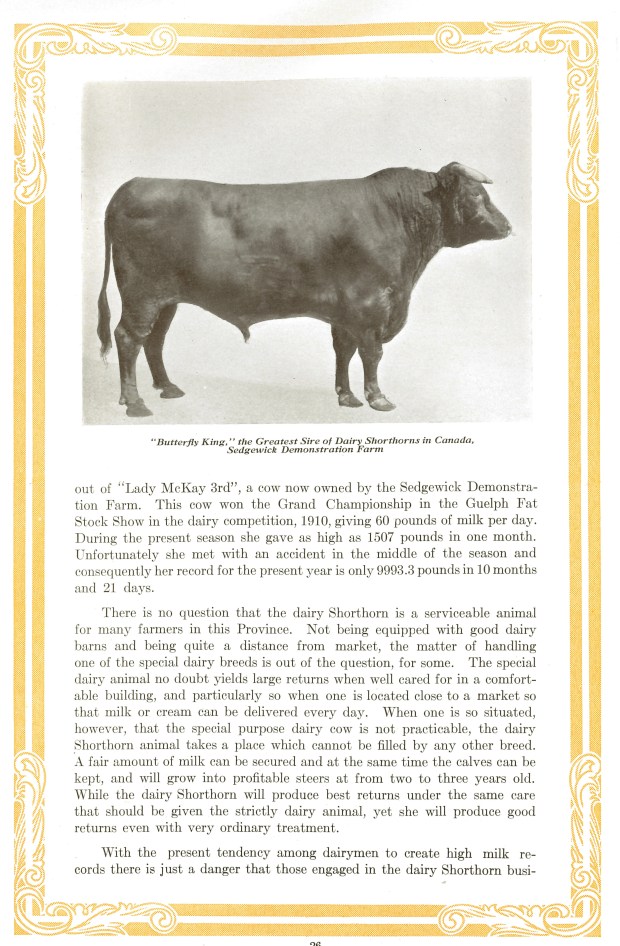
Demonstration Farms were erected in the early 1910s as a precursor to Schools of Agriculture. In 1911, the Sedgewick Demonstration Farm was established and by 1913 it was thriving. Please read the following passages for more on the Demonstration Farms and on the farm in Sedgewick, Alberta. As you look through the images, you will notice how similar the barns in their original locations still are to the ones standing on the Billows/Sarasin and Wesley properties.

Black, Dave. “Demonstration Farm at Sedgewick”. Sedgewick Sentinel: A History of                             Sedgewick and Surrounding Districts. 1st Ed. Sedgewick: Sedgewick                                        Historical Society, 1982. Print


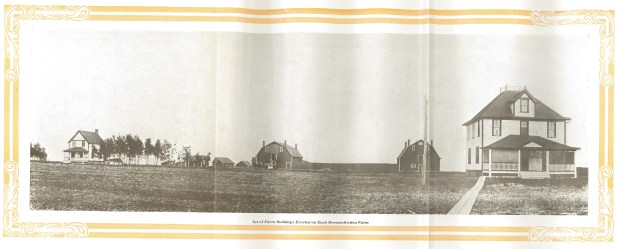
“Set of Farm Buildings Erected on Each Demonstration Farm”.

The house on the far right of the following frame is the manager’s house. It currently still stands in Sedgewick on the south-eastern side of town.

The barn just to the left of the manager’s house in the photo was the horse barn. It has three split doors on the one side and 5 split doors on the other. These doors line up with stalls inside the barn. The horse barn was moved to a lot on the western edge of Sedgewick by Elmer and Clara Billows. You can see pictures of that barn and read about its history by clicking here. The house on the far left in the following image was the cook’s house. It was also moved by Elmer and Clara to their home.

The other barn in the following frame was the cow barn. It is wider than the horse barn and has windows on the sides instead of doors. It was moved by Frank and Cecilia Wesley to an area South of Strome, Alberta. You can see pictures of that barn and read about its history by clicking here.

Demonstration Farm 14

Alberta. Dept. of Agriculture. Report Of Demonstration Farms And Schools                                          Of Agriculture Of The Province Of Alberta. 1st ed. Edmonton, Alta: Alberta Dept.                of Agriculture, 1913. Print.

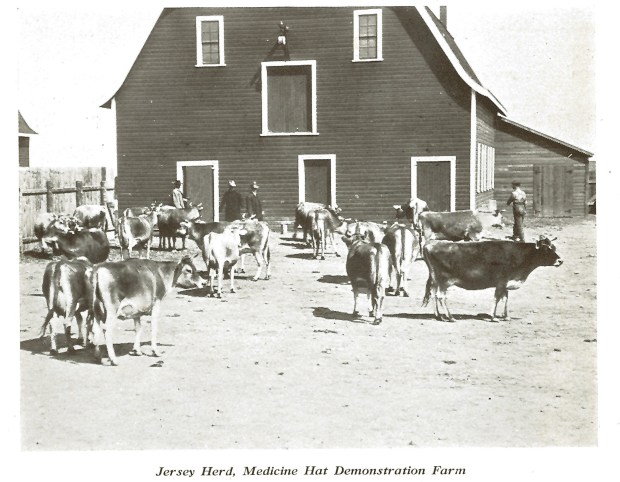
Additionally, the following image is of a herd of Jersey cows in front of the cattle barn at the Demonstration Farm in Medicine Hat, Alberta. It is interesting to compare these past and present photos of the barns.

Demonstration Farm Barn 1

Alberta. Dept. of Agriculture. Report Of Demonstration Farms And Schools                                          Of Agriculture Of The Province Of Alberta. 1st ed. Edmonton, Alta: Alberta Dept.                of Agriculture, 1913. Print.


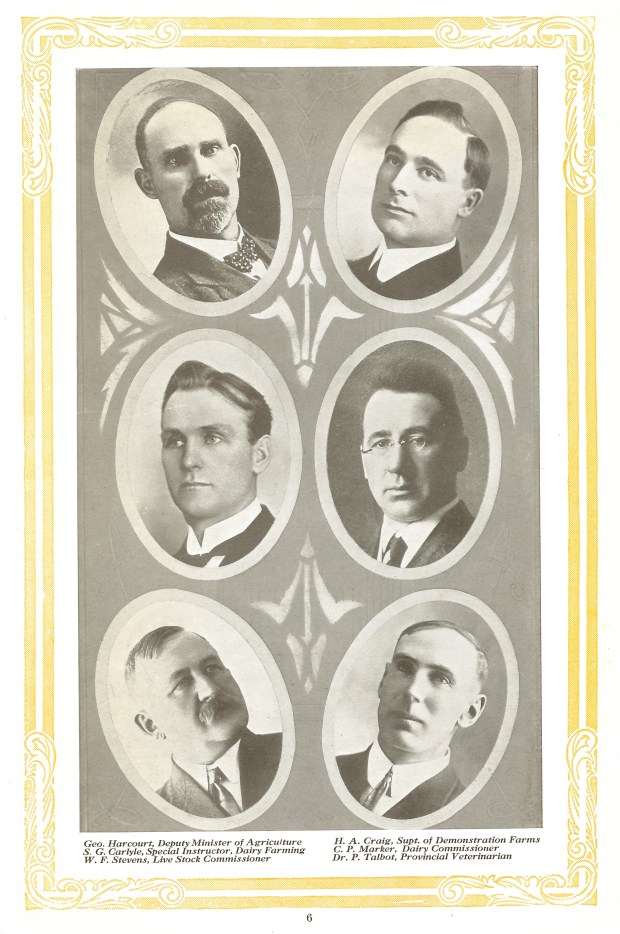
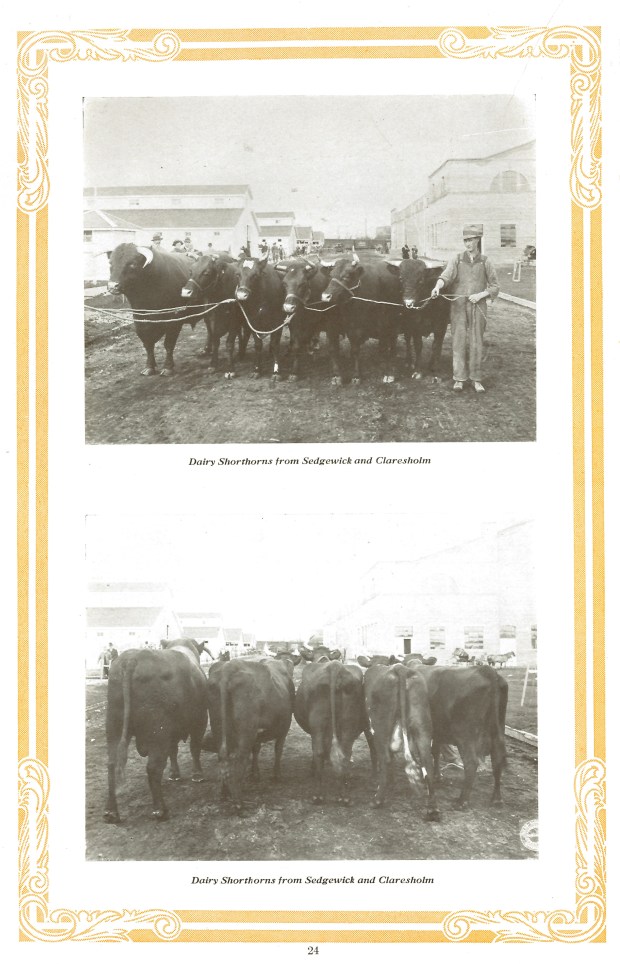
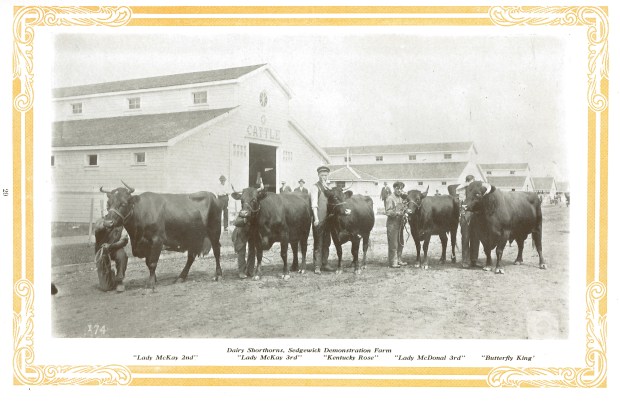
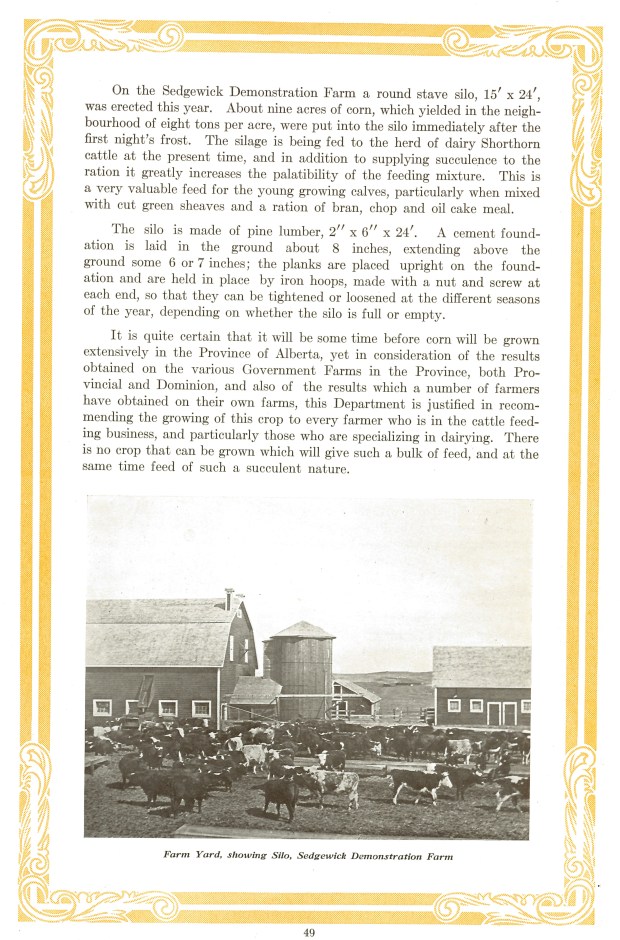
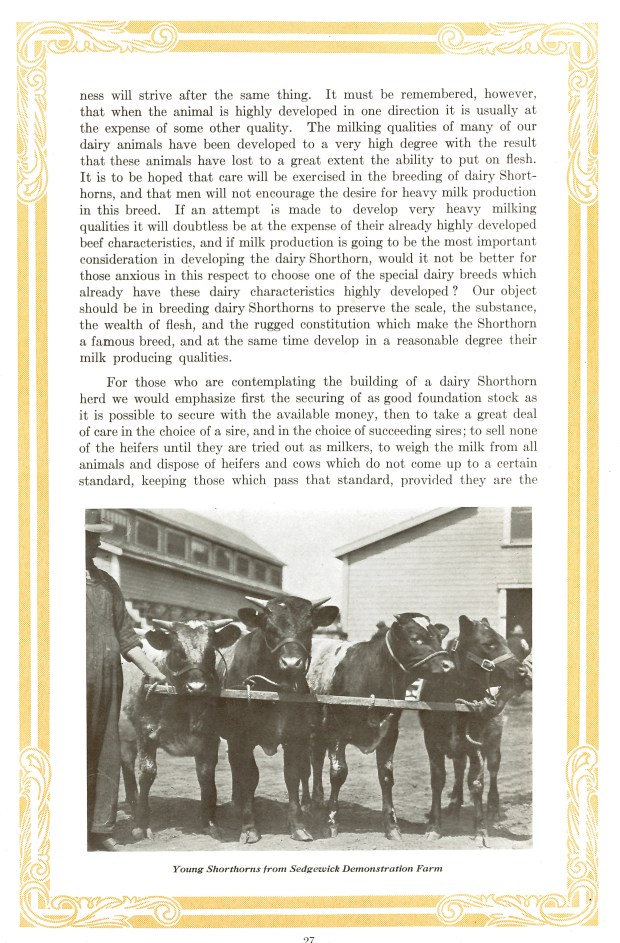
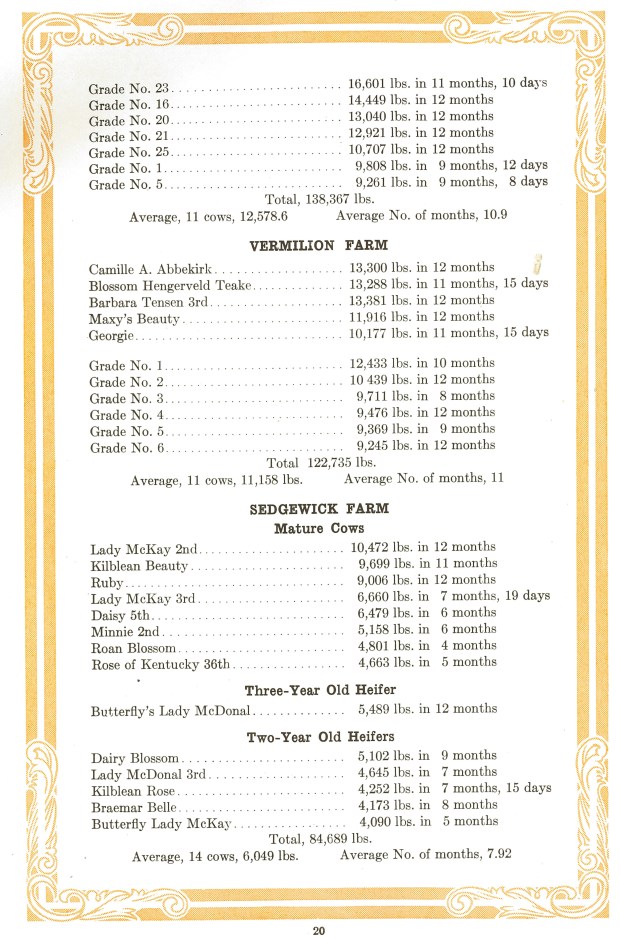
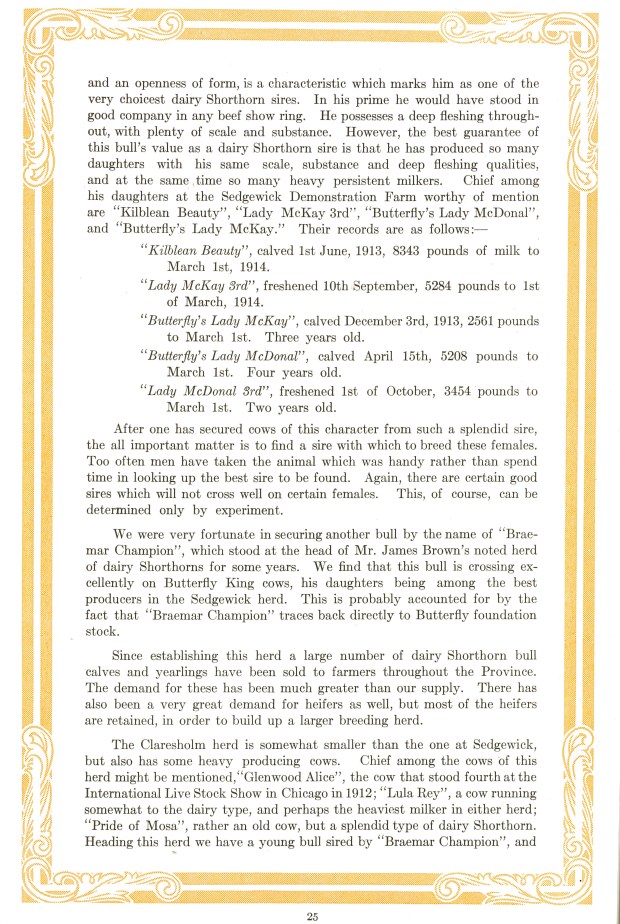
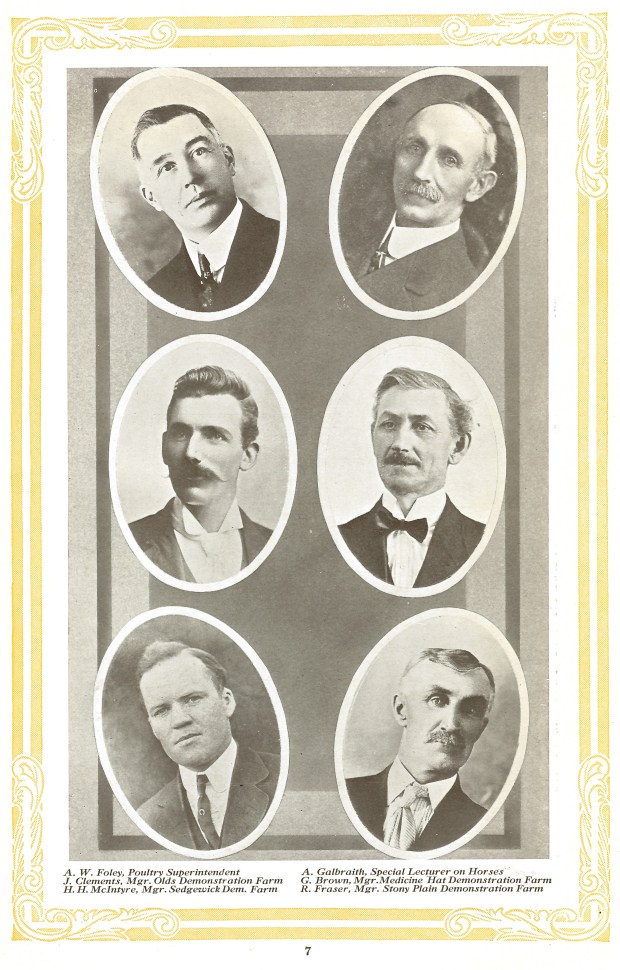
Below are some excerpts from a report done by the Province of Alberta on Demonstration Farms and Schools of Agriculture.

*As with all tiled images, please click on the first image to view all images in a slideshow. If you find the image hard to read please zoom in on the image or open the image in a new tab.

Demonstration Farm 3Demonstration Farm 7Demonstration Farm 12Demonstration Farm 13Demonstration Farm 10Demonstration Farm 5Demonstration Farm 8Demonstration Farm 4Demonstration Farm 11Demonstration Farm 6Demonstration Farm 9

Alberta. Dept. of Agriculture. Report Of Demonstration Farms And Schools                                          Of Agriculture Of The Province Of Alberta. 1st ed. Edmonton, Alta: Alberta Dept.                of Agriculture, 1913. Print.