Weller

History

Jerry Weller’s grandfather moved to the property in 1907 and built the barn around 1915. The story goes that Jerry’s grandfather built the barn himself even before the family’s first house was built. The original layout of this barn was almost identical to the Feddema barn. After recent renovations, this barn got a new lease on life.

Originally, the east side of the barn housed dairy cattle from the time when Jerry was young until 1974. The family sold their cream to the creamery in Daysland. The Wellers used to store loose hay in the barn in the early 1960s before they got a bale elevator for square hay bales. This barn did not originally have an actual loft. Loose hay was instead stored in the open-air walkway between the two sides of the barn. The west side of the barn housed the family’s draft horses up until machinery came to the farm in the late 1950s. Around the early 1970s, the family restored the foundation on the west side of the barn. They also renovated the western side of the barn for pigs.

The Weller’s barn used to have wrought iron stanchions and stalls for the cattle. Most of these are now long gone but they were quite a sight to behold even when the barn was new. Wrought iron was beautiful but it was also a luxury few could afford at the time of construction. Most historical barns have a hay carrier for transporting loose hay into the barn. However, the Weller barn also had a litter carrier to aid in cleaning the barn of manure. Louden litter carriers were the first litter carrier even patented.

The east side of the barn had its’ foundation restored in 1995. That was the year the family had most of the barn renovated on the inside and when metal roofing/siding was installed. It was also at this point that the Wellers had the eastern side of the barn renovated. These renovations turned the barn into a garage for tools and a butchery. Even today, the Wellers use the eastern half of the barn as a station to butcher pigs for the Heisler Elk’s Club. The family stopped raising pigs in 2005.

Weller, Jerry. Personal communication. 24 Jun. 2016.

IMG_2850

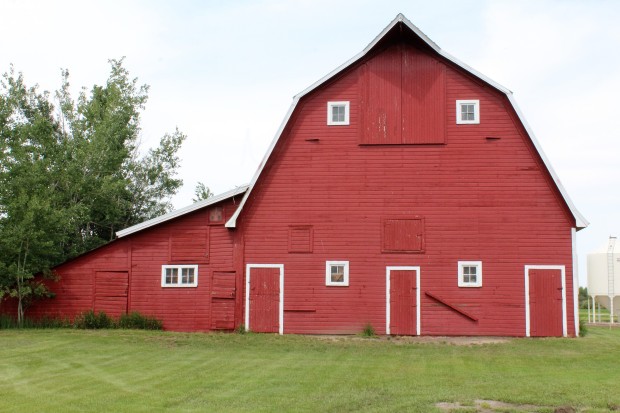
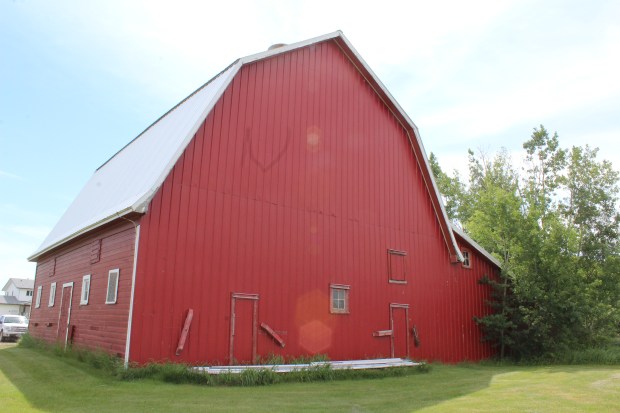
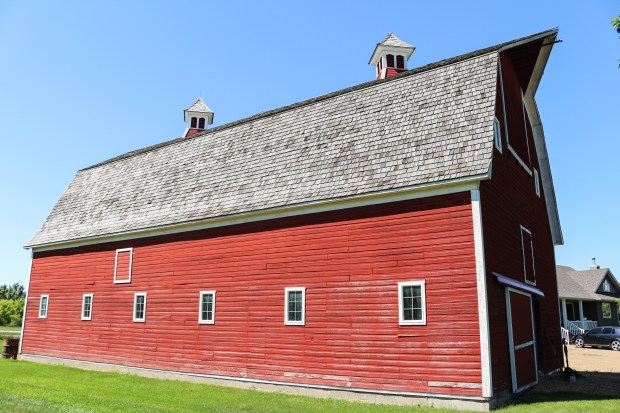
This frame shows the western broad side and the northern face of the barn. All of the stall windows and doors that used to open to the outside were covered up after the barn was renovated in 1995.
IMG_2852

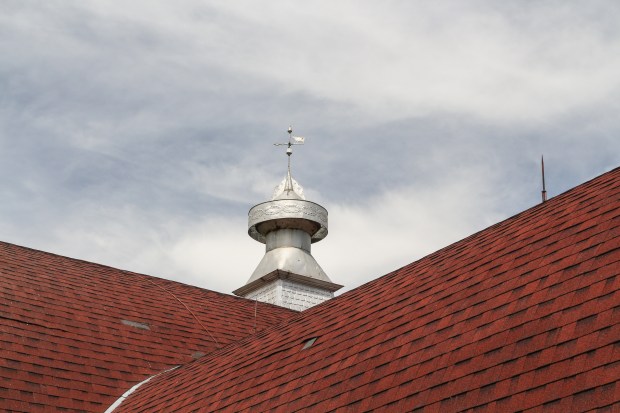
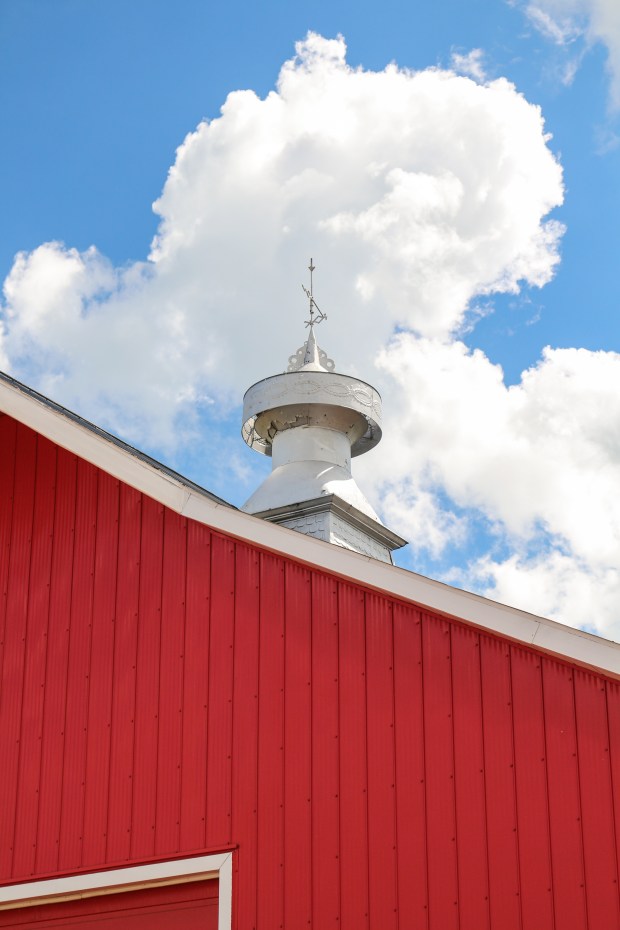
This frame shows a close up of one of the barn’s metal ventilators. This barn is large enough that it needs two ventilators.

IMG_2856

This frame shows the east side of the barn’s roof.

IMG_2859

The foundation for this barn had to be replaced since its’ original construction. Before pouring started, the whole side of the barn had to be lifted and supported.
IMG_2860

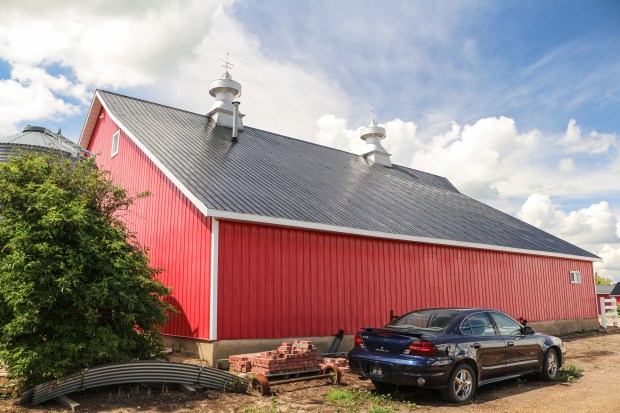
This frame shows more of the eastern side of the roof and a portion of the southern face of the barn.

IMG_2869

The southern face of the barn still has the small door that could have been used for hay bales. The door on the left goes into the western set of stalls that is now the old pig pen. The right door leads into the shop area inside the barn.

IMG_2873

The western side of the barn used to be used for pigs up until 2005.

IMG_2875

This frame shows the pig pens inside the barn.

IMG_2879

The eastern side of the barn is now a shop. This frame shows the tool bench inside.

IMG_2878

This frame shows the middle of the barn, which used to be an open area used for storing hay. Now, the shop area can be used as a wash bay (because the Wellers had a drain put in when they lifted the barn to restore the foundation) and a meat processing station. In the back of the shop, the Wellers have their equipment that they use for making pork sausage with the Heisler Lions Club.
IMG_2888

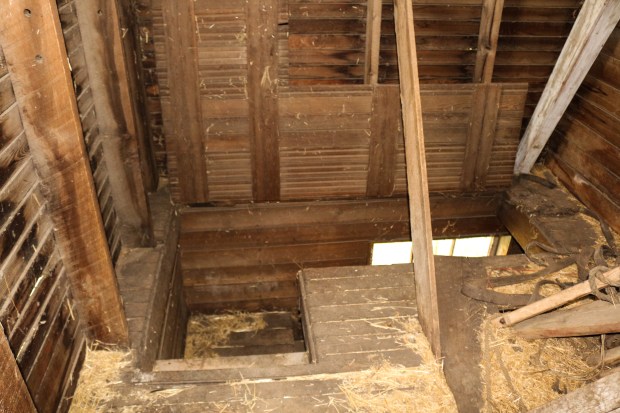
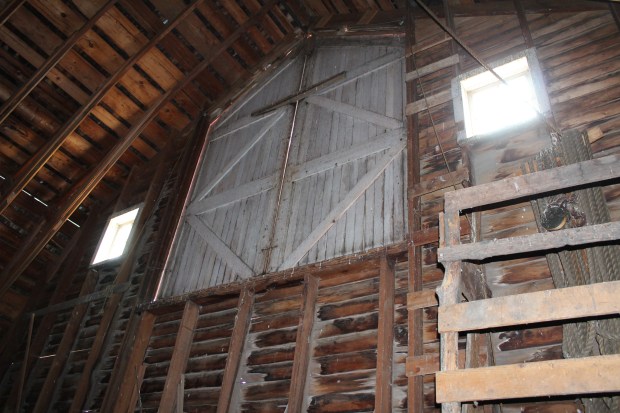
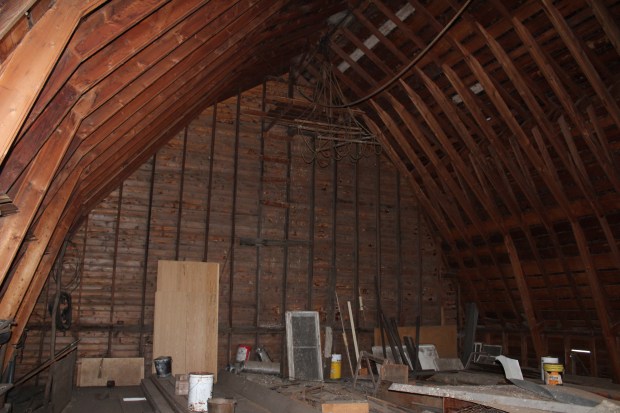
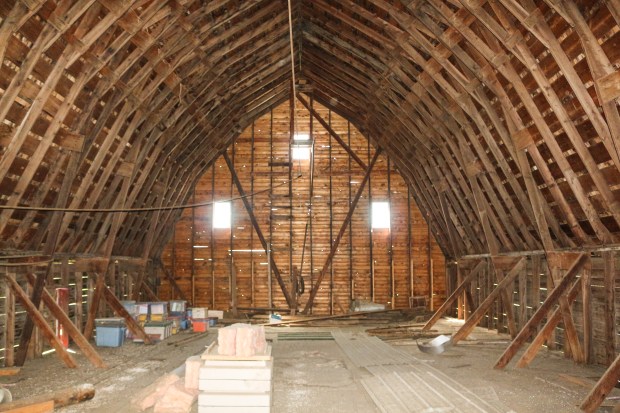
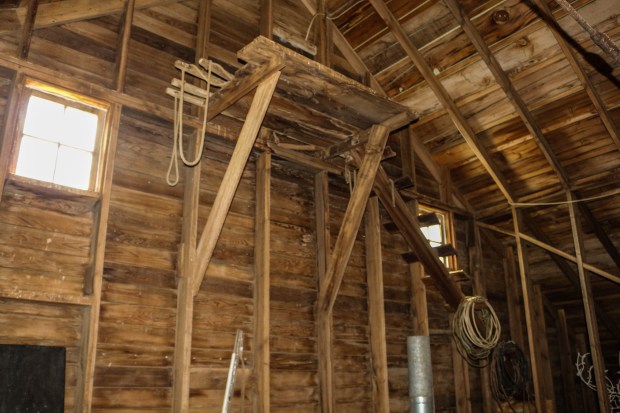
Once you step up into the “attic space” above the shop, the space looks much more like a traditional barn. The framing and parts of the hay rack are visible.

IMG_2887

This frame shows the metal track for the hay carrier that sits in the peak of the barn’s roof.

IMG_2893

This frame shows the loft space above the pig pens (the western set of stalls). The space would have been used to store square bales back before the barn was renovated.
IMG_2886

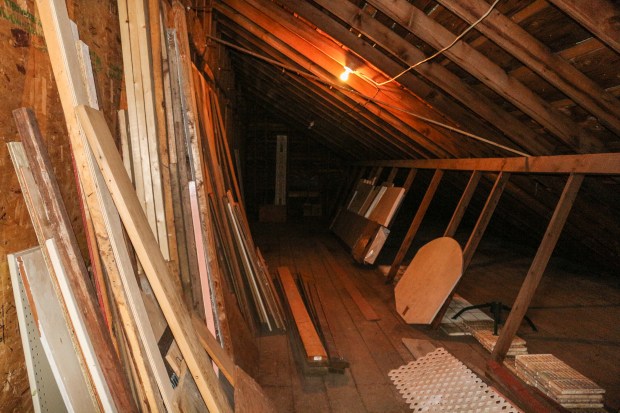
This frame shows the eastern loft space. Square bales would have also been stored here back when the Wellers had dairy cattle.
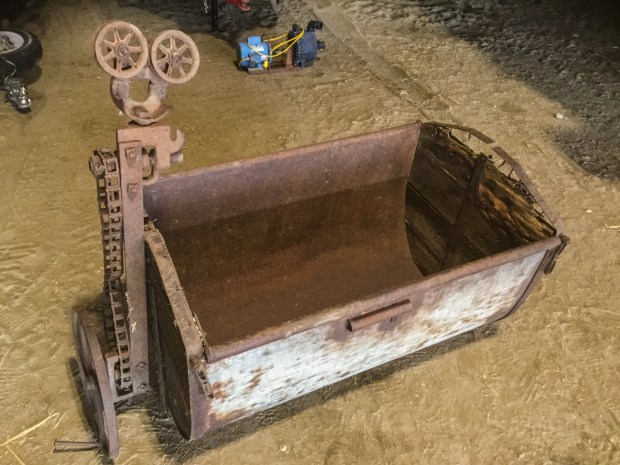
Manure Carrier

The Weller’s litter carrier.

Location

52.739579, -112.224798                                             NW 26-43-16 W4

Characteristics

Barn Condition: Good

Construction Date: 1915

Features: Two metal ventilators, hay hood and hay track, two weather vanes

Roof Shape: Bonnet

Paint: Red with white trim and a black roof

Decorations: No names or dates

Roof Covering: Metal

Siding: Metal

Foundation: Concrete

Spiller/Miller

History

Denise Miller’s grandparents lived on this property. Her father’s family homesteaded the quarter this barn stands on. Her mother’s family homesteaded on the quarter north of her father’s family. During my conversation with Denise, she joked that her parents “fell in love over the fence”.

The barn was built in 1946 by Sandy Colberg. It housed milking cows but had some pigs in it as well. A fact of great interest is that this barn had electricity many years before others in the area. Power came through the Daysland area in 1952. As early as 1948, Denise’s grandfather created power for the barn through generators. This barn also has six chutes for air circulation on the ground floor, which is very unique. The size of the barn and its use as a dairy demands adequate air circulation through numerous chutes. These chutes run from the cement floor all the way up to the cupolas in the barn’s roof. You can see the chutes in the pictures that follow.

Without the chutes, the ground floor would accumulate too much moisture during the winter. The excess moisture rots the barn’s wood and can greatly decrease the life of the barn. Therefore, the warm, moist air created by livestock in the barn must escape. Before chutes and cupolas were common, farmers had to open the barn doors to let the moisture escape. This also decreased the temperature inside the barn and that would have stressed livestock. Arguably, the stressors would have decreased efficiency and milk production.

Miller, Denise. Personal communication. 14 Jun. 2016.

IMG_2429

This frame shows the south face and the west side of the barn. The metal ventilators on the roof are from the original barn that was built in 1911. The Spiller family took the ventilators off the old barn and reused them on this barn.

IMG_2426

The wooden structure in this frame is a cupola.

IMG_2421.JPG

This frame shows a close up of the metal ventilator.

IMG_2352

This frame shows the south end of the barn. What some might see as an addition, the east side of the barn, was actually present on the barn from day one. It is the milk condenser and supply room.

IMG_2353

This frame shows a bit of the cattle yard. At one time, the bar was surrounded by fences that would keep the dairy cattle enclosed and close to the barn for milking.

IMG_2355

This frame shows a direct view of the east side of the milk condenser/supply rooms. Near the peak of the arched roof, one can see a hole. This hole would have been used to auger chop into the loft for storage.

IMG_2357

This frame shows the of the east side of the barn.

IMG_2364

The door to the right in this frame is the eastern door of the barn. Denise recalls that the room pictured here was used to store chop.

IMG_2367.JPG

The next room is just west of the molasses storage room. This room would have held the milk condenser and various other milk processing machinery.

IMG_2384

This frame is a view of the entry into the main bar from the condenser/supply rooms. The photo was taken while standing in the walkway between the stalls in the main part of the barn. The staircase up to the loft is seen in the right portion of the frame.

IMG_2383

This frame shows the staircase to the loft.

IMG_2371.JPG

This photo was taken while standing in the middle of the barn at the south end. Some of the western stalls have been converted into concrete and metal bar stalls while most of the eastern stalls are still wooden. The walkway between the two sets of stalls has been leveled. Where there was once an indent in the floor near the stalls, for excrement to drain away, there is now level concrete.

IMG_2375.JPG

The ventilator chute is branded with Denise’s father’s brand.

IMG_2379.JPG

The loft floor in this barn was also supported by smaller cross beams.

IMG_2404.JPG

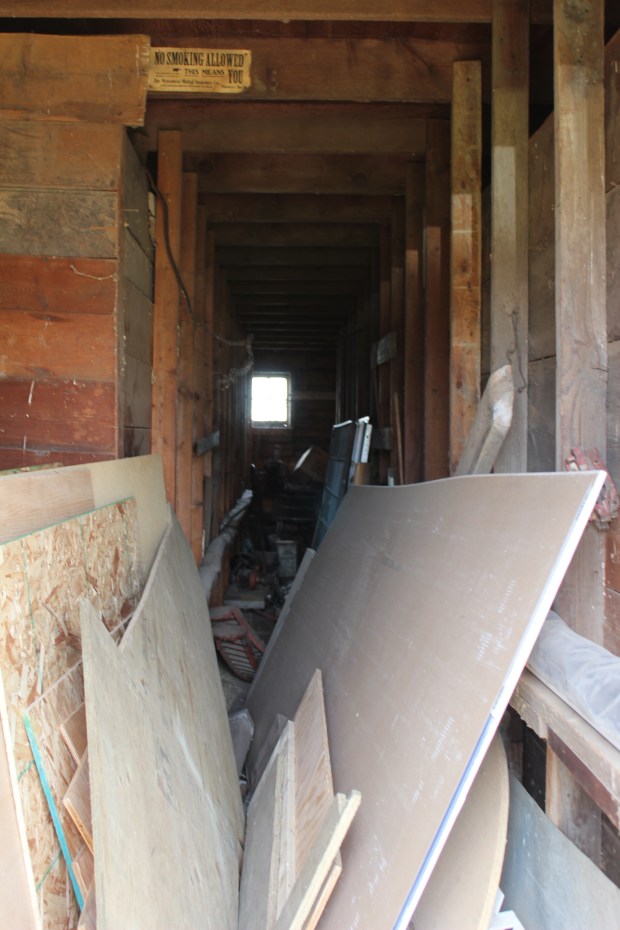
Many barns have some sort of warning sign about fire for insurance reasons. This barn had a Liberty Fire Extinguisher. It was made in Wawanesa, Manitoba, Canada for the Wawanesa Mutual Insurance Company. Wawanesa Insurance was the largest fire insurance company in the country for a time. The fire extinguisher uses a dry powder, usually sodium bicarbonate, for extinguishing.

IMG_2385.JPG

The hay door on the southern face of the main barn is well supported.

IMG_2388.JPG

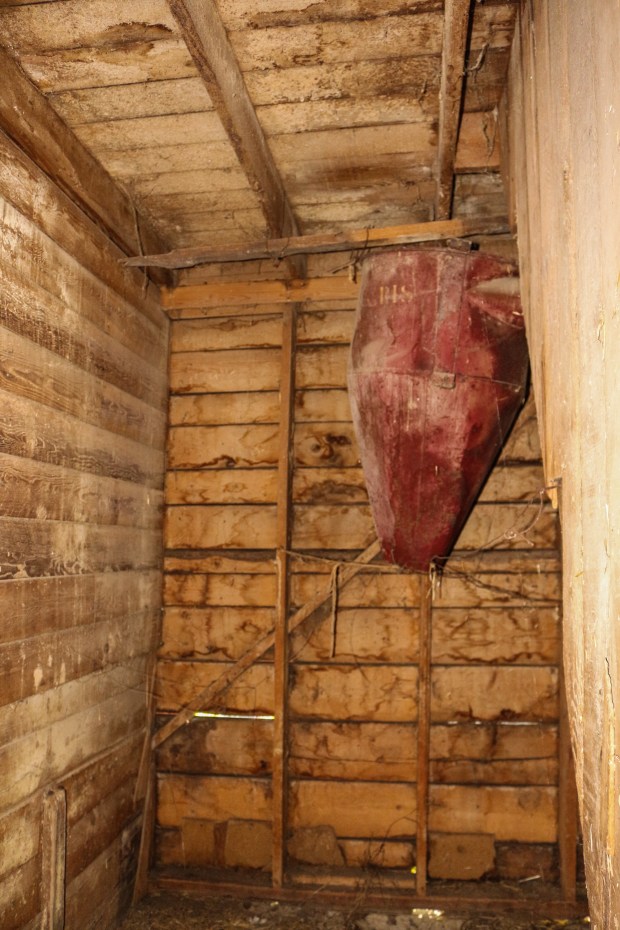
The two towers in this frame are the chutes from the wooden cupolas on the roof and are for air circulation.

IMG_2395.JPG

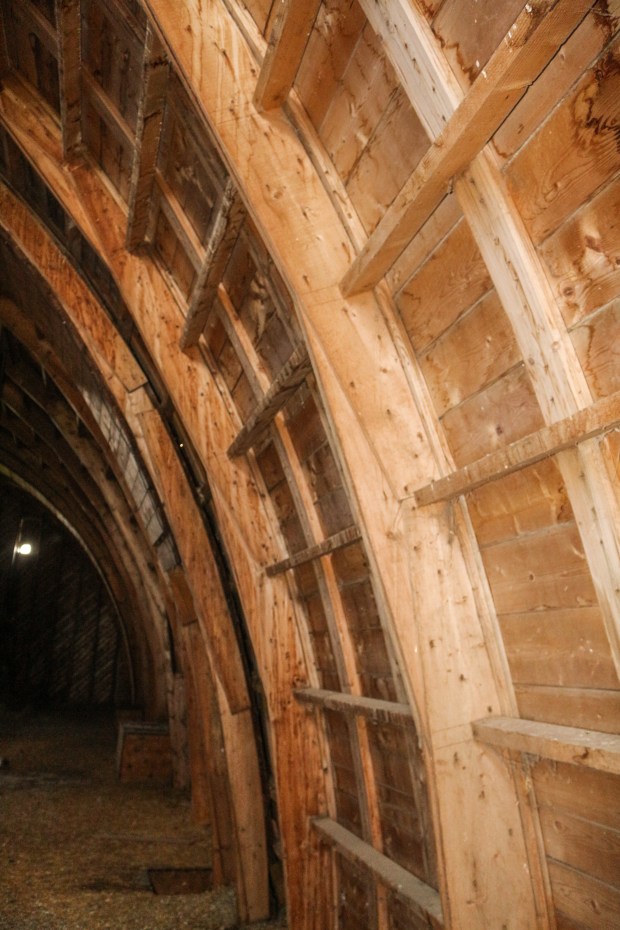
This barn is unusual because it has an arched shape created by small trusses. Usually, an arched shape in difficult and time consuming to create with trusses. Modern arched roofs are made using glued laminated timbers.

IMG_2361

Throughout my visit the original owner of the metal ventilators’ great-great-grandson followed us around. The ventilators were part of the first barn that was built on the property. The boy was especially interested in what we were doing since, in most other cases, he would not be allowed into the barn. He seemed somewhat smitten, at least for the moment.

Location

52.873848, -112.172205                                 SE 18-45-15 W4

Characteristics

Barn Condition: Good

Construction Date: Built in 1946

Features: Has two cupolas, two ventilators, six lightning rods, a hay track and hay hood, and weather vane

Roof Shape: Arched

Paint: White

Decorations: No dates or names

Roof Covering: Asphalt shingles

Siding: Wooden shiplap

Foundation: Cement foundation with some parts having many field stones.

Meyer/Schares

History

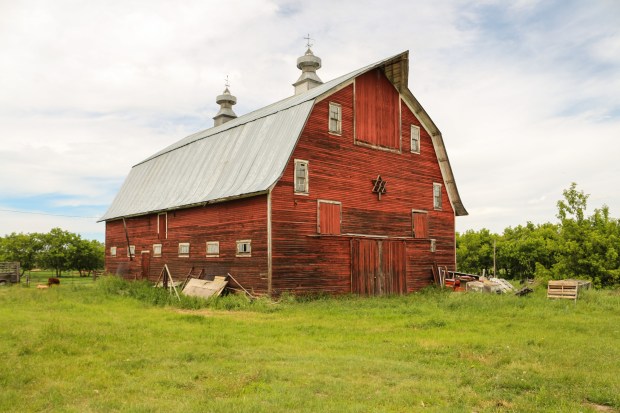
This barn is unique because it uses the old construction style of post and beam construction. This is evident in many of the pictures that follow. Additionally, the roof on this barn is a gambrel shape, but it is not produced by modern trusses. Instead, the posts and beams create the shape. You can see this below in the photos of the barn’s loft.

This barn was constructed sometime before the other barn in this yard – before 1920. Lloyd Meyer believes that, at one time, the owners were going to make the barn larger with an expansion to the north. That is why, he says, the barn is almost as wide as it is long. It is likely that the Schares Family had a hand in building this barn because Christina Schares homesteaded this property.

Meyer, Lloyd. Personal communication. 14 Jun. 2016.


IMG_2499

This frame shows the south face of the barn.

IMG_2497

The east face of the barn.

IMG_2501

The north face of the barn. This would have been where the expansion of the barn would have occurred.

IMG_2504

This frame was taken while going through the door on the eastern side of the barn. The barn has a concrete foundation, a dirt floor, and wooden guides for the door.

IMG_2516

The south wall of the barn is where the ladder to climb into the loft is installed.

IMG_2507

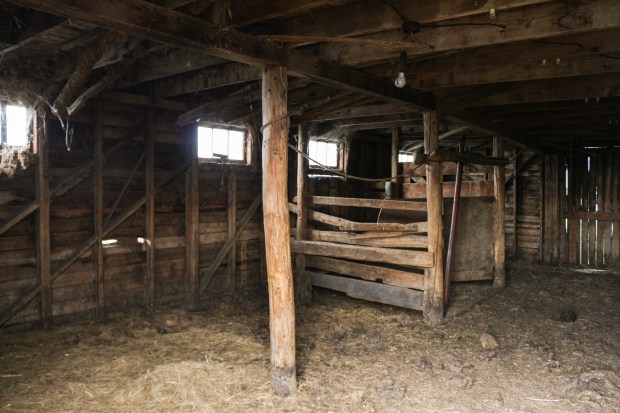
This frame shows the south half of the stalls. This barn was largely open with only three or four stalls at a time. The posts used to construct this barn are vertical logs.

IMG_2524

One of the stalls on the south side was retrofitted to give the farmer a place to tend to cattle using a head gate.

IMG_2508

This frame shows the northern half of the barn.

IMG_2512

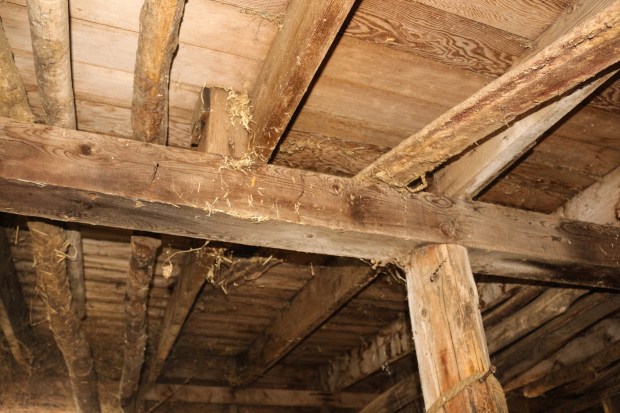
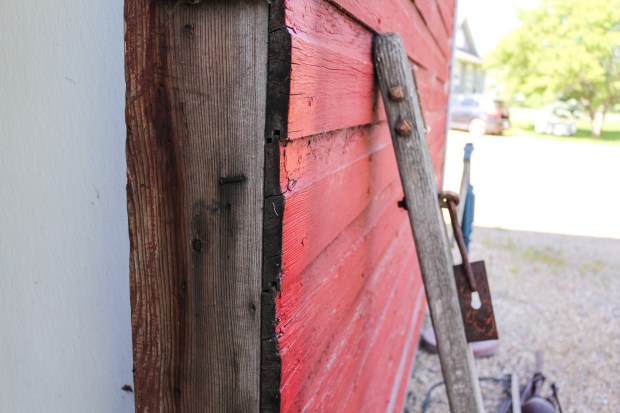
This frame is a nice close up of the techniques used in post and beam construction. This frame was taken above the sliding door on the west side of the barn.

IMG_2520

Notice the pencil lines on the beam.

IMG_2530

There are many different types of halter holders. This design is very simplistic but does the job very well.

IMG_2532

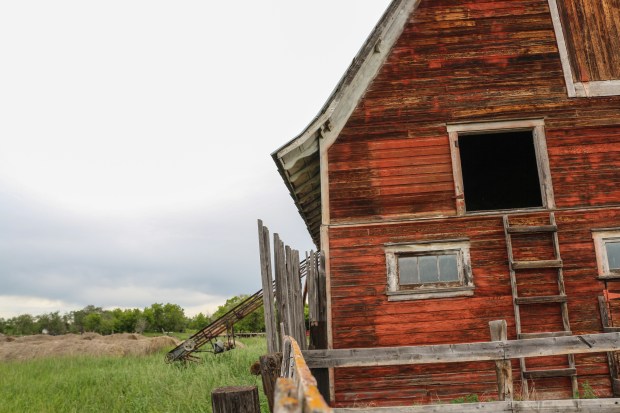
The south face of the barn has doors for throwing hay out of the loft and into the feeding troughs below. Two sets of ladders were installed to allow access to the loft from outside.

IMG_2534

This frame shows a bale elevator going into the loft from the west side of the barn.

IMG_2538

This frame shows the door on the south face of the barn. This door opens up into the northern stall with the cattle gate.

IMG_2539

Inside the loft the square bales that are brought up by the elevator can be stacked and stored.

IMG_2551

The gambrel roof beams are supported by posts since there are no trusses.

IMG_2543

This frame shows the loft’s hay rack machinery that is installed in the peak of the roof. The pulley system, the track, and the loft door are visible. Someone put a metal wire through the pulley to keep the loft door shut.

IMG_2546

This frame shows a view of the trapdoor that is in the loft and leads to the ladder to the ground level. There are a few holes in the loft floor that allow hay to be thrown down to the ground floor. With all the hay covering the doors, one must be careful where they step.

IMG_2545

This frame was taken from the west loft door on the south end of the barn looking out into the yard. The ladder that one must climb down can be seen slightly in the bottom right corner of the frame. Luckily, there is a bit of a fence on the ground to separate “man from beast”.

Location

52.624639, -112.310284                                 SE 14-42-17 W4

Characteristics

Barn Condition: Good

Date Constructed: Before 1920

Features: None

Paint: Red with some white trim

Roof Shape: Gambrel

Roof Covering: Metal

Siding: Wooden shiplap

Foundation: Concrete
Additional History on the Property

See the other Meyer/Schares barn

Meyer/Schares

History

This barn was built in the early 1920s by the Schares Family using frame construction and balloon framing. Christina Schares homesteaded this property with the help of her five sons, three of whom were carpenters. When the Schares family owned this property, they used the barn for show horses. When Lloyd Meyer purchased the property from his father, Leo, he began to use the barn for dairy cattle. The barn is now only used for storage. This barn is one of two barns in this yard. Please click here to see the other barn in this yard.

The ventilators on the roof of the barn used to have white glass globes on the tips of the lightning rods. As well, there used to be metal horses on the back end of the weather vanes. These decorations were all shot off by Lloyd and his brothers when they were young. There is a Canadian centennial star on the east face of the barn for decoration. Lloyd bought the star at an auction and nailed to the barn. The barn was last painted on behalf of the realtor company that owned the property before the Meyers. The men hired to do the job stayed in one of the original homestead buildings on site.

Meyer, Lloyd. Personal communication. 14 Jun. 2016.

IMG_2434

This frame shows the south and east faces of the barn. There is a Canadian centennial star on the east face of the barn.

IMG_2435

This frame gives a closer look at the centennial star and the hay hood on the east face of the barn.

IMG_2436

This view of the south face of the barn shows the unique three pane windows, the falling eaves, and the entry route for power into the barn. The door on this face gives entry to the walkway in front of the dairy cattle stalls.

IMG_2437

This frame shows the west face of the barn. The upper left portion of the frame shows where a chunk of the metal sheeting has blow off the roof.

IMG_2442

This photo was taken from the entrance on the south side of the barn. This photo looks east at the area in front of the dairy cattle stalls and the staircase going up to the loft.

IMG_2461

The stalls had head gates to hold the cattle while milking and a vacuum system to run the milking machine. The cross member with attached pipe in this photo is part of the vacuum system.

IMG_2445

The door in the right side of this frame is the door on the east face of the bar. The room pictured here was for storing feed and milking equipment.

IMG_2490

This frame shows a closer picture of the staircase going up into the loft.

IMG_2494

The loft floor uses wooden tongue-and-groove planks.

IMG_2484

The staircase had a trapdoor lip and a brace to keep it open.

IMG_2463

Inside the staircase room there was a hand carved wooden chute for transferring grains.

IMG_2467

Also inside the staircase room was the hay rack sling that was used to carrying the square bales.

IMG_2475

The backside of the loft’s hay door was visible from within the loft.

IMG_2469

This frame shows the southern half of the barn’s roof.

IMG_2482

This frame gives a close-up of the posts in the loft of the barn.

Location

52.625338, -112.309426                                 SE 14-42-17 W4

Characteristics

Barn Condition: Good

Construction Date: Built in the early 1920s

Features: Two metal ventilators, weather vane, hay hood and hay track

Roof Shape: Gambrel

Paint: Red

Decorations: No names or dates, centennial star on eastern face

Roof Covering: Metal roofing

Siding: Wooden clapboard siding

Foundation: Cement

Additional Information on the Property

See the other Meyer/Schares barn.

Meyer, Catherine. “Meyer, Leo and Catherine”. Wagon Trails in the Sod: A History of the                                 Heisler Area. 1st ed. Heisler: Heisler Historical Society, 1982. Print. 

Streich

His

Edwin Streich’s father bought the property this barn sits on in 1942. The barn was built by Roy, Vansel, and Harmon Misner. Vansel Misner came to visit the barn often after he moved to Rocky Mountain House. He was a frequent visitor up until his death.

The family that owned the property before the Streichs used the barn for horses. The Streichs used the barn for cattle and horses beginning in 1942. The family stopped using horses on their farm in the 1950s and got rid of their cattle in the 1980s. The Striechs know that the barn got painted after construction in 1918. For maintenance, the barn was again painted in 1956 and sometime in 1970s. The barn was built using frame construction with platform framing. Streich, Edwin and Linda.

Personal communication. 20 Jun. 2016.

IMG_2645

This frame shows the southern face and western side of the Streich barn.

IMG_2648

This frame was taken directly from the South.

IMG_2651

This frame shows the southern face and eastern side of the barn.

IMG_2652

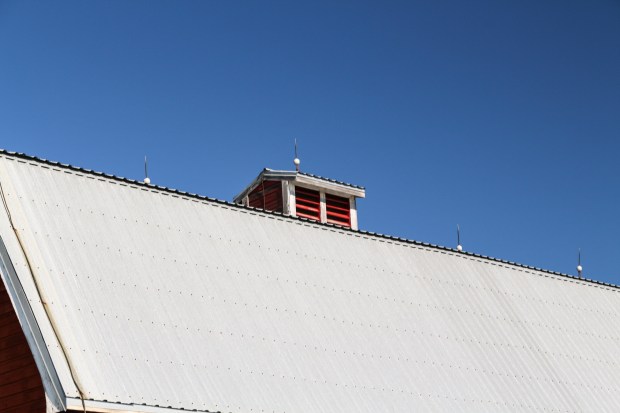
This barn has five lightning rods and one cupola. Edwin Streich remembers when the cupola blew off the roof during a strong storm. He decided that he would repair it and then reinstalled it on the barn.

IMG_2655

The barn sits on a concrete foundation and has a concrete floor on the ground level.

IMG_2656

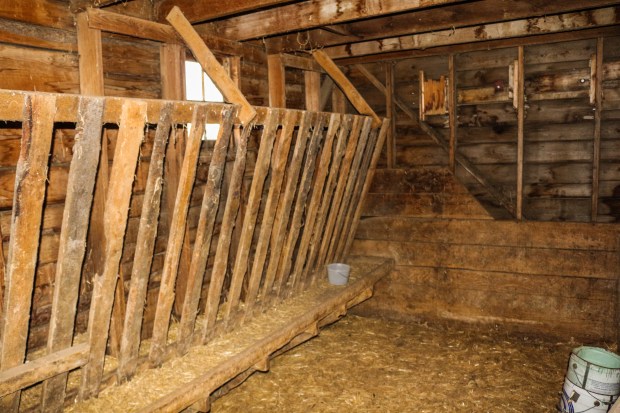
Many of the stalls in this barn still have the mangers installed.

IMG_2660

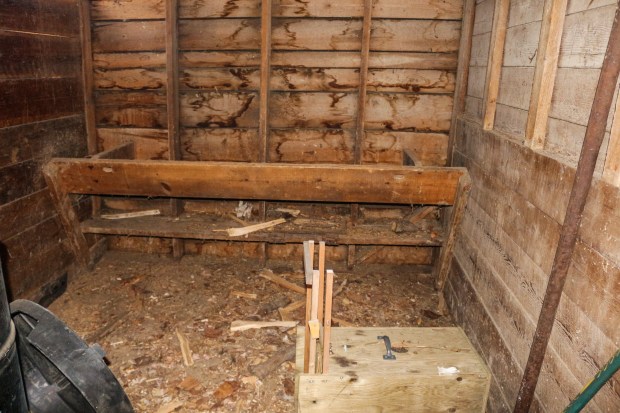
The manger in the pigs’ stall still has the wooden guides for hay to be dropped down from the loft into the manger.

IMG_2663

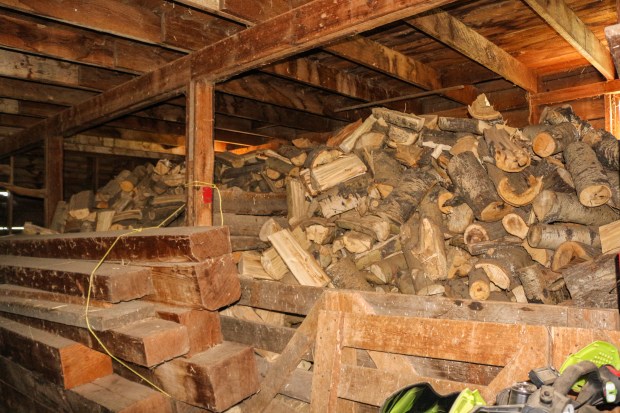
This frame shows two of the eastern stalls. The Streichs now store their firewood here. It has proven to be a great area to cure the fresh wood and then store it until use.

IMG_2661

Just off the southern door and to the eastern are the staircase to the loft and the chop storage room, the latter of which is pictured here. The chop room has a funnel that was used to bring the chop inside the room using an auger and a hammermill.

IMG_2665

This frame shows the staircase to the loft. The wall on the right side of this photo is the southern wall of the barn and the wall on the left side of this photo is the chop storage room.

IMG_2666

The large loft doors in this barn are double swinging doors. Usually the large loft door is a single door that folds down to the ground in order to operate the hay track. The doors on this barn were most likely installed because there was no hay track. Linda Streich told me that most times the family would load bales into the loft through the small door just below the two large swinging doors. They would toss the bales up into the loft before they acquired a bale elevator.

IMG_2668

The northern side of the barn usually deteriorates faster than the rest of the barn. This is because the sun does not reach the northern face. With no light to dry the dampness, from dew and rain, the north side is more susceptible to slow deterioration.

IMG_2669

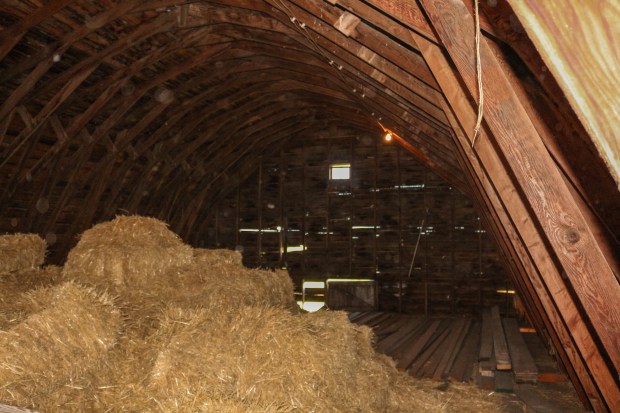
The rafters in the loft support the roof. A roof with two slopes created by rafters is called a gambrel. This barn has a gambrel roof.

Location

52.540245, -111.994948                                 SW 20-41-14 W4

Characteristics

Barn Condition: Good

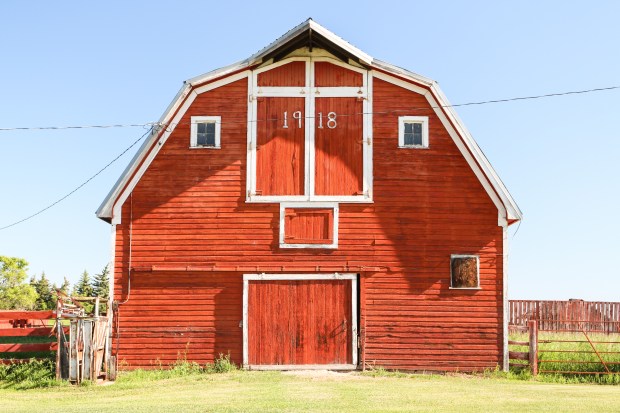
Construction Date: Built in 1918

Features: One cupola, hay hood but no hay track, lightning rods

Roof Shape: Gambrel

Paint: Red with some white trim

Decorations: Has the construction date painted on the south face

Roof Covering: Metal

Siding: Wooden drop siding

Foundation: Concrete
Feddema

History

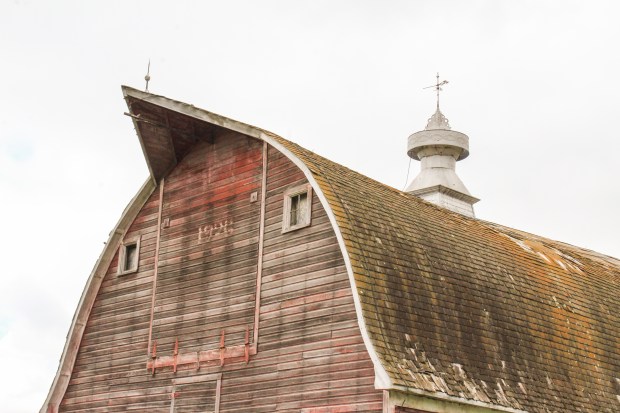
John Feddema assumes that the barn was built in 1922 by neighbours and his family. John has vivid memories of his mother repainting the wrought iron date on the front of the barn. Perched on top of a tall ladder, she carefully painted “1922” in black. John’s mother is still alive, at 101 years old, and lives in Killam.

Originally, the barn stored hay from floor to ceiling. This barn did not originally have an actual loft. Loose hay was instead stored in the open-air walkway between the two sides of the barn. The east side of the barn has stalls that housed dairy cattle while the west side of the barn has stalls that housed the draft horses.

John remembers fighting with his older sister over milking rights to a particular cow on the east side. However, the horses were mostly gone by the time John was around and so he does not remember much about them.

This barn is very similar to the Weller barn, which is also featured in this database. The barn was built using frame construction and balloon framing.

John and Irene took over the farm in 1965 and used the barn for cattle. In 2015, they sold the farm site to their son, Chad, who hopes to restore the barn in the future.

Feddema, John. Personal communication. 22 Jun. 2016.

IMG_4695

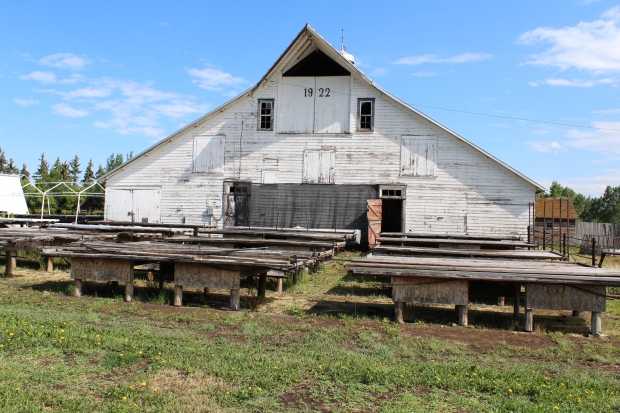
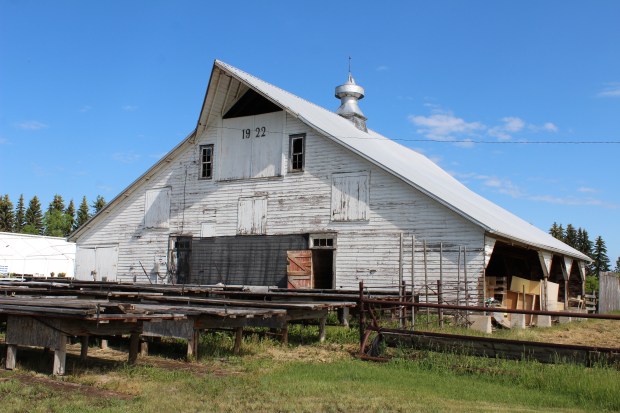
This frame shows the south and west faces of the barn. The tables in front of the barn are makeshift plots for starting plant seedlings.

IMG_4798

This frame shows the south face of the barn. This barn hay both a hay hood and a hay track for loading loose hay into the center of the barn with a hay carrier. The barn used to have two doors on each face (north and south) for entry into the east and west sides of the barn. Now only one exists on both faces.

IMG_4797

This frame shows the south and east faces of the barn. This barn has a bonnet style roof which is created by the two shed like structures. The two “sheds” are essential for the barns structural integrity and are part of the original construction.

IMG_4700

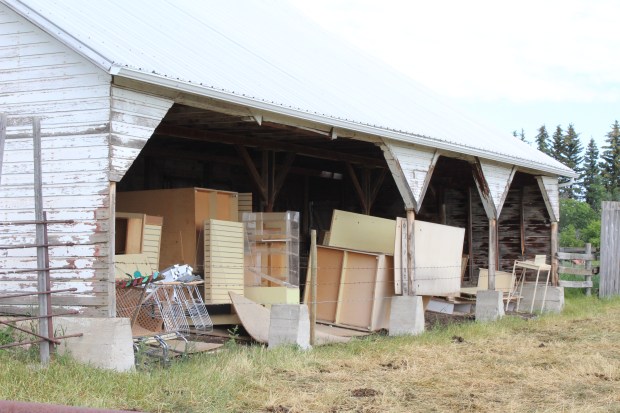
The east side of the barn used to look exactly like the west side. John Feddema had the east side adjusted so that he could feed cattle there. He removed some of the walls and stalls which created a parade of arches to form a shaded arcade on the east side.

IMG_4702

This frame shows the east door on the south face of the barn. The hallway in this frame runs between the old dairy cow stalls and the hay storage area.

IMG_4705

The natural light in this frame is due to the covered arcade pictured on the right side of this frame.


IMG_4711

This doorway leads into the middle of the barn where hay was stored.

IMG_4715

This frame was taken from the previous doorway and is of the south wall inside the barn. The white sheets hanging in this frame used to cover the seedlings the Feddema’s planted to protect them during winter. The large loft door in this barn is very unique. The upper part of the door used to fold down with the use of pulleys so that the rest of the door could open inward.

IMG_4759

After square bales became popular, the Feddema’s used bale elevators to bring bales into the barn through the smaller loft doors.

IMG_4769

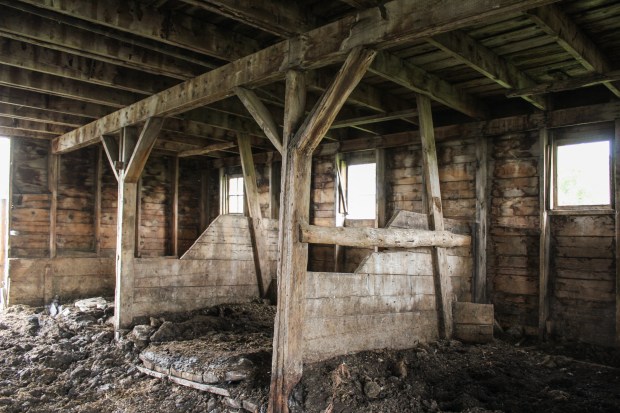
This frame shows the east half of the barn. Above both sets of stalls there is plenty of loft space. John Feddema guesses that the space was used as a covered storage area in the times before square bales. Later on the lofts were both used for square bales. John Feddema remembers the barn being stuffed full of strategically placed bales.

IMG_4767

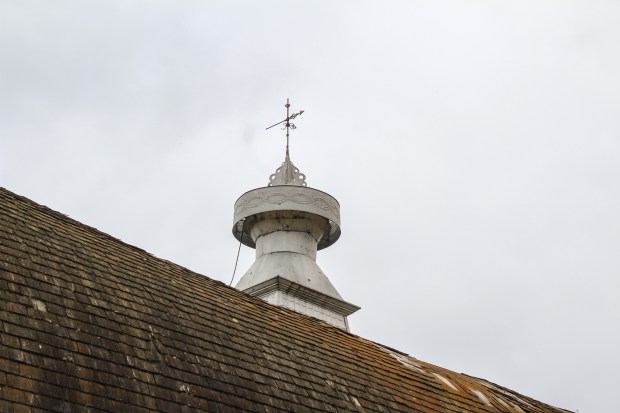
This frame shows the east and some of the south faces of the barn. Each side of the barn has one ventilator chute that runs from ground level up to the metal ventilator on the roof. The ventilator allows air to circulate within the barn which is very beneficial in the winter. Also in this picture, one can observe the timbers used to frame the barn. Wondrously, the timbers are all single pieces of wood from floor to ceiling. The trees felled to make them must have been giants.

IMG_4737

Without the air circulation, keeping livestock inside the barn is more difficult. In the winter livestock within the barn create a lot of heat and humidity. If a barn has a metal ventilator or a wooden cupola, then the humidity can exit the barn through the roof without compromising the heat within the barn. This protects the barn from deterioration by moisture and economizes feed use.

IMG_4716

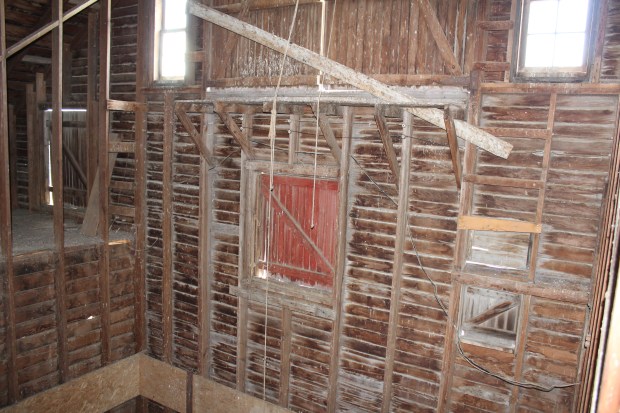
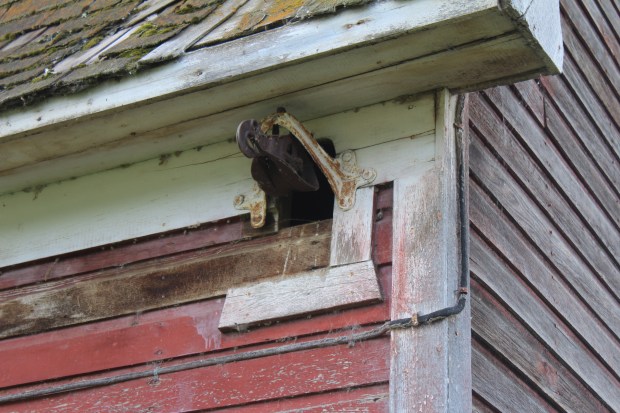
This frame shows the peak of the barn’s roof. The chutes meet in the peak to allow air to exit through the ventilator. As well, the hay track is still present in the peak with a section of the original rope. Also, you can see where the Feddema family had to install steel cables in the rafters to keep the barn from falling over.

IMG_4739

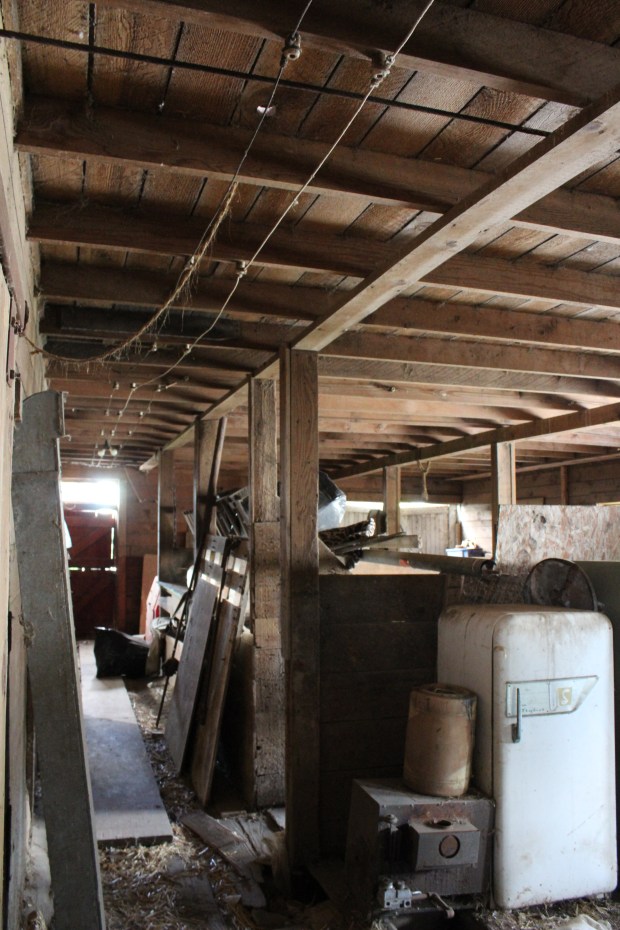
This frame was taken from the western doorway while looking north into the horse stalls. The floor in the western stalls is both concrete and wood. The wooden planks, seen in this frame, ran on the ground in front of the stalls and within the stalls.

IMG_4748IMG_4750IMG_4788IMG_4789

Location

52.727500, -112.106088                                 SW 27-43-15 W4

Characteristics

Barn Condition: Fair

Construction Date: Assumed built in 1922

Features: One metal ventilator, weather vane, hay hood and hay track

Roof Shape: Bonnet

Paint: White over top of red

Decoration: Has the date 1922 in wrought iron posted on the loft doors

Roof Covering: Metal roof

Siding: Wooden shiplap siding

Foundation: Concrete

Eshpeter

History

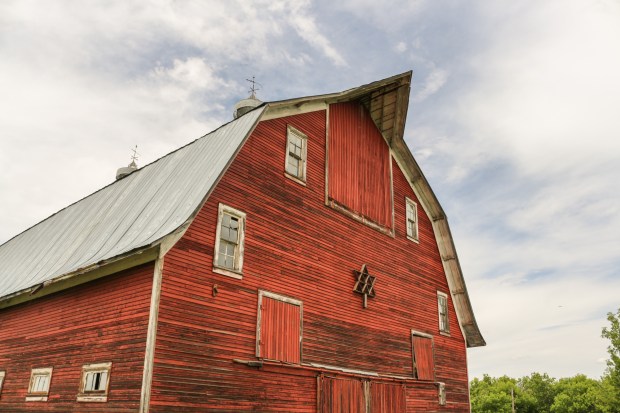
This barn is presumed to have been built in 1926 as indicated by the painted date on the eastern side of the barn. Nathan Eshpeter’s family moved onto the property when he was a baby and used the barn as a cattle shelter; however, the barn was originally used as a horse barn. The barn had some electric lights and a water pump installed at some point to modernize the building but the exact time when these renovations were done is unknown. Nathan states that one of the most interesting features of the barn is its’ hay track. Nathan plans on fixing the barn up by filling the holes in the roof, supporting the foundation, and adding new siding/shingles.

The barn was built using frame construction with platform framing.

Eshpeter, Nathan. Personal communication. 9 Jun. 2016.

Update: In the fall of 2016, the Eshpeters renovated their barn. You can see photographs of the renovated barn here.

IMG_4321

Overview of the barn showing the northern side and eastern face.

IMG_4323

A close up of the painted date, the metal ventilator, the hay hood, and the lightning rods. The wooden siding and shingles are more visible in this frame.

IMG_4326

A close up of the metal ventilator and weather vane.

IMG_4354

The northern face of the barn has an outline of a what must have once been an attached shed and part of the hay rack machinery.

IMG_4356

This frame is a close up of the pulley that runs the hay rack. A rope would have run out here and been attached to a horse or tractor to run the other pulleys inside the loft.

IMG_4357

Breaker box and plug-ins on the outside north facing wall. The paint line around the old addition is visible.

IMG_4352

This frame shows the western face of the barn.

IMG_4327

The view from the middle of the barn looking West into the northern stalls.

IMG_4351

The mangers in the barn were cut in order to give cattle the ability to eat out of them. They were built for horses and, therefore, used to be too tall for cattle.

IMG_4345

The floor inside the barn is mostly dirt and manure. It appears that at one point there may have been a concrete lip before the stalls started or a concrete slab for the stall timbers to lay on. These timbers could have been replaced back in the day if they wore out with use.

IMG_4350

This frame shows the last stall on the north-eastern side of the barn. This stall is smaller than the others and also has a chute in it. It appears that a chute was created to allow feed to be augured through the window into the area under the staircase. Nathan Eshpeter remembers that his dog used to crawl into the space at various times of the year for protection.

IMG_4341

Inside the loft light shines through the rafters on the north-western side of the barn. In the peak of the roof are parts of the hay rack.

IMG_4342

A close up of parts of the hay rack. The rope would exit the hole to the right (not pictured in this frame) and be attached to a horse or tractor to run the pulley system.

IMG_4336

This frame shows the eastern face of the barn, the door that must be opened so that the bales can be brought up to the loft, and other aspects of the hay track.

IMG_4343

This frame showcases the main pulley for the hay track.

IMG_4337

The roof on this barn has an arched shape. This is due to the use of glued timbers. This was a very early attempt at a practice that is now very common today. These timbers are actually thicker than what you would find today but the builders were successful with their design and the building has held up quite well.

Location

52.869337, -112.306805                                             NE 07-45-16 W4

Characteritics

Barn Condition: Fair

Construction Date: Assumed built in 1926

Features: One metal ventilator, hay hood, hay track, lightning rod, weather vane on top of the ventilator

Roof Shape: Arched

Paint: Red with white trim

Decorations: The date of construction was painted on the east face of the barn

Roof Covering: Wooden shingles

Siding: Wooden shiplap siding

Foundation: Concrete foundation with dirt floor.
Chevraux

History

Stan Chevraux believes that the main part of this barn was built before 1912. When his grandparents moved onto the quarter in 1912 they built the addition onto the pre-existing barn. The main barn had stalls and doors for the draft horses while the addition was for cows as a milking room and, for a time, it housed some pigs. Stan remembers the pigs having the ability to leave their pens and roam in the outside area just west of the addition. Both the main barn and the addition have loft space that was used for animal feed and material storage. The use of the barn changed, after the family got rid of their animals, and the horse stalls were taken out so large timbers could be put in, allowing the lower level of the barn to be used for grain storage.

This barn uses frame construction and platform framing. As well, it has a gambrel roof. The roof shape can be attributed to the trusses used to construct the roof.

Chevraux, Stan. Personal communication. 7 Jun. 2016.

IMG_4163

This frame shows the main barn and the addition. The furthest door to the left in this frame was for accessing the pigs and the backside of the milking cows while they were in their stalls. The door second from the left was for reaching the head of the cow and placing food in the manger. The door to the loft above the addition can be seen above the window of the addition. The ground floor, middle door on the main barn gives access to the old walkway between stalls and to the staircase to go upstairs into both lofts. Either of the side doors on the main barn gave access to the rear of the horse stalls. The loft floor starts approximately just above the ground level windows.

IMG_4165

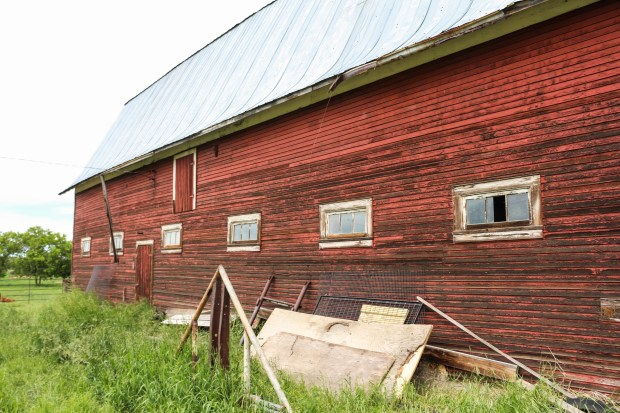
This side view shows the metal roof, the barn’s metal ventilators, and the side access into the barn.

IMG_4209

This frame shows the eastern side of the barn’s roof.

IMG_4207

This frame shows the northern face of the barn.

IMG_4166

This frame shows a close up of the barn’s roof from the south. This frame shows the hay hood which covers the hay track.

IMG_4187

This frame is a close up of the middle door on the south face of the main barn. One can see how the doors are split to allow air circulation and light without risking livestock escape. Stan Chevraux opens the split door for a demonstration.

IMG_4169

This frame shows the walkway between the two sides of the main barn. The corridor would have been wider when there were still intact horse stalls in the barn. However, now the walkway is narrower because of the timbers that were installed in order to use the barn as a the granary.

IMG_4184 (2)

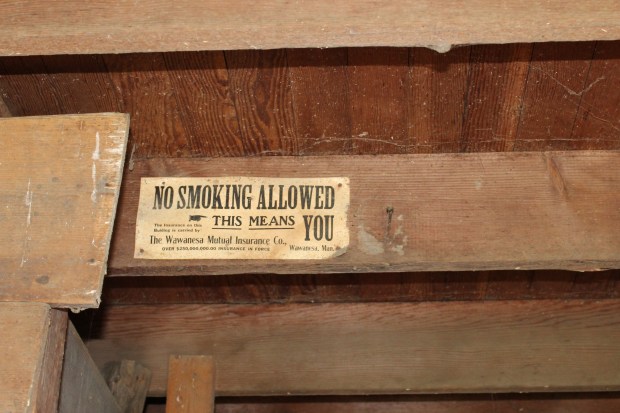
A close up of an aspect of frame 7. This notice was posted as required by the Wawanesa Mutual Insurance Company of Wawanesa, Manitoba. Wawanesa Insurance was the largest fire insurance company in Canada at the a time.

IMG_4183

Another fire notice; however, this one is posted to your left when you go up the staircase.

IMG_4177

This frame shows the southern face of the main barn and an aspect of the hay track. The staircase is just to the right but is out of view in this frame.

IMG_4173

This frame shows a broader scope of the loft above the main barn. There is a hay rack in the peak of the roof used to help bring bales in for storage. The roof was built using trusses and that creates the gambrel roof shape. In contrast if this barn was constructed today, it would most likely be built with glued laminated timbers and be an arched roof.

IMG_4176

This frame shows a close up of the trusses used to construct the roof.

IMG_4178

This is the view from the main loft into the space above the addition which housed cattle and pigs. This attic is now used to store some old parts and construction materials.

IMG_4179

This is the view from the main loft into the space above the addition. The door in this frame is on the south face of the addition.

IMG_4189

Back on ground level we open the south-west door on the main barn. This gives us access to the back aisles on the horse stalls of the main barn. This area used to be used for grain storage as well.

IMG_4191

The granary/horse stall area is used for storage now. These fence poles are being held between the front of the horse stalls and the wooden timbers which line the center walk-way.

IMG_4192

This frame shows the inside of the granary/horse stall area. The furthest wall in this photo is the north side of the barn while the wall coming towards us is the west side of the main barn.

IMG_4193

This frame shows the rest of the granary/horse stall area to the north. This area would have been the main aspect of the western set of horse stalls in the main barn.

IMG_4200

This frame shows the view from the most eastern door on the south face of the addition. The left side of this photo is where the pigs were housed and the right side is where the milk cow stalls were. The far wall in the middle of this photo has the names “Ed” and “Joe” and the year “1941” painted on it. On the other side of that painted wall is a storage room for feed, tools, etcetera. The stone boat in the middle of the room was used for hauling manure out of the barn and was kept inside of the barn in the wintertime to keep it from freezing.

IMG_4198

The walkway between the two areas would have given someone access to the pigs for feeding and the backsides of the cows for milking.

IMG_4197

The pig pen had little head space due to the slanting roof and used whole trees for fencing and roofing material.

IMG_4195

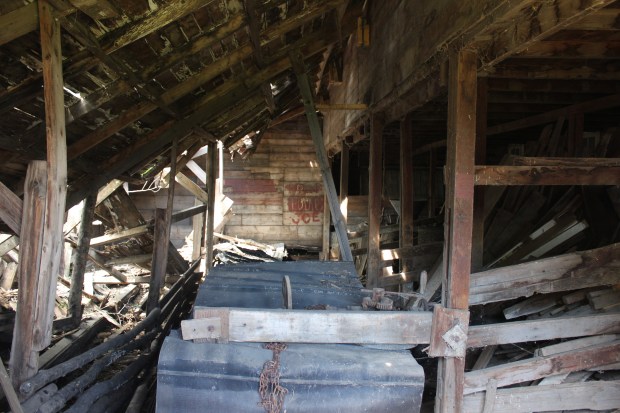
The addition’s roof is in poor condition and has partly collapsed.

Location

52.786373, -111.920089.                                            SE 14-44-14 W4

Characteristics

Barn Condition: Good

Construction Date: Main part built before 1912 with the shed addition built after 1912

Features: Hay hood, hay track, lightning rod, ventilator

Roof Shape: Gambrel

Paint: Painted red with some white paint accents

Decorations: No names or date decorations

Roof Covering: White metal

Siding: Wooden tongue and groove siding

Foundation: Concrete

Jackson

History

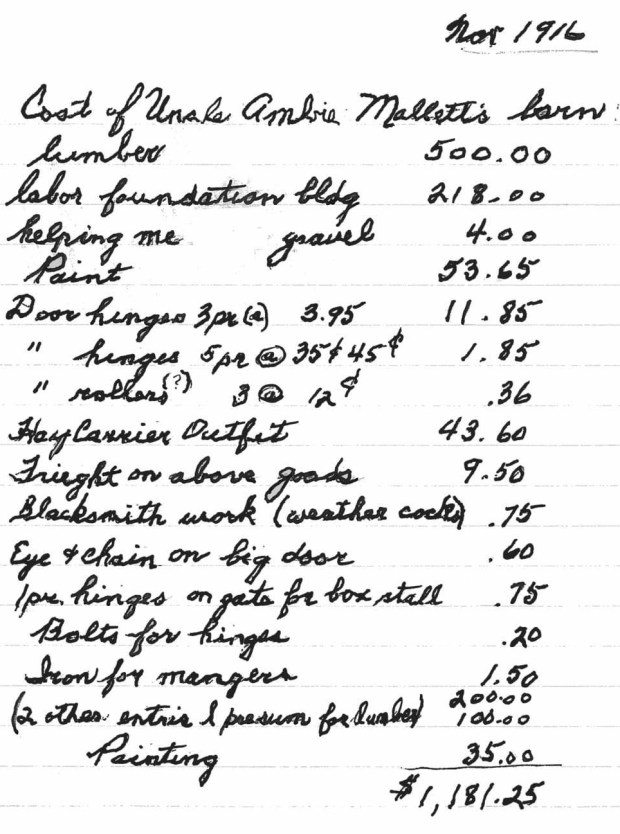
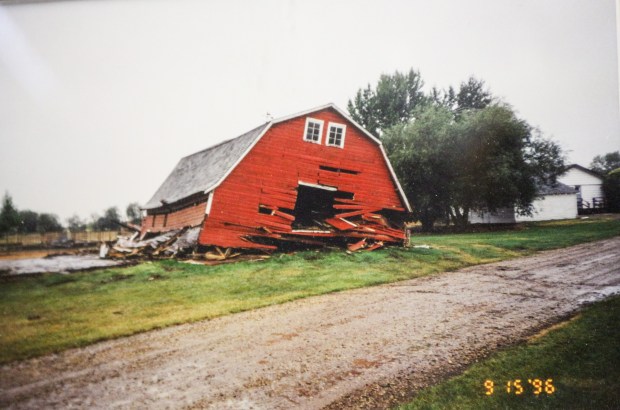
In 1912, Ernest Jackson, Grant’s grandfather, moved his wife and seven children to Tinchebray District in the County of Paintearth from Nebraska, USA. In 1946, Stanley Jackson, Grant’s father, purchased the farm located on the SW quarter of 02-41-14 W4. After the move, Stanley relocated a barn from three miles north to this quarter for their dairy. When the family no longer had milk cows, the barn was used for calves from the Jackson’s cattle herd. In the years following, the Jackson’s used the barn less and less and the barn deteriorated. In the 1990s, when the wood and cement supporting the barn became too weak to warrant restoration, Grant and his son, Scott, set out to find another barn that they could restore and use. In 1996, they moved a barn that used to belong to Ambie Mallet from Forestburg to their home quarter. Ambie Mallett had come west from PEI in 1904 and homesteaded, along with his brother Bert, in the Hastings Coulee District in 1906.  In 1916, he bought a farm two miles south of Forestburg, where he built a house and barn. Grant Jackson discovered that the barn cost Ambie Mallet about $1,181.25 to build back in 1916.

scanned-from-a-xerox-multifunction-printer-3-e1493992847252.jpg

In 1944, Ambie decided to retire from farming and sold the farm to Albert and Tillie Bailer.  In 1967, Albert and Tillie retired to Forestburg, and their son Gordon and his wife Irene took over the farm. In April 1990, Gordon and Irene sold the farmyard to Terry and Ken King. Of the land they then farmed, three quarter sections were sold: two to Joe and Larry Prehn and one to Ron Link. A few years later, the iconic red barn was moved to the Grant Jackson farm near Galahad.

Grant Jackson does not know who built the Mallet’s barn but he knows it was built in 1916. The Jackson’s restored the Mallet’s barn and refitted it for use as an alpaca barn. The family stopped alpaca farming in 2002 and now use the barn for storage and other restoration projects.

The long term goal for the barn now is to turn it into a museum. Grant hopes that the “Old Barn Hay Tool and Equipment Museum” will become a reality and delight both the old and the young alike.

Jackson, Grant. Personal communication. 20 Jun. 2016.

IMG_2672

After Grant and his son, Scott, had taken an interest in restoring barns, they set out to find a new barn for their property. This photo is of the Jackson’s old barn while they were tearing it down. The old barn was very small and the wood had rotted out.

IMG_2673

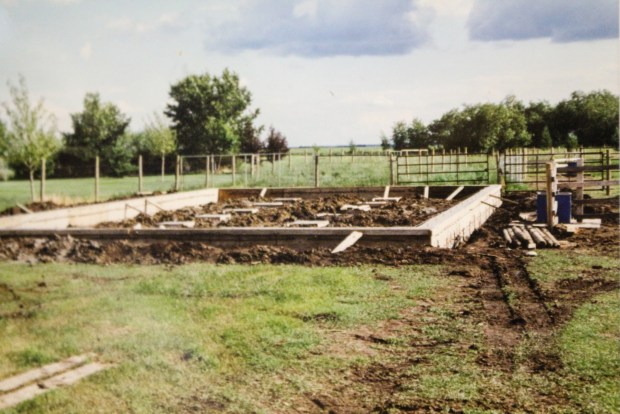
This is a photo of the foundation the Jackson’s had poured for their new barn to sit on.

IMG_2674

The Jackson’s found a barn south of Forestburg and bought it.

IMG_2675

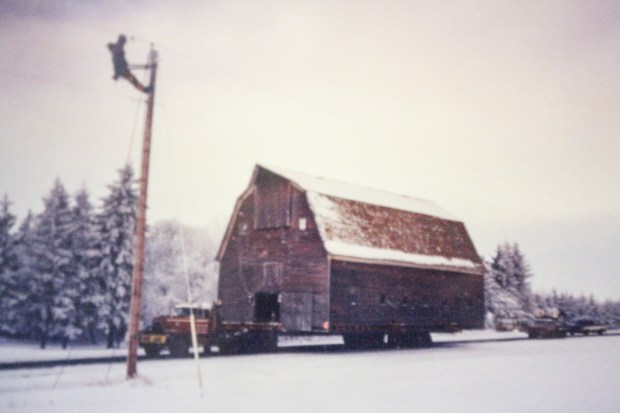
Moving the barn cost around 5000 dollars in 1996.

IMG_2676

Some power lines needed to be moved in order to get the barn down the road.

IMG_2678

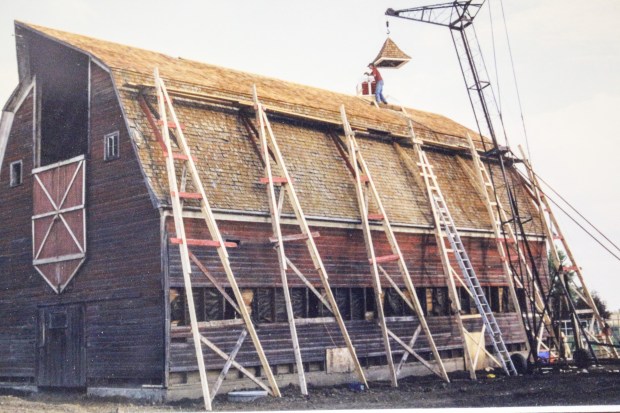
The first thing Grant Jackson did when the barn was finally set and stable in his yard was rebuilt the cupolas. Later in the year, they would be installed and this photo was taken.

IMG_2680

The north side of the barn was very worn from the weather. As such, the Jacksons resided the north face of the barn. Grant could not find any fir siding to match the original siding. Instead they special ordered this drop siding and installed it in 1996.

IMG_2682

The siding was painted red and new double pane windows were installed. A few years after 1996 a wind storm went through and blew the cupolas off the roof. Grant Jackson repaired them once again and reinstalled them.

IMG_2687

The barn on the right side of the photo is the original barn that rotted and was torn down.

IMG_2685

This photo is of the Jackson farm yard in 1954. The barn on the left side of the photo is the original barn that rotted out. The barn on the right side was for pigs and is now gone.

IMG_2688

This photo is of the Jackson farm in the early 2010s. The barn in this photo is the Mallet’s old barn which was moved and relaid in 1996.

IMG_2743

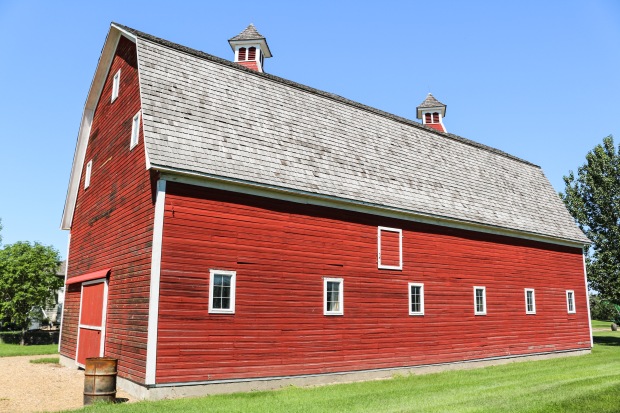
This frame shows the east and south faces of the barn. The two cupolas on the roof of the barn were restored by Grant Jackson.

IMG_2741

This frame shows the east side and north face of the barn. The windows on this barn are not the originals. The old ones were replaced with double pane rectangular windows.

IMG_2712

This frame shows the northern face and western side of the barn. The Jackson’s installed a door on the western side of the barn in order to create an office for their alpaca farm.

IMG_2714

This frame shows the view looking south from the north door of the barn. The interior of the barn was completely renovated. All of the stalls were removed and some siding was put up to protect the walls. This was done because the barn was used for alpacas in the late 1990s and early 2000s.

IMG_2716

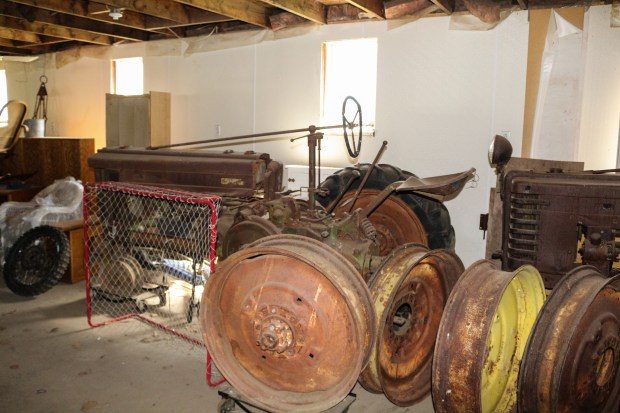
The following pictures are of pieces of equipment that Grant Jackson plans on using for display in his future museum. Right now he and Scott are working on restoring them as a hobby.

IMG_2717

IMG_2719

This tractor is a three-wheel tractor. Grant says Scott got it in California.

IMG_2720

This frame shows a wooden pipe and pump for a water well.

IMG_2722

This frame shows one of the many different types of hay hooks Grant has acquired.

IMG_2732

This frame was taken standing at the north end of the barn and it is of the south face of the barn. This barn has a hay track in the rafters and is one of a few barns that has the original rope for the hay track.

IMG_2729

This frame shows the standing platform on the south face of the barn. This would allow the owner to fix and operate the hay carrier.

IMG_2731

This frame is of the east side of the roof. It shows more of the original rope for the hay track and some of the roof framing. Sets of trusses and supports create a gambrel shape and have allowed the roof to stay strong and steady through the years.

IMG_2739

The siding on this barn is wooden shiplap.

IMG_2690

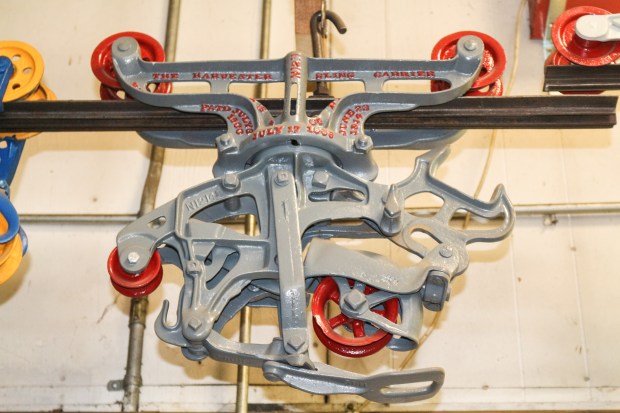
Grant Jackson is an avid collector and restorer of hay carriers, antique tools, and farm equipment. Pictured here are just three of the hay carriers that he has personally acquired and restored.

IMG_2691

IMG_2692

The hay carriers that Grant Jackson buys look like this upon purchase. He sandblasts them to clean them and then hand-paints them.

IMG_2695

This frame shows the barn carrier from Grant Jackson’s barn. Many different markings are welded onto it. One of the most interesting phrases is the date specifying the age of the piece: Aug. 11, (19)08.

IMG_2703

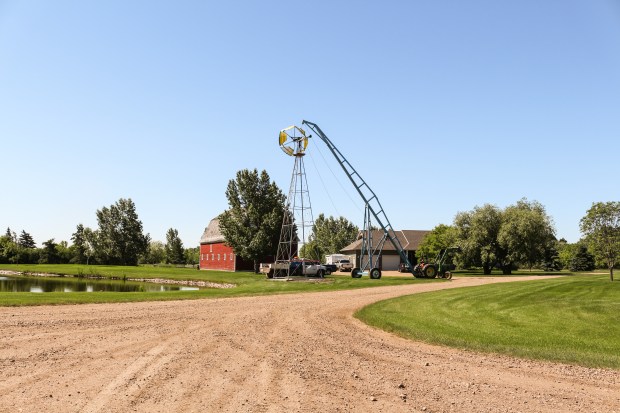
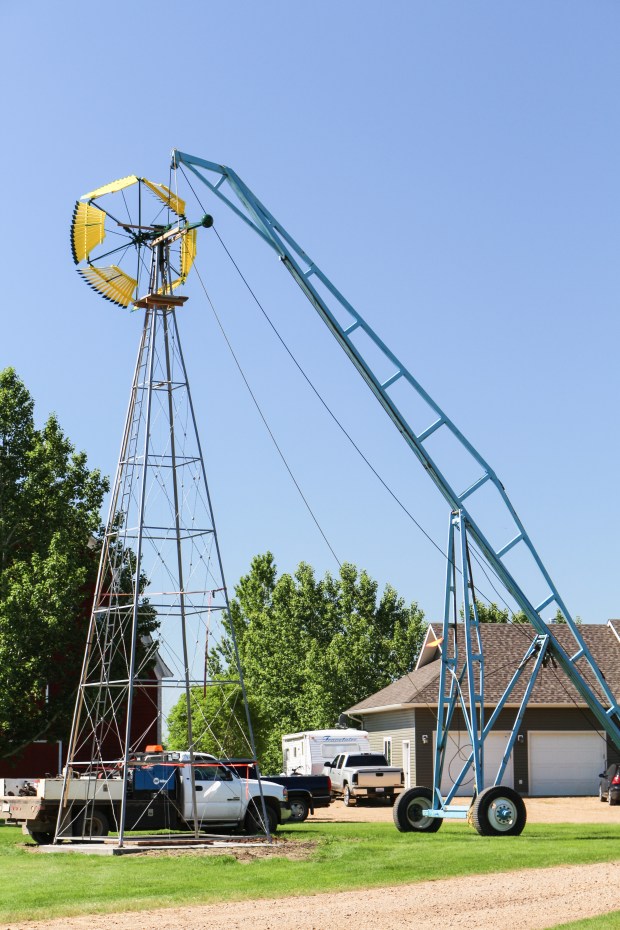
The day that I visited the Jackson farm was a momentous day. It was the day that Grant Jackson was installing his windmill, a three-year project.

IMG_2706

Grant will set the windmill so that it pumps water out of the nearby pond. This will mean that visitors will be able to see how an old-fashioned windmill used to work.

IMG_2707

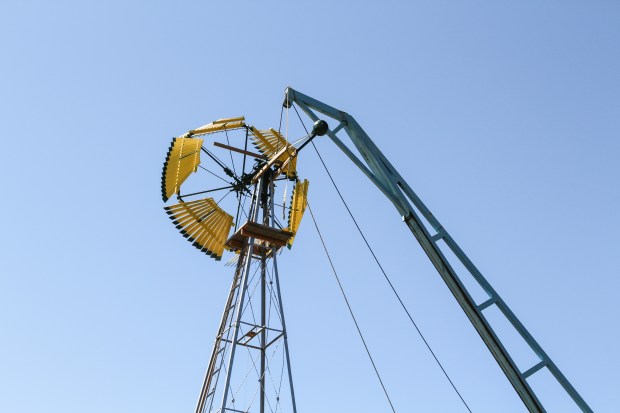
The fans on Grant’s windmill are wooden and he got them from a dealer out of Texas, USA.

Location

52.497638, -111.922792                                 SW 02-41-14 W4

Characteristics

Barn Condition: Good

Construction Date:  Built in 1916

Features: Two cupolas, hay hood and hay track

Roof Shape: Gambrel

Paint: Red with white accents

Decorations: No names or dates decorate it, white trim

Roof Covering: Wooden drop siding

Siding: Wooden shiplap siding

Foundation: Concrete

Chevraux-Chamber’s Place

History

Stan Chevraux remembers his father buying the quarter this barn sits on in the 1950s. His father called it the Chamber’s Place. The barn was part of a very lovely yard and a strikingly beautiful house, which was moved shortly after purchase of the property. The main barn had a side for draft horses and a side for milking cows. Attached to the west side of the barn exist an outside area for the cows, a few storage sheds, and a chicken coop. Later in the life of the barn, the use of the barn changed and all of the stalls were taken out and large timbers were put in so that the lower level of the barn could be used for grain storage.

This barn used frame construction and platform framing. As well, it had trusses to support the roof, resulting in the gambrel style roof.

Chevraux, Stan. Personal communication. 7 Jun. 2016.

IMG_4272

This frame shows the western face of the barn and the outbuildings. The closest outbuilding is the chicken coop with a small room for storing feed and other supplies while the next outbuilding is an enclosed outside area for cattle that also has a small room for storage.

IMG_4274

Close up of the chicken coop with a small portion of the storage room seen on the far left of this frame.

IMG_4273

Remnants of nesting boxes.

IMG_4275

This frame shows the covered area for cattle with built-in storage on the west side of the building (the left side of the building where the small door is).

IMG_4276

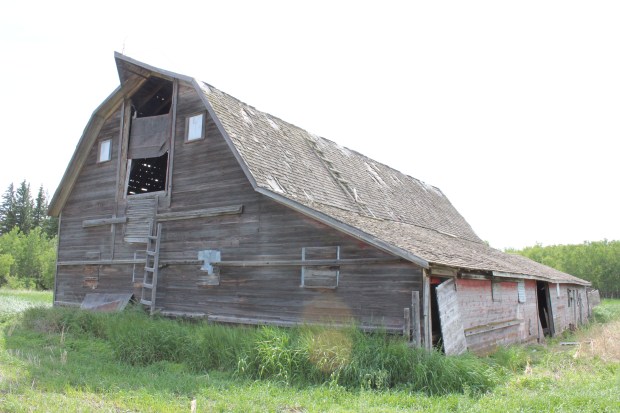
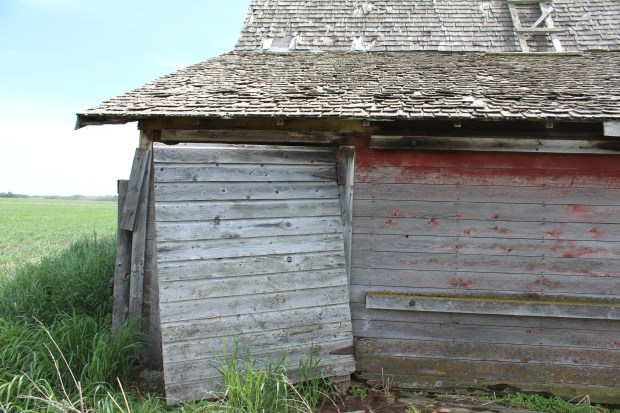
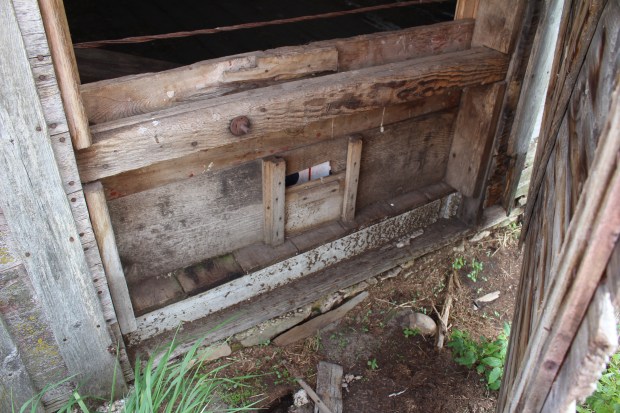
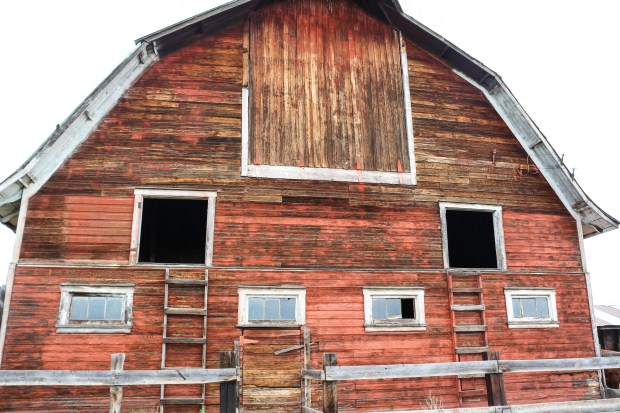
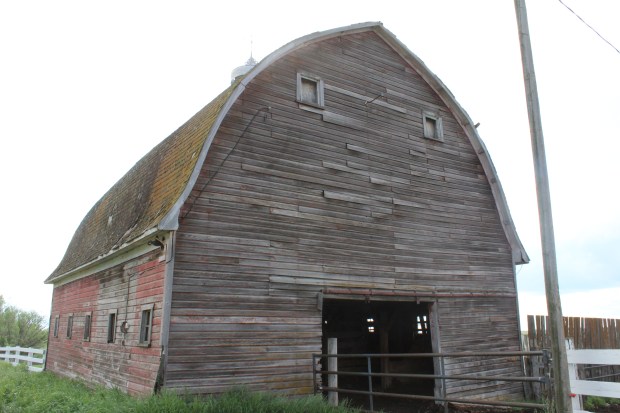
View of the main barn. The windows are boarded up to keep grain inside and a ladder was installed in order to inspect grain. Both of these features are remnants from the time when the barn was used as a granary.

IMG_4212

View of the main barn from the south. The western side of the barn was used for horses while the eastern side was used for cows. There used to be a horse silhouette made out of strips of wood on the western door of the south facing side of the main barn (the door on the left of the broad face of the barn in this frame).

IMG_4214

The beams and the anchors for the steel wire, used to keep the building from bursting under the pressure of the grain, are visible in this frame.

IMG_4213

The painted number “36” is faintly visible. Numbering bins helps farmers keep track of their crop once it is stored in the granary.

IMG_4217

The hay hood and the hay track can be seen in this frame. The addition is also more clearly visible.

IMG_4225

One of the north doors. This one is for entry into the cattle side of the barn via the attached shed.

IMG_4221

Alterations were made to the entry so that grain could be stored inside of the barn.

IMG_4219

This frame was taken from the north-east entry door and it shows the view inside of the east side of the main barn.

IMG_4227

This frame shows the north side of the barn. Once again, you can see boarded up windows and anchors for the steel wire.

IMG_4229

The northern side of the main barn, of the cow shed, and of the chicken coop.

This frame shows where the main barn and the cow shed join. The stone foundation that supports the barn is also visible.

IMG_4270

This frame shows the view from the north side entry. The enclosed area to the right of the ladder has the remnants of the west horse stalls. The enclosed area has the other half of the horse stalls and the walkway between the two sets of stalls.

IMG_4269

The floor is a mixture of concrete, wood, and stone.

IMG_4241

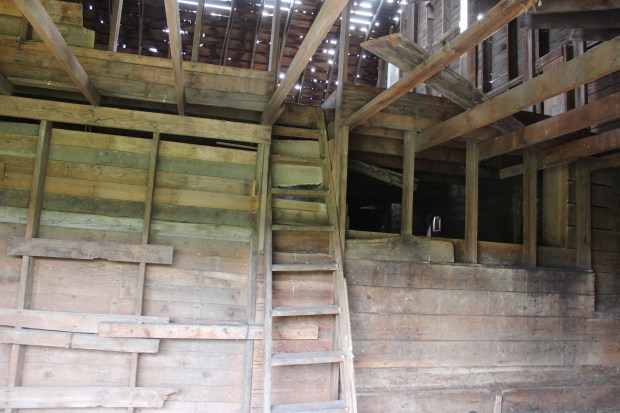
The west horse stalls. The stall walls have been taken out and the area has been boarded up for grain storage. The mangers, one feed chute, and some left over grain can be seen in this frame.

IMG_4255

The view from the ladder looking up into the loft. The loft door in this photo is for the east end of the barn.

IMG_4244

Many steel braces, to keep the building from falling down, can be seen in this frame.

IMG_4249

The roof on this barn is a gambrel, meaning it has two slopes on each side of the roof. This is caused by the rafters that were used to construct the roof.

IMG_4251

One of the two chutes over the western horse stalls. This particular chute was seen in frame 19.

IMG_4246

The second chute heading into the western horse stalls. This chute is on the northern side of the barn.

IMG_4264

This frame shows the first floor, eastern set of horse stalls. The actual horse stalls would have started at the posts and ran back to the east wall. You can orient yourself with the knowledge that the tack holder in this picture runs east-west. As said earlier, the stalls were dismantled in order to create an open space for grain. The concrete floor has an indent, which was for drainage of excrement, leading us to conclude that the walkway between the two sets of stalls ran north-south. The door on the right edge of this frame used to have a horse decoration on it that was made out of cut wooden strips. The wall of timbers on the right side of this frame separates the two granaries and also the two sides of horse stalls.
IMG_4271

This frame is the view from the north of the backside of the main barn, covered cattle area, and the chicken coop.

IMG_4233

This frame shows where the main barn and the cow shed join. The stone foundation that supports the barn is also visible.

Location

52.787090, -111.946803                                             SE 15-44-14 W4

Characteristics

Barn Condition: Poor

Construction Date: Unknown but before 1920

Features: Hay hood, hay rack, one lightning rod

Roof Shape: Gambrel

Paint: Was painted red but has now worn off

Decorations: No visible names or decorations but there are granary numbers painted on the south side of the barn

Roof Covering: Wooden shingles

Siding: Wooden flush siding

Foundation: Foundation of field stone and concrete