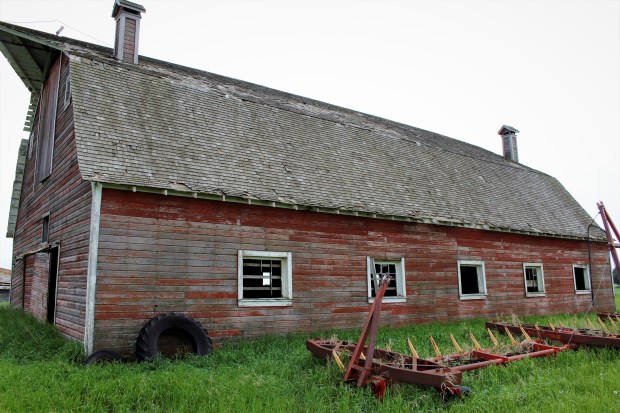
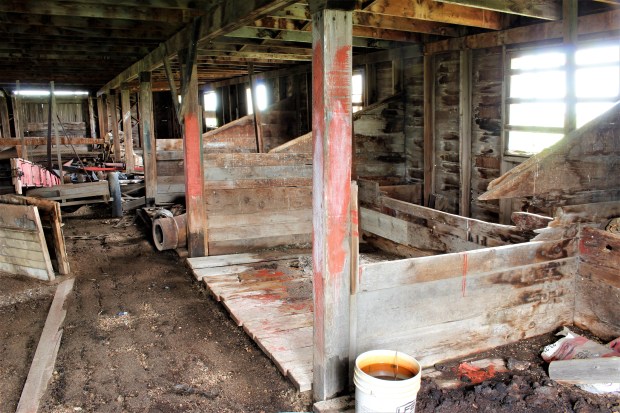
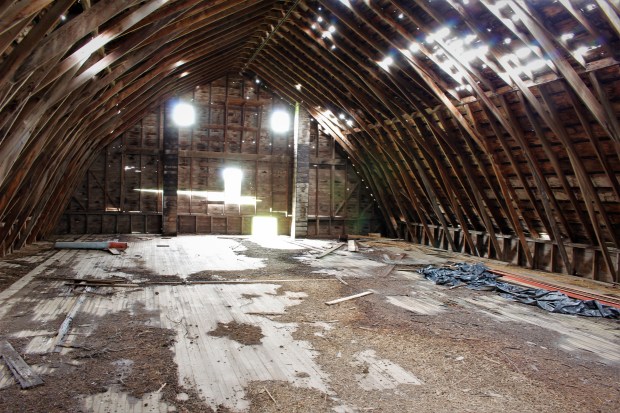
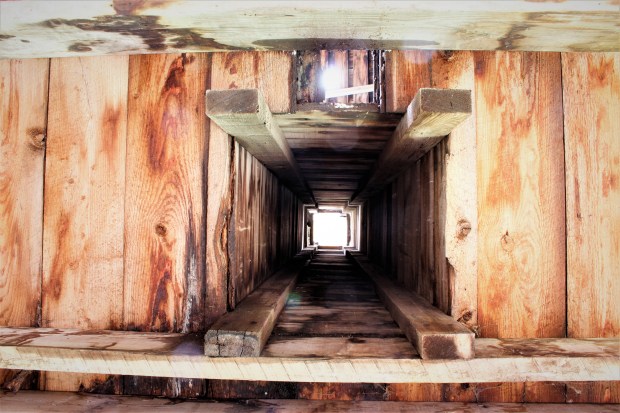
Updated Eshpeter Barn Pictures

2017 Pictures of 2016 Eshpeter Barn Renovation

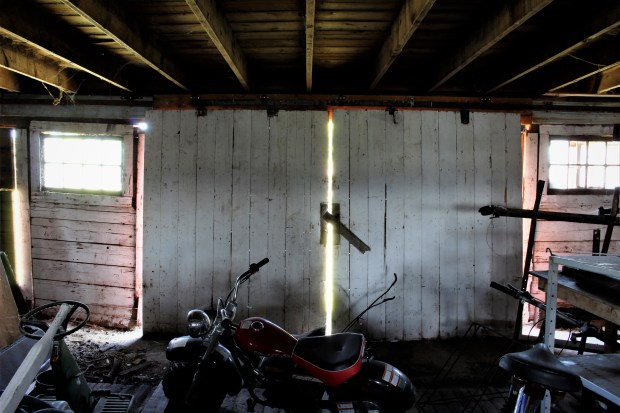
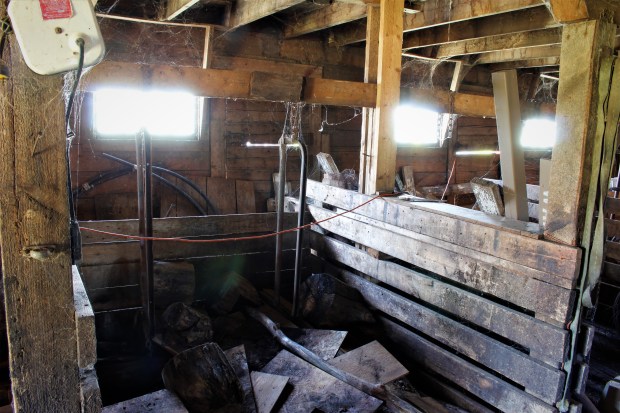
In November 2016, the Eshpeter Barn underwent extensive renovations. These improvements will greatly extend the life of the barn and increase its modern-day functionality. The rejuvenation will allow the barn to continue to serve the entire family, as a tether to the past. It will act as a daily reminder of the family’s history and as a source of comfort for the younger generations. No one in the family will be untouched by the gentle giant – the heritage barn.
_MG_7645

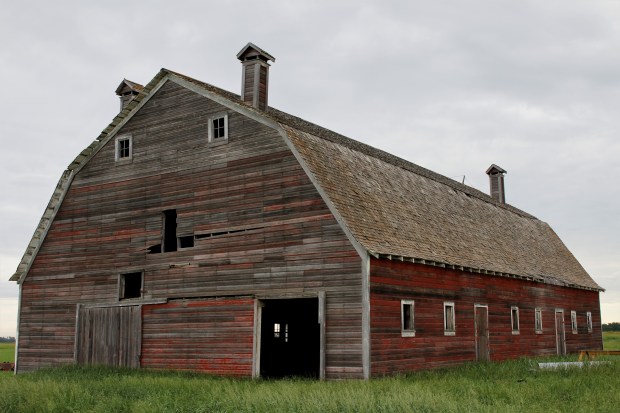
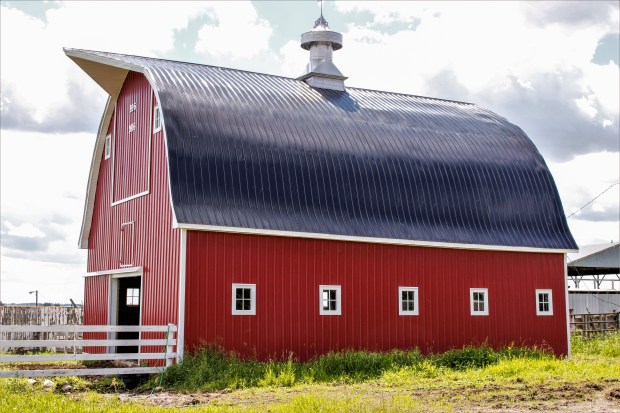
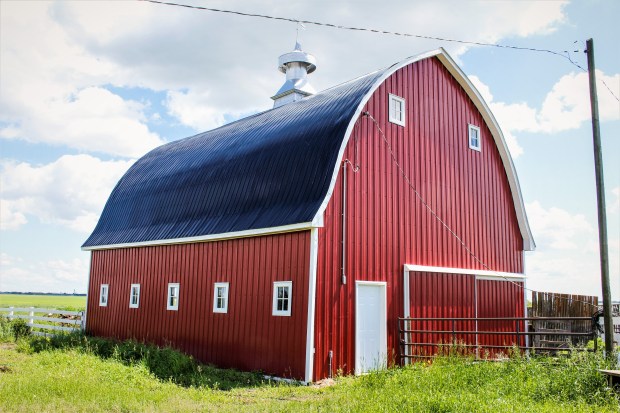
This frame is of the northern side of the barn and part of the eastern face of the barn. The Eshpeter family put new metal roofing and siding on the barn.

_MG_7650

This frame is a close up of the hay hood and loft doors on the eastern side of the barn. The original “1926” year that was painted on the face has been updated to metal and the year “2016” was added. 2016 is the year the renovation were done.

_MG_7648

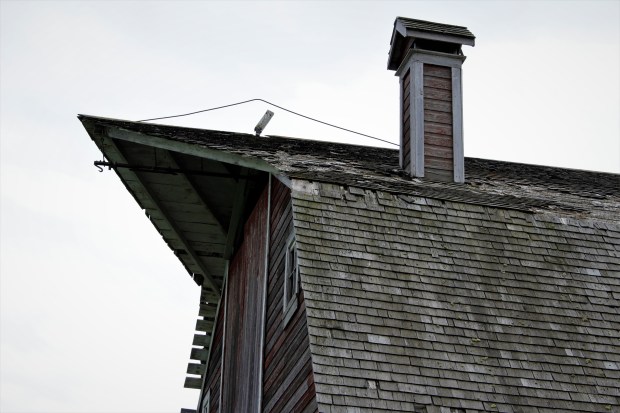
This frame is a close up of the metal ventilator on the roof of the barn. Much of the ventilator was replaced with new metal but the embossed portions were preserved from the original ventilator.

_MG_7690

This frame shows the northern side of the barn. Notice that the old pulley for the hay carrier has been removed. 
_MG_7666

This frame shows the western face and northern side of the barn. A new door was installed in the north-western corner of the barn.

_MG_7669

This frame shows the new staircase in the north-eastern corner of the barn. Additionally, new ply-wood can be seen on the North side of the barn. This was installed because much of the original wood had rotten away on this side. The South side of the barn did not need to have this done. The South side of the barn is still in its original condition except for the removal of the stalls.

_MG_7674

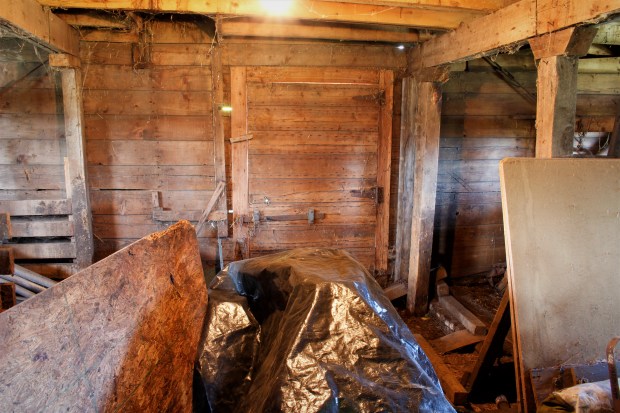
This frame was taken while standing at the top of the staircase in the loft whilst looking South.
_MG_7672

This frame shows the western face of the barn.

_MG_7678

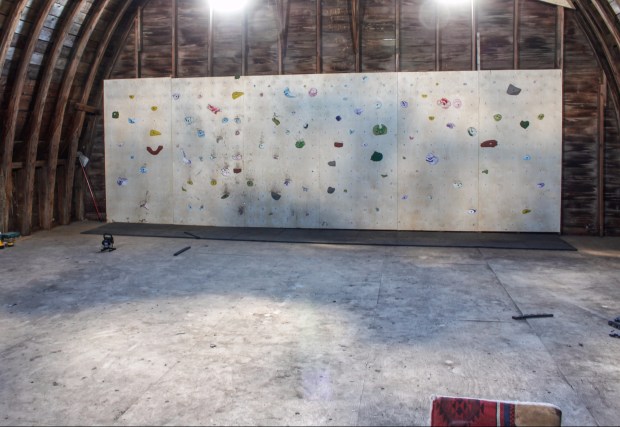
Nathan Eshpeter and family installed the climbing wall, pictured here, for their children to play on.

_MG_7683

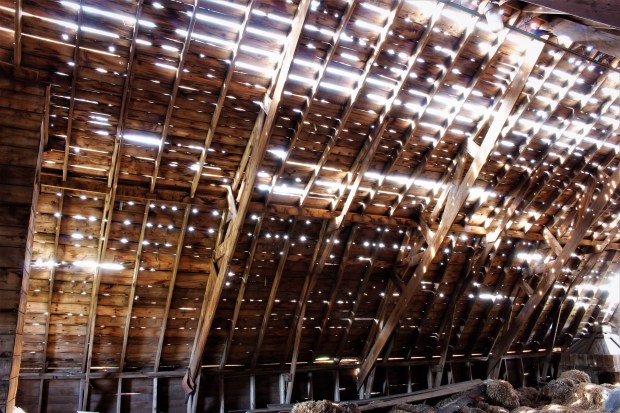
This frame shows the north-eastern quarter of the barn’s roof. Note the electric lights which illuminate the loft and steel cable which braces the roof.

Characteristics

Barn Condition: Good

Construction Date: Assumed built in 1926

Features: One metal ventilator, hay hood, weather vane on top of the ventilator

Roof Shape: Arched

Paint: Red with white trim

Decorations: The date of construction and date of renovation are fastened to the eastern face of the barn.

Roof Covering: Black metal

Siding: Red metal

Foundation: Concrete foundation with dirt floor.

2016 Renovations

Hay track and hay carrier were removed, metal siding/roofing installed, new staircase to loft, repairs to North side, rock-climbing wall installed in loft, plywood put down as loft floor, new lighting and support cables installed.

Stadler/Spiller/Gaume/Andersen-Scammell

History

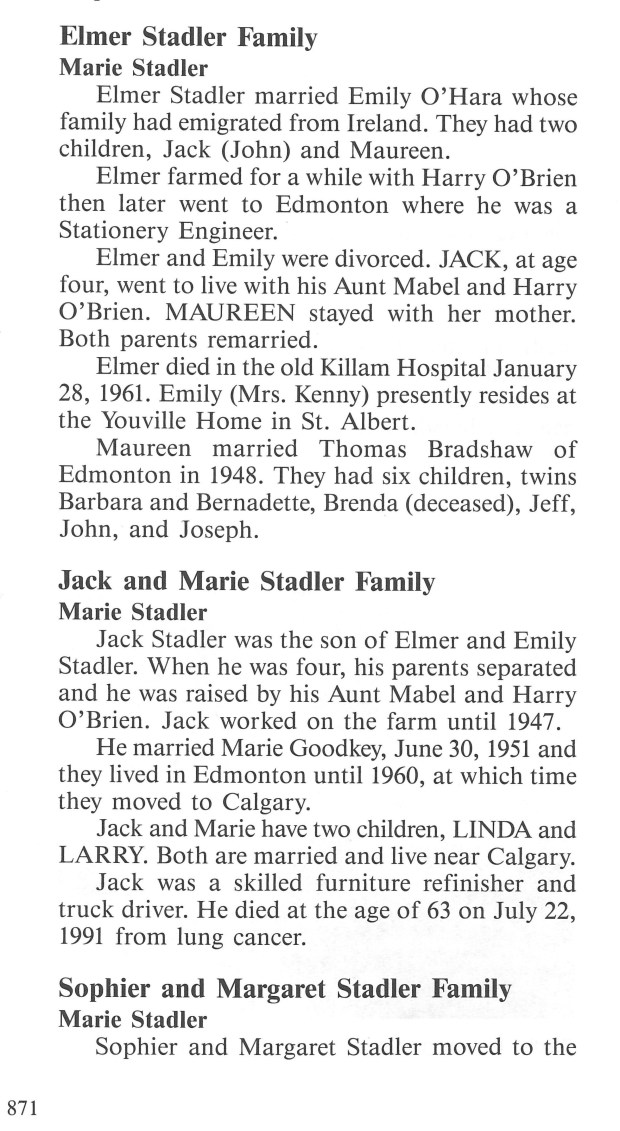
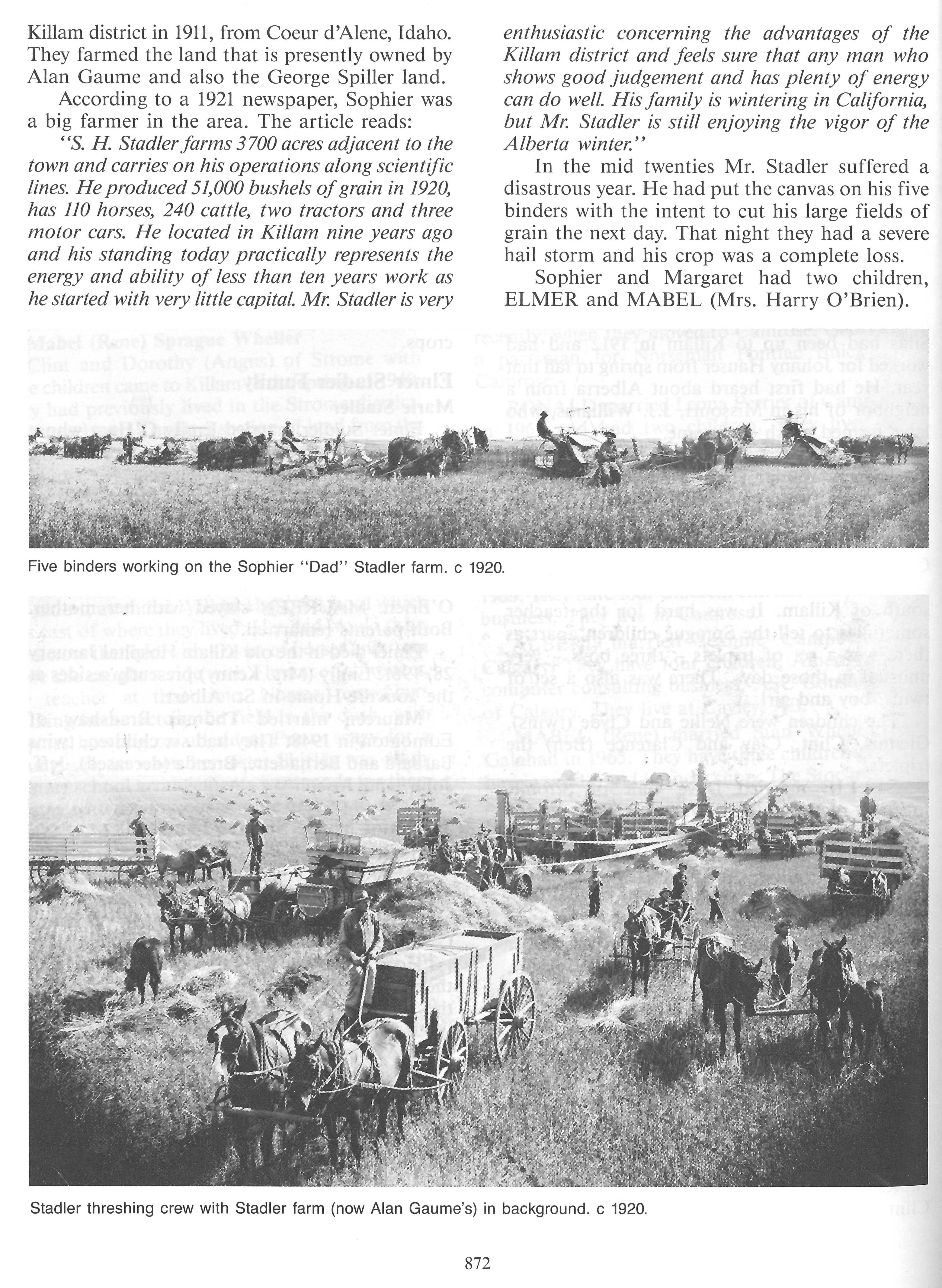
This barn was commissioned to be built by Sophier Stadler. Sophier and Margaret Stadler moved to the property the barn stands on in 1911 from Coeur d’Alene, Idaho. In the mid twenties, Sophier had a disastrous year and ended up having to sell the property.

In 1928, John Alexander (Lax) and Katherine George purchased the property from S.H. Stadler. Lax and Kate came to the Killam area in 1912 from the United States of America. They lived and worked with Lax’s brother, Len George, on NE 22-43-14 W4. Lax and Kate never lived on the Stadler property but their daughter, Helen, and her husband, Harry, did.

In 1945, Harry and Helen Spiller purchased the property this barn sits on from the Georges and farmed there until 1966. Harry Spiller used the barn for mixed livestock. He had draft horses and used teams of horses to farm until 1939. In 1939, Harry bought a tractor to farm with and got rid of most of his horses. Harry partitioned the barn off into sections in the early 1940s so that his family could raise cows and pigs. Harry’s son, George, lived on the property with his family from 1932, when he was born, until 1953, when he and his wife Therese (nee Leeb) moved to the old O’Connell Boys Home – SE 17-44-13 W4. George remembers playing in the loft of the barn as a young kid and watching the Keuber thrashing outfit fill the loft with plump, loose hay. George believes that at that time the Keubers even used their wooden thrashing machines.

In 1966, Alan Gaume purchased the property with his wife, Dorthy, and his family used it until 2014. The Gaumes had the northern half of the barn renovated so that they could store their combine inside the barn. As well, they used most of the rest of the barn to store grain.

In 2014, Kris Andersen and Chelsie Scammell purchased the property. Kris and Chelsie currently use the barn and penned areas surrounding the barn for cows and calves. They look forward to the days when their children will be old enough to enjoy the barn in their daily lives.

The barn has 16 stalls, which would have housed 32 horses. The barn used to be painted white and have green trim. It was only painted once in its entire life by S.H. Stadler. The barn was built using frame construction through platform framing.

Spiller, George. Personal communication. 26 Jun. 2017

Scammell, Chelsie. Personal communication 26 Jun. 2017.

_MG_7910_edited.jpg

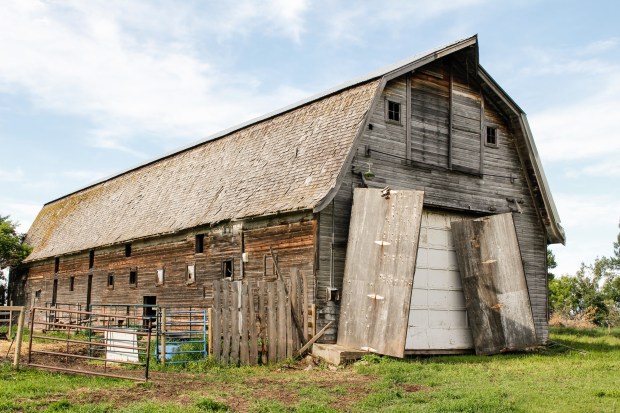
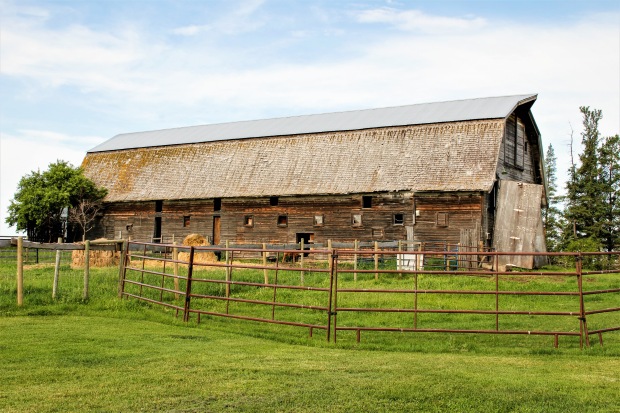
This frame shows the eastern side of the barn and part of the northern face of the barn. The Scammell family put up corrals so that they could use the barn for cattle.

_MG_7916

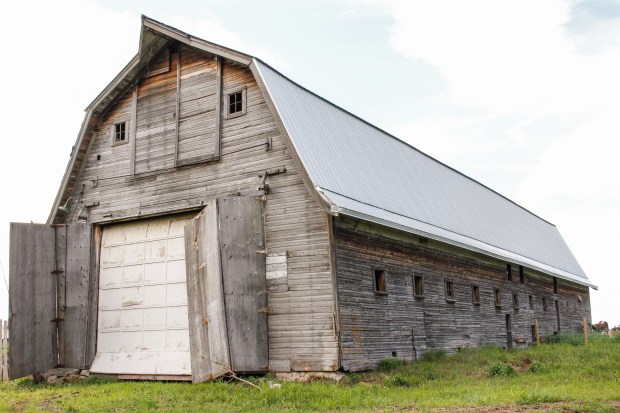
This frame shows the northern face and eastern side of the barn. The Gaume family renovated the barn when they owned it so that they could use the barn as a machine shed. The overhead door was installed at that time.

_MG_7929

This frame shows the northern face of the barn and the western side of the barn. This barn used to have 16 stalls – enough for 32 horses.

_MG_7955

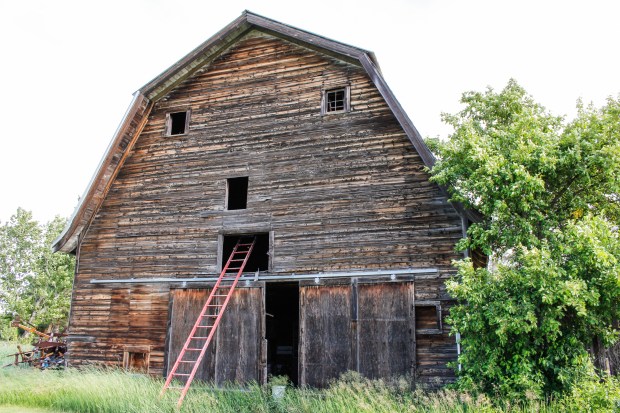
This frame shows the southern face of the barn.

_MG_7952

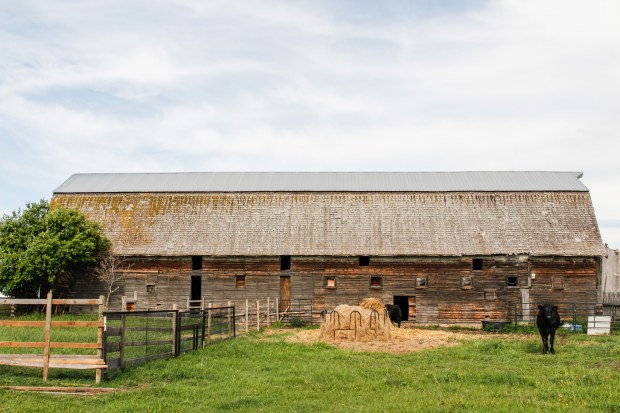
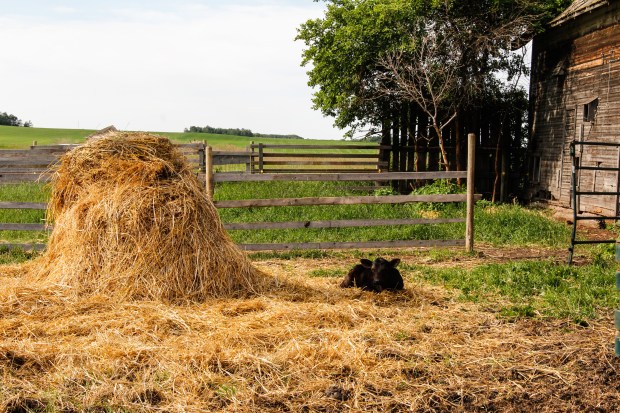
This frame shows the eastern side of the barn. The Scammell family uses the barn for calves and cows.

_MG_7938

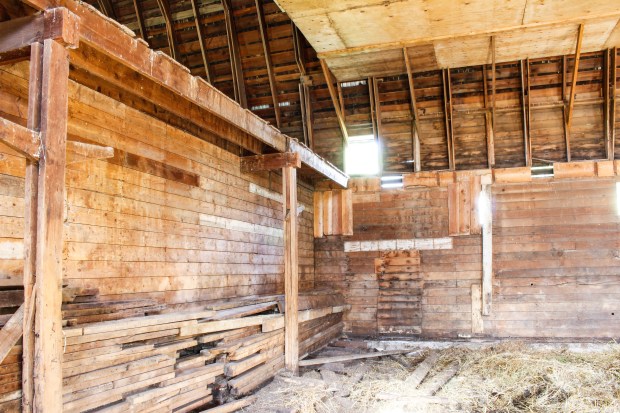
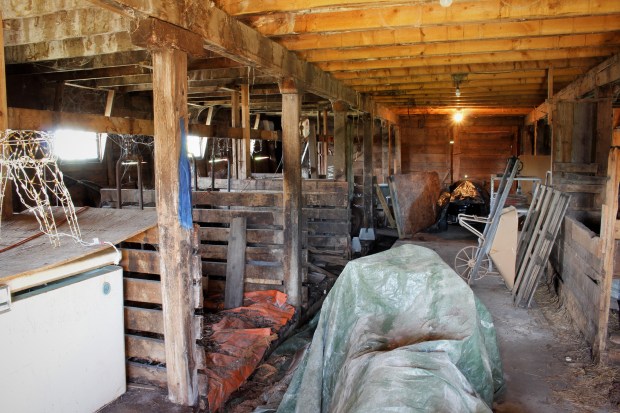
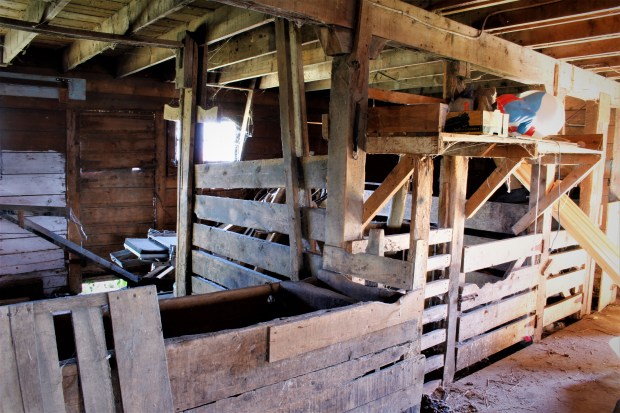
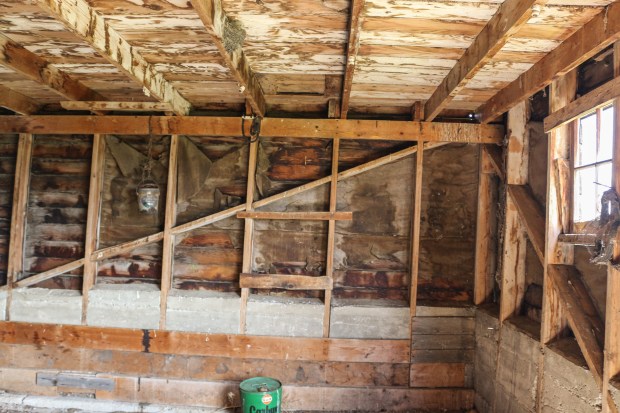
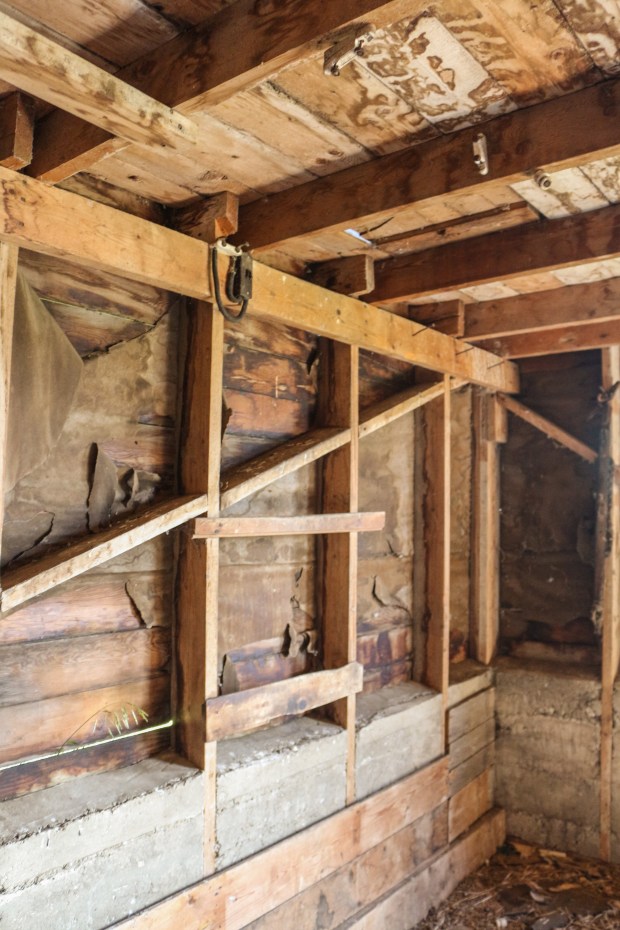
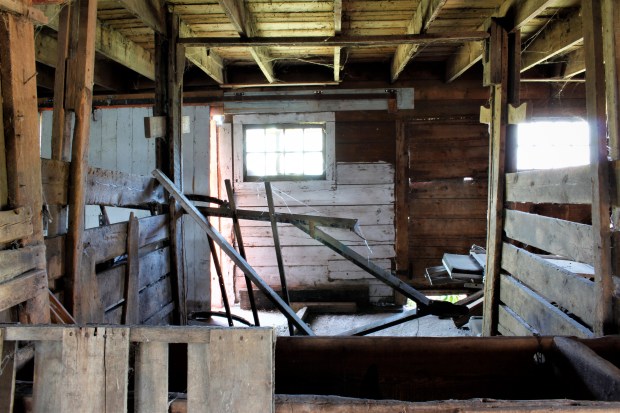
This frame shows the inside of the barn taken from the eastern side of the barn. This area was renovated so that a combine could be stored inside the barn. The wall on the left of this frame was installed so that grain could be stored inside the barn.

_MG_7958

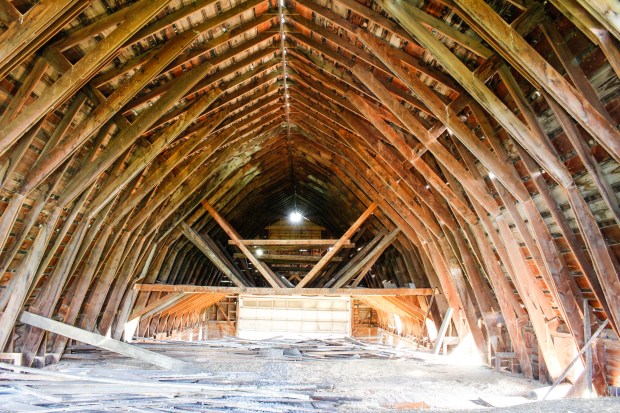
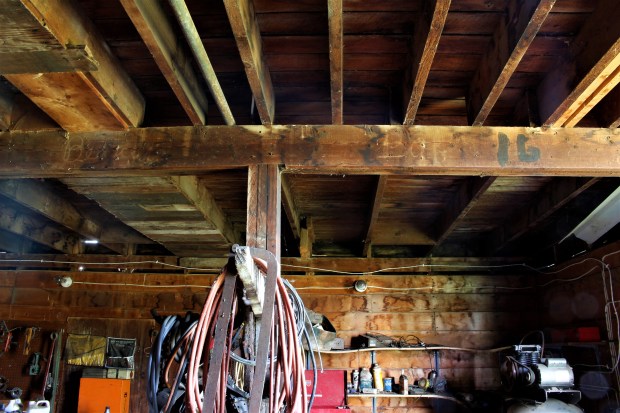
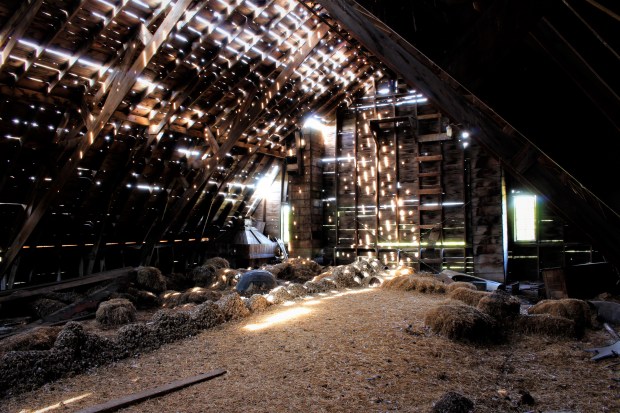
This frame is of the loft of the barn. It was taken while standing on the southern end of the barn looking North. Note the bracing for the overhead door on the North end of the barn.

_MG_7963

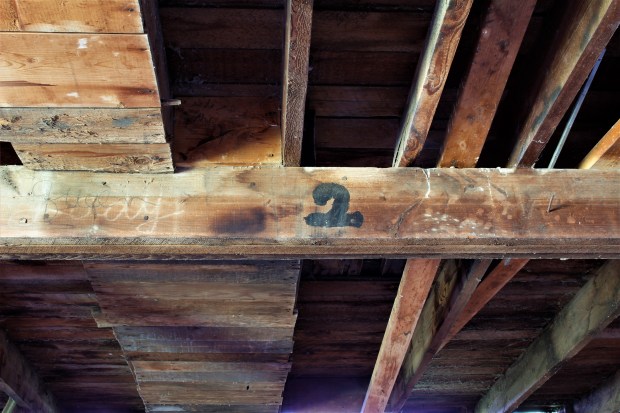
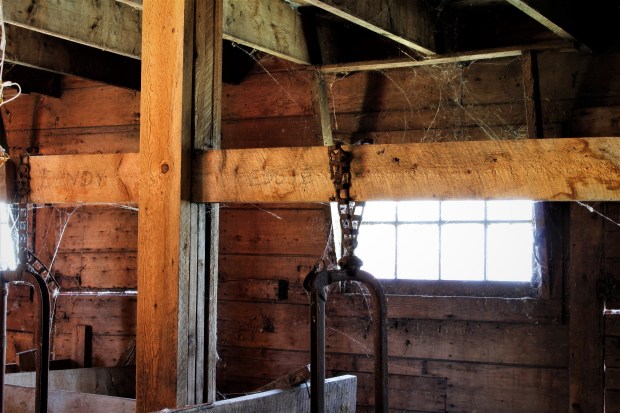
This frame was taken while standing in the southern half of the barn while looking West. The stalls in this barn were originally for horses and they were numbered “1” through to “16”. Each stall also had the name of the two horses housed in each stall written on the support beam above the stall. Note the names “queen” – in pencil – and “Lady” – underneath it in chalk – in the left aspect of this frame.

_MG_7964

This frame was taken while in the southern half of the barn while looking East. Note the names “Maud” – in pencil – and “Sandy” – underneath in chalk – on the left side of this frame. As well, on the right side of this frame is “Jenny” – in pencil – and “Beaue” – underneath in chalk.

_MG_7971

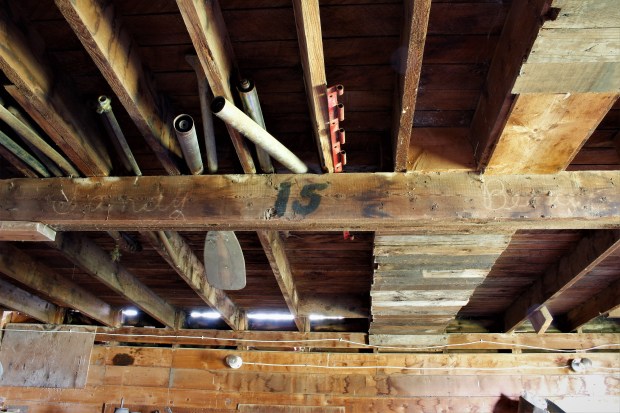
This frame was taken while in the southern half of the barn while looking East. “16” is the last stall in the barn in the South-East corner of the barn.

_MG_7931

Location

52.784096, -111.854815                                     NE 08-44-13

Characteristics

Barn Condition: Fair

Construction Date: 1914

Features: Hay hood, carrier, and track.

Roof Shape: Gambrel

Paint: None, used to be white with green trim

Decorations: No names or dates, used to have “SH Stadler 1914” in cutout wooden letters on the North face of the barn

Roof Covering: Metal and cedar shingles

Siding: Wooden shiplap

Foundation: Cement with some field stones

Additional History on the Property

stadler-1-e1498660976586.jpg

stadler-2-e1498661081952.jpg

Stadler, Marie. “Sophier and Margaret Stadler Family”. The Pleasant Country: Volume                       Two Killam and District 1903-1993. 1st ed. Killam: Killam Historical                                    Society, 1993. Print.

Billows/Sarasin

History

Warren Sarasin’s grandparents bought the property this barn sits on in 1969 from Elmer and Clara Billows. Warren’s grandparents milked cows in the barn up until the 1980s when Warren’s grandfather died. Warren’s grandmother lived on the property up until 2001 and then Warren’s parents bought the property. John and Marion Sarasin lived in the house on the property from 2001 until 2009. Since 2009, Warren and Lisa Sarasin have been living on the property. The barn has been used since 1980 solely for storage. This barn was built using frame construction and platform framing.

The house on this property and the barn were both moved by Elmer and Clara Billows from the Demonstration Farm in Sedgewick, Alberta. Elmer and Clara lived in the house and used the barn from the early 1920s until 1969. The house used to be the cook house on the Demonstration Farm and the barn was one of two large barns. It is believed that the Wesley family bought and moved the other large barn to an area South of Strome, Alberta. The Wesley family’s barn is also featured in this database.

Black, Dave. “Demonstration Farm at Sedgewick”. Sedgewick Sentinel: A History of                             Sedgewick and Surrounding Districts. 1st Ed. Sedgewick: Sedgewick                                        Historical Society, 1982. Print

Sarasin, Warren. Personal communication. 19 June 2017.

_MG_7441

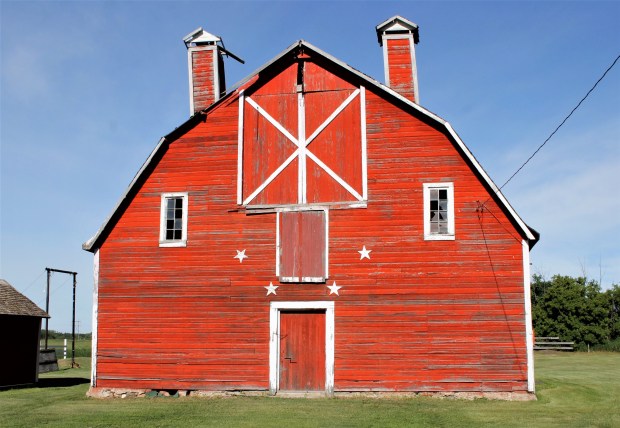
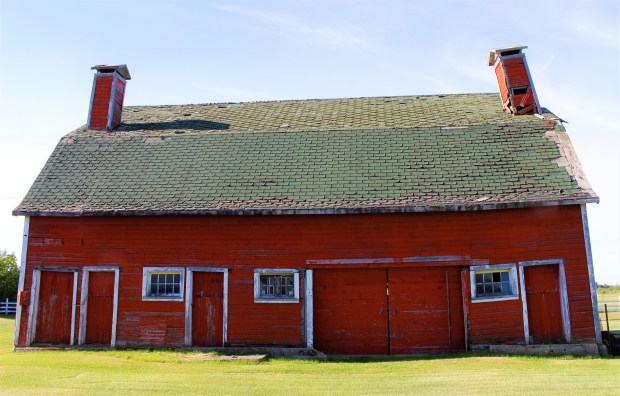
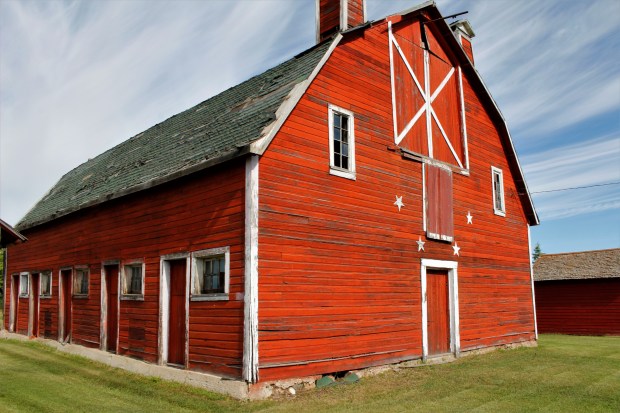
This photo is of the eastern face of the barn. Notice the four wooden stars near the bale door.

_MG_7446

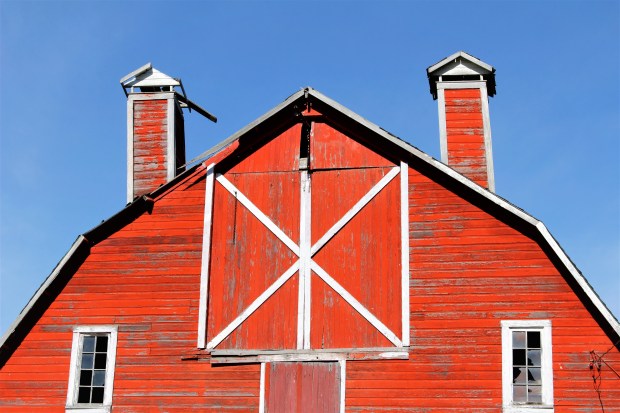
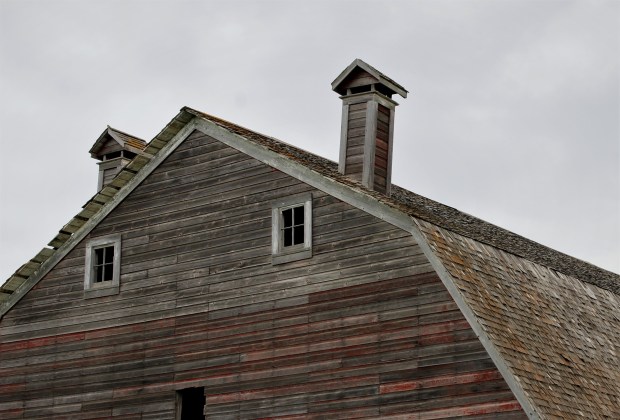
This photo is a close up of the eastern face of the barn. Notice the two wooden cupolas and the fold-down hay carrier door.

_MG_7451

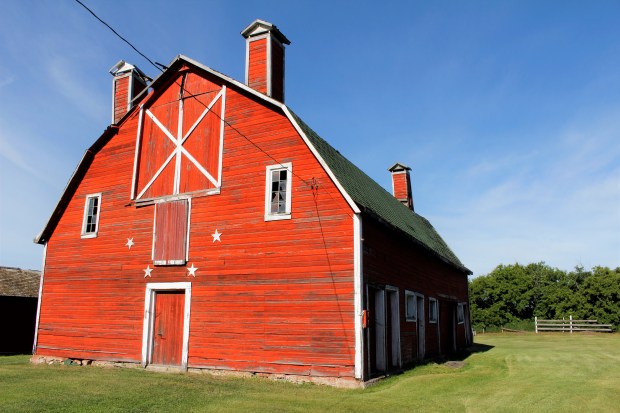
This photo shows the eastern face of the barn and part of the northern side of the barn. This barn originally had four cupolas – one in each corner of the barn.

_MG_7454

This photo shows the northern side of the barn. The large door in this frame would have been for machinery.

_MG_7494

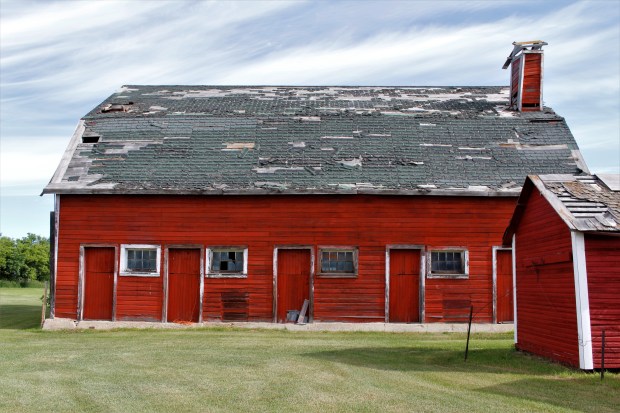
This photo is of the southern side of the barn. The doors on this side of the barn lead into stalls. By our best guess, the stalls would have originally been for horse because of the split doors. After the barn was moved here, it was most likely renovated for milk cows. Now, these doors lead into a walk-way in front of the milking stalls and stanchions. Notice the missing cupola. It was blown off in a strong wind storm.

_MG_7460

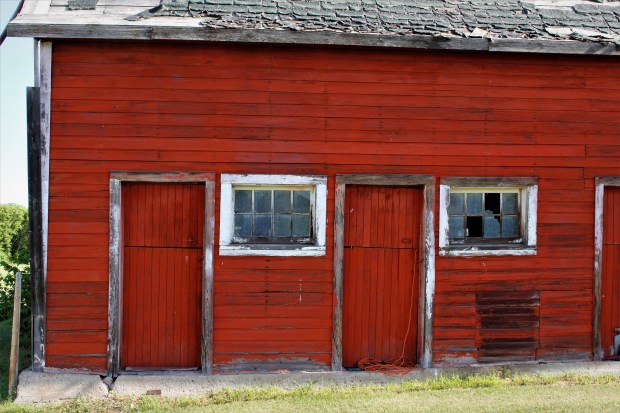
A close up of two of the doors and two windows on the south-west side of the barn.

_MG_7488

This photo shows the eastern face and the southern side of the barn

_MG_7463

This photo was taken whilst standing in the eastern doorway looking West.

_MG_7470

This photo is of the inside of the door on the western face of the barn.

_MG_7476

This photo is of the inside of the door on the northern side of the barn.

_MG_7473

This photo is a continuation of the last photo. In the foreground of the photo you can see a manger. In the background you can see the northern side of the barn.

_MG_7465

This photo is of the stalls on the southern half of the barn. This stall was set up for milking cows. Note the metal stanchions and the names of the cows written on the 2×4. The wall in the background is the southern side of the barn.

_MG_7472

This photo is a continuation of the last photo.

_MG_7467

Notice the names of milk cows written on the wood next to the stanchions.

_MG_7478

This frame is of the western face of the barn and rafters inside the loft.

_MG_7485

This frame is of the southern half of the barns roof and shows the platform which the roof sits on.

Location

52.776951, -111.704000                                     SW 08-44-12 W4

Characteristics

Barn Condition: Poor

Construction Date: 1912

Features: Four wooden cupolas

Roof Shape: Gambrel

Paint: Red with white trim

Decorations: Four wooden stars on eastern face

Roof Covering: Asphalt shingles

Siding: Wooden shiplap

Foundation: Cement and stone

Additional History on the Property

To learn more about the Sedgewick Demonstration Farm please click here.

Billows

“William F. Billow Family”. Sedgewick Sentinel: A History of Sedgewick and Surrounding                             Districts. 1st Ed. Sedgewick: Sedgewick Historical Society, 1982. Print

Wesley

History

Dave Wesley’s great-grandfather, Wencil Wesley, came to the Strome area from the USA in 1900/1901. Wencil and Mary had seven children. All of the family, except for Frank Wesley, the youngest child, moved back to the USA. Frank stayed and had four sons with his wife Cecilia. Their names were Arthur, Robert, Arnold, and Wilbur. Frank used the barn for mixed livestock. Dave Wesley vaguely remembers there being a corral on the South side of the barn. After Frank passed away, Arnold Wesley received the land. He farmed it from 1951-1994 but only ever used the barn for grain storage. In 1994, Dave Wesley purchased the property and used the surrounding land for crop farming. Dave is the son of Wilbur and Gloria Wesley. Although Dave never used the barn in the time that he has owned it, he does remember playing ball hockey up in the loft of the barn as a kid. This barn was built using frame construction and platform framing.

The barn on this property was moved by Frank and Cecilia Wesley from the Demonstration Farm in Sedgewick. The barn was dismantled into single pieces, moved by horse, and then reassembled on the current property. You can see evidence of this work to this day. Each piece of shiplap wooden siding has the original nail holes in it, which do not line up with the nails currently used to hold the siding. Today, the siding is not positioned in the same manner that it was at the Demonstration Farm. New nail holes were created when the barn was assembled at the current property because it would have been nearly impossible to put each piece of siding back into its original position.

This barn was one of two large barns which originally stood on the Demonstration Farm property. The other of these two large barns was purchased by Elmer and Clara Billows of Sedgewick. The Billows moved the barn from the Demonstration Farm to their property just off the schoolyard in town. That barn is also featured in this database and you can learn about it by clicking here.

Black, Dave. “Demonstration Farm at Sedgewick”. Sedgewick Sentinel: A History of                             Sedgewick and Surrounding Districts. 1st Ed. Sedgewick: Sedgewick                                        Historical Society, 1982. Print

Wesley, Dave. Personal communication. 16 June 2017.

_MG_7182

This frame is of the northern side and western face of the barn. Note the two cupolas.

_MG_7189

This frame is of the western face of the barn. Note the two separate entrances.

_MG_7193

This frame is of the western face and part of the southern side of the barn. You can see three of the four cupolas.

_MG_7195.2

This frame is a close-up of the two cupolas on the western side of the barn.

_MG_7220

This frame is of the eastern face of the barn. Note the hay hood and hay doors. The hay doors on this barn are similar to those on the Billow/Sarasin barn.

_MG_7206

This frame is a close-up of one of the cupolas, the hay hood, the hay doors, and part of the hay track.

_MG_7208

This frame is of the northern side of the barn. This barn has windows on the sides instead of split doors (like the Billows/Sarasin barn has). These windows make it more likely that this barn was originally for milking cows when it was on-site at the Demonstration Farm. Whereas the split doors suggest that the Billows/Sarasin barn was originally used for horses.

_MG_7226

This frame is of the stalls on the northern half of the barn. After the barn was moved, these stalls where renovated for horses. That is why these stalls have hardwood floors.

_MG_7227

This frame is of the walk-way between the northern set of stalls and the middle set of stalls. Note the door in the background. That door is on the western face of the barn.

_MG_7229

This frame shows the middle set of stalls. All of the stalls have been removed in this area of the barn. All that remains are the posts, which currently still function to hold the loft floor up. The stalls were likely removed so that the barn could function as a granary. .

_MG_7228

This frame is shows the southern side of the barn. The wall in the left aspect of this frame is the southern side of the barn. The door in the background cut into the western face of the barn. The dirt area in the center of this frame most likely a drive-way for equipment. Some examples of what would have come through here are a stone-boat for manure or a cart for hay/straw.

_MG_7233

This frame is of the rafters and the western face of the barn in the loft. The two columns in the background are the chutes for the two cupolas on the western side of the barn. Cupolas were a critical part of the barn because they allowed moist air to escape the barn.

_MG_7236.2

This frame is of the rafters which make up the southern half of the roof of the barn.

_MG_7237.3

This frame is of the rafters and platform on the northern half of the barn. The platform is critical for holding up the barn’s roof.

_MG_7245.2

This frame is of the backside of the loft door on the eastern face of the barn.

_MG_7241

This frame shows the chute for the south-eastern cupola. The staircase covering is also visible.

_MG_7251.2

This frame is a through-shot of the chute for the cupola on the south-eastern side of the barn. You can see that the chute does not go all the way to the ground floor but instead stops at the loft floor. This would have allowed the moist air to escape and prevented the wood inside the barn from rotting.

Location

52.696919, -112.061723                            NE 11-43-15 W4

Characteristics

Barn Condition: Poor

Construction Date: 1912

Features: Four cupolas, hay hood, hay carrier,

Roof Shape: Gambrel

Paint: Red with white trim

Decorations: No names or dates

Roof Covering: Wooden shingles

Siding: Wooden drop siding

Foundation: Cement

Additional History on the Property

To learn more about the Sedgewick Demonstration Farm please click here.

Also on the Wesley’s property is an old grain handling system. Grain bins are positioned on the East and West sides of the building. In the center of the building is the elevator which would lift the grain and deposit it into the bins. This building was also moved from the Demonstration Farm to the Frank Wesley farmyard.

_MG_7255

This frame shows the eastern face of the elevator.

_MG_7259

This frame shows the eastern face and southern side of the elevator.

Muyres

History

This barn and the old house in the same yard were moved to this quarter of land in the fall of 1963. Albert and Hiram James were the first people to own the barn back when it was still standing on the quarter to the south (NW 28-40-15 W4). After AtcoPower bought that quarter of land in the late 1950s, the barn was sold to the Muyres family. AtcoPower mined for a short while on the old James land but the coal was not good enough quality to warrant much exploration.

Kevin Lattery moved the barn for the Muyres. The barn had to be cut in half to move it because it was so long. The barn is approximately 80 feet long by 30 feet wide by 20 feet tall at the peak. The Muyres family insulated and double-lined the barn once it arrived. They put new tin on the roof and outer walls in the early 2000s.

The Muyres used the barn for milk cows from 1965-1981 and for pigs from 1965-1990.

Muyres, Donald. Personal communication. 15 June 2017.

19369325_10155394305192512_1010508396_o

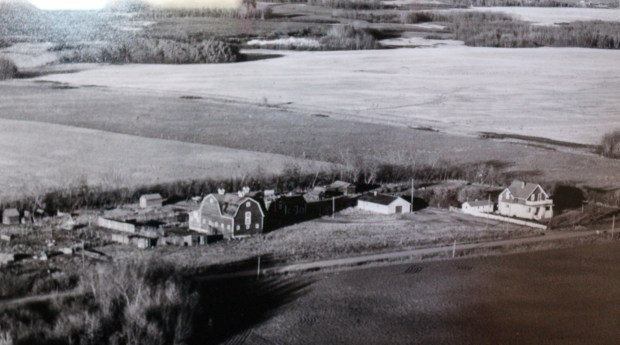
Aerial photo of farmyard taken in 1997. Range Road 154 is visible in the bottom of the frame. The southern face and western side of the barn are showing.

19400858_10155394306112512_162564912_o

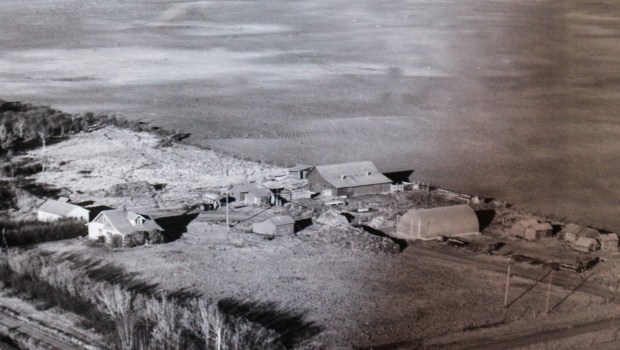
Aerial photo of farmyard taken in 1997. Range Road 154 is visible in the top of the frame. The southern face and eastern side of the barn are showing.

_MG_7121

This frame shows the southern face of the barn and the eastern side.

_MG_7124

This frame is of the southern face of the barn

_MG_7129

This frame shows the southern face of the barn and the western side.

_MG_7146

This frame was taken while standing in the southern doorway looking North.

_MG_7147

This frame is of some of the eastern set of stalls.

_MG_7152

This frame is of some of the other sets of stalls on the eastern side of the barn. These stalls are in the northern half of the barn. The metal stanchions are for milking cows.

_MG_7156

This frame is of the same eastern stall on the north-eastern side of the barn. However, this frame was taken while standing on the North side of the barn looking South-East.

_MG_7176

There are some old metal ventilators in this yard as well.

Location

52.482589, -112.114978                                   SW 33-40-15 W4

Characteristics

Barn Condition: Good

Construction Date: After 1919 but before 1954, most likely the early 1920s

Features: Two cupolas

Roof Shape: Gable

Paint: Red and white

Decorations: No names or dates, white trim

Roof Covering: White tin

Siding: Red tin

Foundation: Cement

Additional History on the Property

Donald Muyres’ great-grandfather was born in Holland. Don’s grandfather and father lived in Minnesota. Don’s father came to the Battle River area in 1922 and lived on several properties (NW 29-40-14 W4 and SW 33-40-15 W4) before settling on NE 32-40-15 W4 for the remainder of his life.


“Donald Muyres” “Michael R. Muyres Family” “Raymond Muyres” Yesterday and Years                              Ago: A History of Forestburg and District. 1st ed. Forestburg: Forestburg                             and District Historical Book Committee, 1983. Print.

Simpsons’ Corner

Additional History on the Simpson Family

The Simpson Barn is an outcrop of the real center of life in the Merna area – Simpsons’ Corner.

In 1882 Mr. and Mrs. George Simpson came to Winnipeg from England. They settled on NW 34-41-12 W4 in Alberta in 1914 after previously moving to Saskatchewan and Vancouver. Their five sons, Jim, Albert, Harry, Percy, and John, also came and made their homes nearby. Their single daughter remained in England. Jim, Harry, and John Simpson started business near their father’s home and formed what would later be called Simpsons’ Corner.

IMG_3359

The picture above is of the Harry Simpson house in 1957. The house is still standing on the intersection of Hwy 608 and Hwy 869. Harry owned the shop and garage just south of the house – across Highway 608 from this house. Harry Simpson fixed machinery, built homes/barns, and worked as a blacksmith. No one has been able to find a picture of the shop but it was a grand meeting place.

Vernon Simpson remembers how farmers used to come and sit around Harry’s radio, since Harry was the only one that owned a radio in the area at the time. As well, no farm work could be done in the night during that time period and horses could only work so many hours of the day. Many farmers would come into Simpsons’ Corner after the day’s work was done to get groceries and to visit Harry Simpson’s shop to catch up on news. Guests would often listen to the only station Harry could get on the radio: KOA Denver. This delighted many farmers! They were highly amused that the only news they could get was from 1,800 km away.

Harry Simpson owned the garage from 1914-1944. In 1944, Harry and his family moved back to Vancouver, British Columbia.

IMG_3363.JPG

The photo above is of Ivan Phouts store, which he opened in 1924 to serve farmers from all four directions. To the west of Phouts store was the home of Harry Simpson. Part of Harry Simpson’s yard can be seen in the bottom left hand corner of this photo. In the bottom right of this photo, you can see the shadow of Harry Simpson’s garage. The store was owned by the Klingers after the Phouts, then by Curly Rombough, and then by Marvin and Mary Rombough. The building was last used for business by Henry Keufler for a trucking company.

IMG_3358.JPG

This property pictured above was where Mr. and Mrs. George Simpson lived. It was directly south of the Phouts store – across Highway 608. Jim Simpson worked on his father’s farm and lived in the house picture here with his parents. John Simpson lived on this property as well but in a different house off to the left in this frame. John was a jeweler and also ran the post office in his house. He was stuck with ill health in the 1920s and went to a famous surgeon in Vienna. Alas, he died in Austria in February of 1926.

IMG_3356.JPG

The photo above is of Vernon and Marlene Simpson’s property in 1957. Vernon is the son of Percy and Carman Simpson. You can see the Simpson Barn in this photo.

IMG_3354

This property pictured above was where Cliff Simpson lived. Clifford Simpson was the third son of Albert and Florence Simpson.

For additional information on the Simpson family please see

“The Simpson Families and Simpsons’ Corner”. Sedgewick Sentinel. 1st ed. Sedgewick:                         Sedgewick Historical Society, 1982. Print.

Wise/Perreault/Voros

History

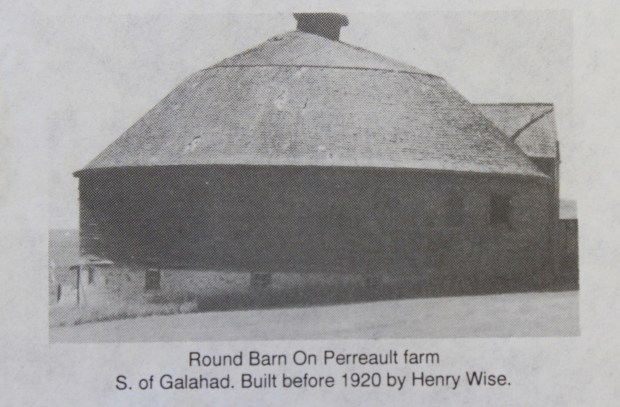
Henry Wise built this round barn sometime after he and his family arrived in the area in 1912. The family moved from Delphi, Indiana, USA by train, arriving in Killam, AB. They made the 30-mile trek from Killam to this quarter with supplies, including Mrs. Wise’s piano.

Henry built the large round barn to house his Red Poll cattle. The barn had a well inside which meant that the cattle, housed on the ground floor, always had water. The loft of the barn stored loose hay for feed and bedding. The barn was extremely unique because it was round and built into a hill. Due to this, a team of draft horses, pulling a rack of hay, could drive right into the loft of the barn. After the hay got unloaded, the team could circle easily inside the loft and then exit the barn. Bins for grain and chop were also in the loft of the barn. Straw was often threshed directly from the loft into the mow for bedding.

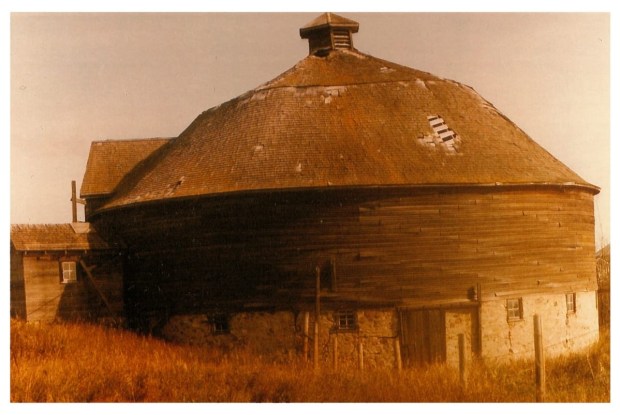
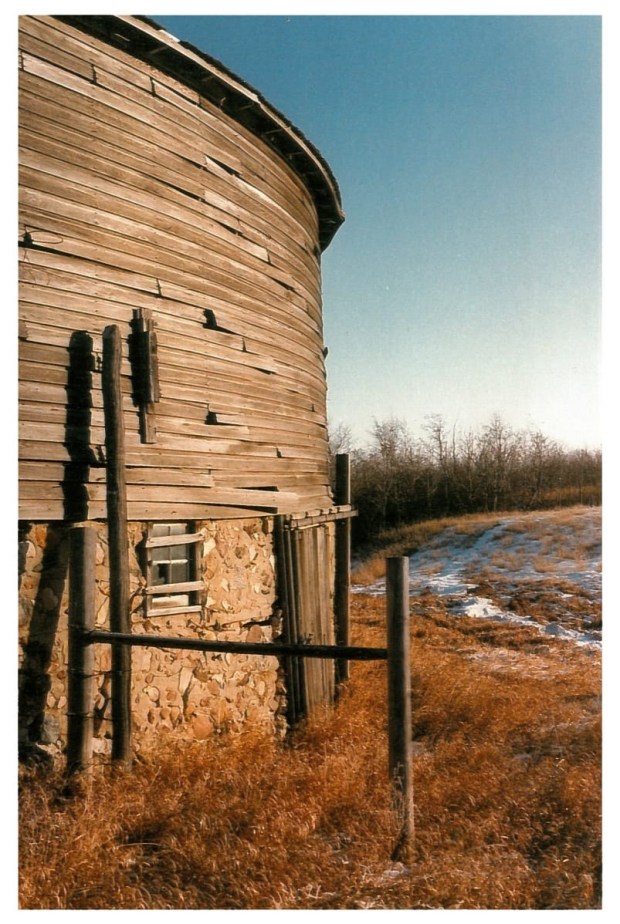
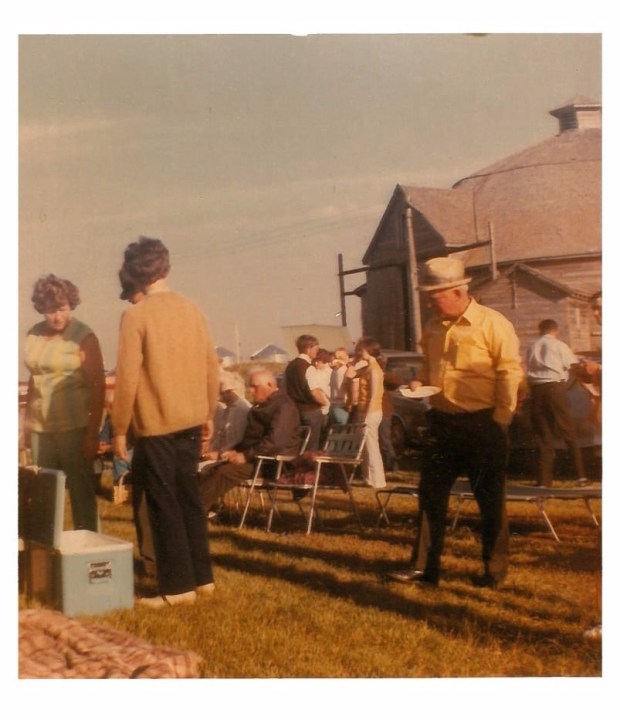
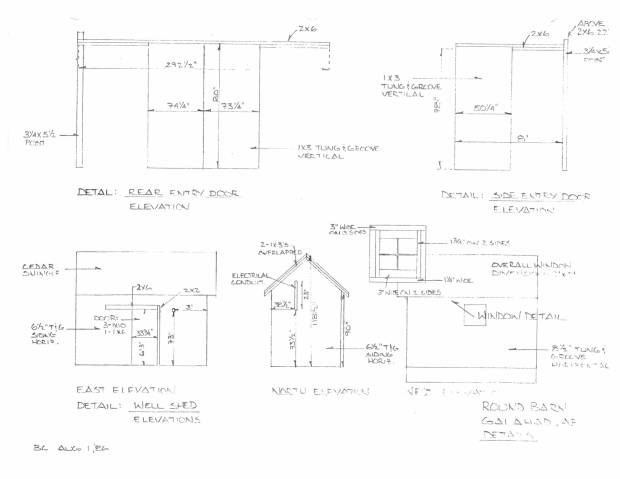
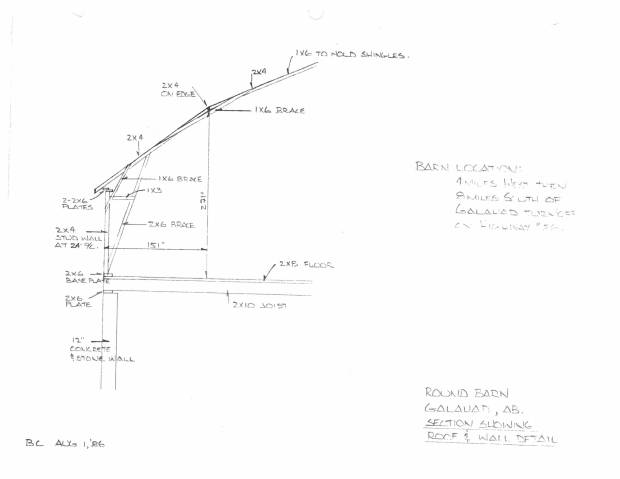
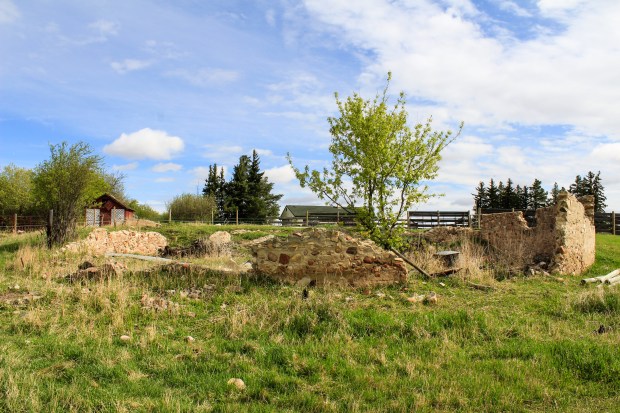
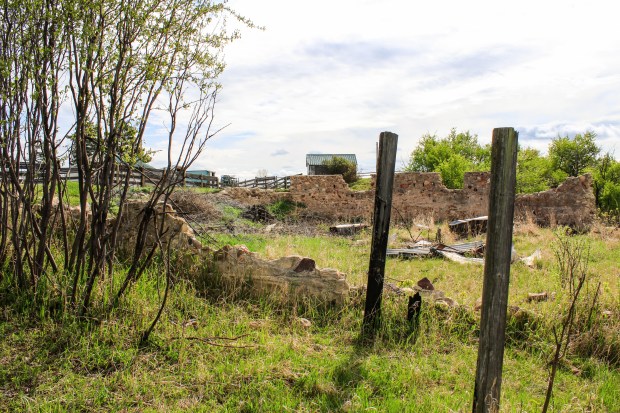
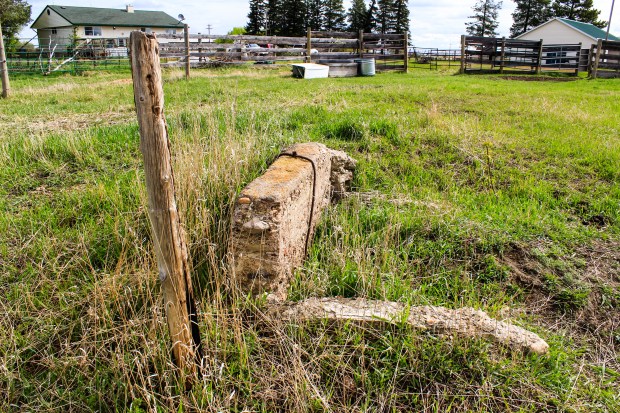
This barn no longer stands. It was set on fire and burnt down in the 1990s. Grant Jackson provided these photos and the plans for the barn. He collected the following photos because he thought that the barn was incredibly unique and deserved to be documented for future generations.

The property the barn used to sit on was owned by the Perreault family sometime after the Wise family. However, the property is now owned by Tommy and Sarah Voros. The Voros family intends to raise their cattle, sheep, and children around the ruins of the old round barn.

Jackson, Grant. Personal communication. 15 May 2017.

Voros, Sarah. Personal Communication. 15 May 2017.

1

View of the barn from the west taken at a point longer ago than the rest of the images.

2

The barn was in a state of disrepair before it burnt down.

3

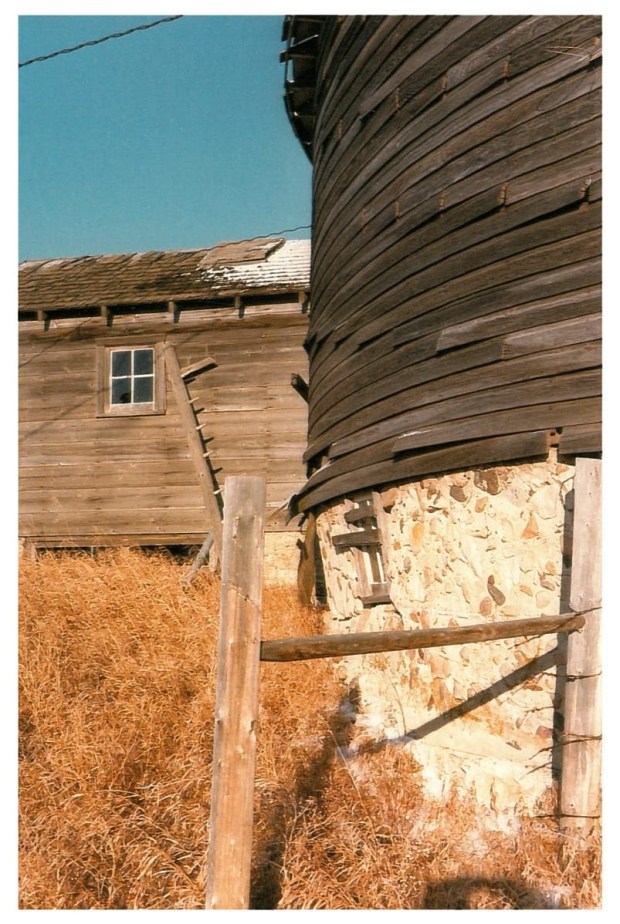
The wooden shiplap siding was curved to cover the barn’s exterior.

4

The conical roof has a single cupola.

5

View of the barn from the north-west.

6

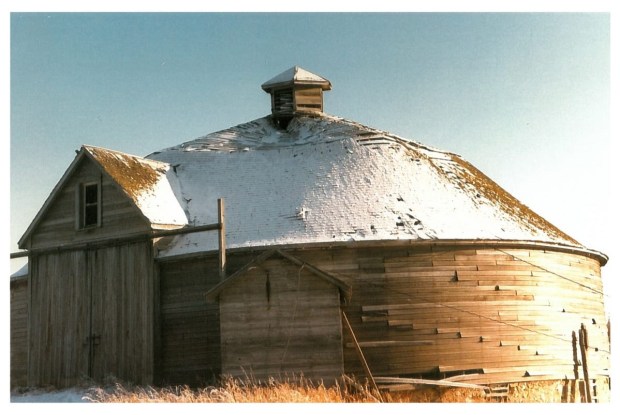
The round barn had many windows and three entrances. The one to the loft is pictured here. The door faces to the north.

7

This photo shows aspects of the main barn, the attached room, and the post that supports the beam that the loft doors slide on.

8

9

The cupola was hexagonal.

10

There was a large door to access the ground floor on the south side of the barn.

11

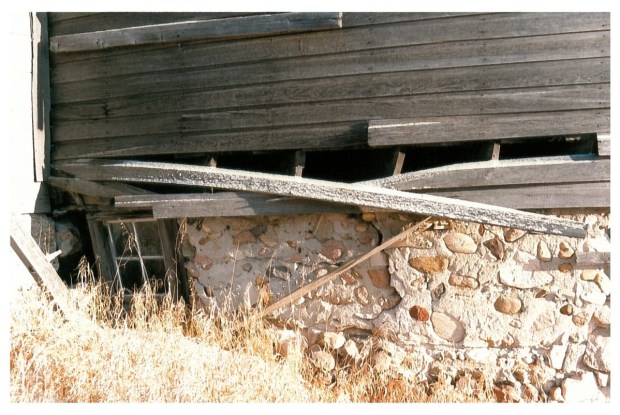
The stone foundation for the barn was is poor condition before the barn burnt down.

12

This frame shows the western door on the ground floor.

13

The beam and post supporting the western door are visible in the left corner of this frame. The south door is just visible in the right portion of this frame.

14.jpg

15

The round barn was featured on a paper handout promoting heritage preservation. It was prepared by the Historic Sites Committee of the County of Flagstaff.

16

The plans for the barn.

17181920

_MG_6314

View from the South of what the barn looks like today.

_MG_6328

This frame shows the barn from the West.

_MG_6329

This frame shows the cement foundation for the building which used to be on the north-western side of the barn.

_MG_6308

This frame shows the southern side of the barn

_MG_6302

This frame shows the south-eastern side of the barn.

_MG_6306

The walls were poured using slip forms. Additionally, you can see how the large rocks were pushed to the outsides of the walls so that they could be seen from the outside.

_MG_6322

This frame shows the inside of the south-eastern wall.

IMG_6319

These holes used to have wooden beams in them. The beams would have been burnt away when the barn was burned down.

Location

52.461967, -111.907767                                       NE 23-40-14 W4

Characteristics

Barn Condition: Destroyed but foundation still visible.

Construction Date: After 1912 but before 1920

Features: Single cupola, shed addition, build into hill, round

Roof Shape: Conical

Paint: None

Decorations: No names or dates

Roof Covering: Cedar shakes

Siding: Curved wooden shiplap

Foundation: Field stone and cement

Additional History on the Property

“The Henry Wise Family”. Golden Echoes: A History of Galahad and District. 1st ed.                        Galahad: Galahad Historical Society, 1980. Print.

Jack Dubois & Martin Ullrickson

Written History from Local History Books

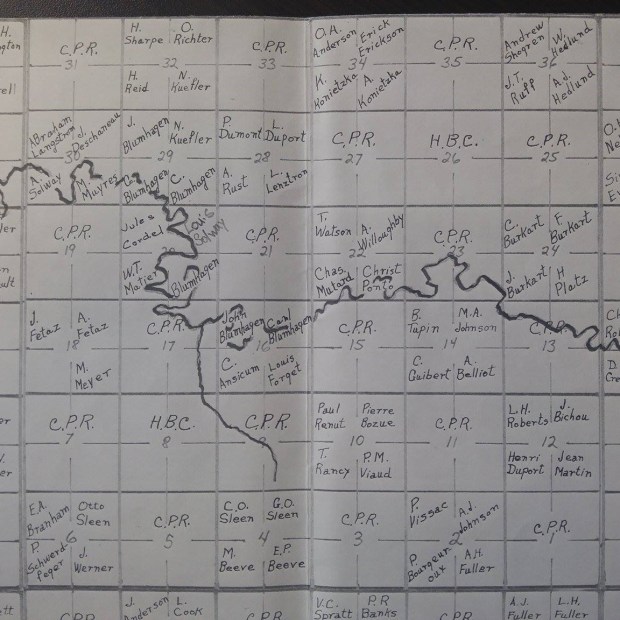
Martin Ullrickson had a run-in with some of the most notorious dwellers of the Battle River at that time. “Alberta’s Cattle Rustler King”, Jack Dubois, and his gang of cattle rustlers stole many branded cattle in the Forestburg/Galahad area. Many local residents still remember the name Jack Dubois to this day. For those of you unfamiliar with the story, the following history is worth the time it takes to read. The run-in between Dubois and Ullrickson was like a real life western film.

Ullrickson, Andrew. “Martin Ullrickson Family”. Golden Echoes: A History of Galahad                                and District. 1st ed. Galahad: Galahad Historical Society, 1980. Print.

Kuefler, Patrick E. “Jack Dubois: Alberta’s Cattle Rustler King.” Yesterday and Years                              Ago: A History of Forestburg and District. 1st ed. Forestburg: Forestburg                             and District Historical Book Committee, 1983. Print.

18596959_10155292566932512_892827937_o

“Homestead Map” from Golden Echoes: A History of Galahad and District. This photo shows Township 40 and Rage 14, West of the 4th Meridian. Note the names of the two Solway brothers who were members of Jack’s gang. Abraham and Louis Solway homesteaded SW 30 and NE 20, respectively, along the Battle River.

Additional History

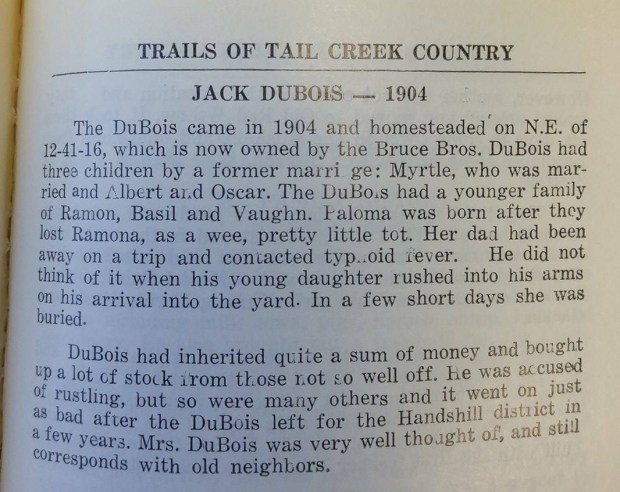
In our modern-day world, and in history, perspective is everything. In Edith Clark’s history book of Tail Creek Country, the picture of Jack Dubois is not one of evil. Instead, he is painted as a normal homesteader, but not without a few faults.

The entry starts on page 403 of Trails of Tail Creek Country, “I have read lately the biography of inspector J. D.  . .”

Wells, George A. “Life of an Early Pioneer in Buffalo Lake Area of Alberta.” Trails of Tail                                   Creek Country. 1st ed. Erskine: Edith Clark, 1968. Print.

1.1

Clark, Edith. “Red Willow – Jack DuBois – 1904.” Trails of Tail Creek Country. 1st ed.                                   Erskine: Edith Clark, 1968. Print.


Horan, J.W. “Chapter XVII: The Stettler Cattle Rustlers – 1907-8.”On the Side of the                     Law: Biography of J.D. Nicholson. 1st ed. Edmonton: The Institute of Applied                     Art, Ltd, 1944. Print.

The capture of Jack Dubois was critical for many Albertans. The fact that he and his gang could evade the authorities for such a long time infuriated people all across the province. Many newspapers of the time printed stories around the issue. Click here to see the master list of stories on Jack Dubois. You can find the following issues in that master list.

The Edmonton Bulletin, July 31, 1903

The Edmonton Bulletin, April 13, 1909

The Edmonton Bulletin, April 16, 1909

Western Globe, April 20, 1909

The Edmonton Bulletin, May 28, 1909

Red Deer News, June 2, 1909

The Edmonton Bulletin, July 1, 1909

Red Deer News, December 29, 1909

The Edmonton Bulletin, February 4, 1910 (5 P.M. EDITION)

The Edmonton Capital, July 5, 1910

Location

Jack Dubois and his gang settled, “near the tranquil edge of the Battle River Valley.”


*Additional information on Jack Dubois can be found on pages 33 and 34 of “Wrong Side of the Law: True Stories of Crime” by Edward Butts (2013).

Steadman

History

Robert Steadman remembers when this barn got converted from a livestock barn to a granary. This would have occurred in the 1960s. At that point, the dirt floor in the barn got changed to cement. The door on the east side was also added so that augers could deposit and remove grain from inside the barn. The majority of the grain would have through the northern door into the loft. There is still a handmade grain chute in the loft.

Steadman, Robert. Personal communication. 18 Aug. 2016.

IMG_2847

This frame shows the northern face of the barn and the eastern half of the barn’s roof.

IMG_2831

This frame is of the eastern side of the barn. There is one door in the middle of this side of the barn. This barn did not have any stall windows on the eastern side of the barn.

IMG_2802

The south face of the barn has a sliding door for entry into the lower half of the barn. There are three windows on this face but not loft door.

IMG_2801

This frame shows the southern face of the barn.

IMG_2830

The most interesting feature of this barn is the fact that it was built into the bank. The foundation uses cement blocks and poured concrete to secure the wooden frame.

IMG_2825

The most interesting feature of this barn is the fact that it was built into the bank. The foundation uses cement blocks and poured concrete to secure the wooden frame.

IMG_2803

This frame is of the door on the South side of the barn on ground level.

IMG_2805

This frame was taken from the southern door looking North.

IMG_2806

This frame shows where the western stalls used to be. The wooden framing is encased by poured concrete and wooden timbers. Inside the barn, one would not be aware of the humidity and heat given off by the sun that day. The inside of the barn is a good five to ten degrees cooler than the outside air temperature.

IMG_2811

This frame shows the northern wall of the barn which is solid concrete. The floor inside the barn near North wall is about two meters below the surface. The metal structure coming out of the roof (the loft floor) is most likely a chimney for a wood-burning stove that would have sat in this corner (the north-western corner).

IMG_2815

The rest of the northern wall of the barn.

IMG_2810

This frame shows the eastern wall, which the ladder up into the lost is mounted on, and the southern wall of the barn.

IMG_2822

When the concrete was poured for the barn’s foundation, the timbers along the walls would have been part of the forms.

IMG_2833

This frame shows the northern face of the barn above ground.

IMG_2840

This structure is part of the chute that the Steadmans used to funnel grain into the ground floor when the barn was being used as a granary.

IMG_2843

This frame shows the loft of the barn and the western half of the roof. The roof is a gambrel shape because of the two sets trusses used to construct it.

IMG_2842

Location

52.428608, -111.509843                                             NW 10-40-11 W4.

Characteristics:

Barn Condition: Poor

Date Constructed: Unknown

Features: No features or decorations

Paint: No paint

Roof Shape: Gambrel

Roof Covering: Wooden shingles

Siding: Wooden shiplap

Foundation: Cement block

Albrecht

History

John Hauser Sr. homesteaded the property on which the barn sits. Terry Raisenen owned the property in about 1965 to 1973. In 1973 Lena Christenson bought the land and sold it to Gunnar Albrecht in 1983. There used to be an addition with a lean-to roof attached to the northern side of the main barn. This addition was used purely for horses; however, it fell down/was demolished in 1983/84.

The barn was used for hogs by Lena Christenson and as a granary by Gunnar Albrecht. It is a very unique barn due to its size, layout, and grain handling system. The barn is huge, especially when one includes the lean-to addition that used to stand. At some point between 1920 and 1960 an addition was put onto the main barn that extended the eastern reach of the barn. Inside of this addition a grain handling system was installed. The two grain elevators in the loft of the addition lead to many chutes and grain bins. The incorporation of the elevators was well thought out and makes use of previously dead space.
Albrecht, Gunnar. Personal communication. 2 Aug. 2016

IMG_6714

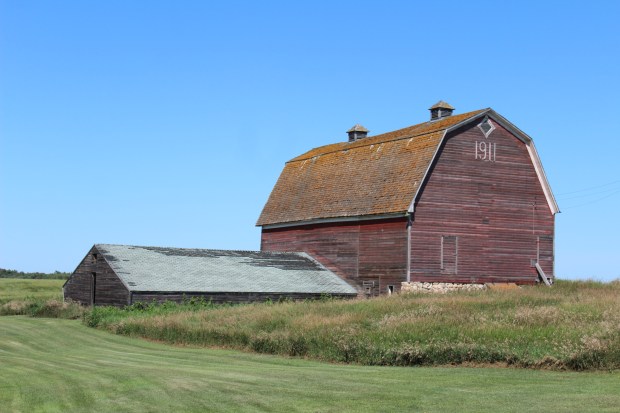
This frame is of the eastern face of the main barn and the eastern half of the hog barn’s roof. A portion of the southern parts of both buildings is also visible.

IMG_6717

IMG_6718

This frame is of the northern half of the main barn’s roof.

IMG_6719

IMG_6721

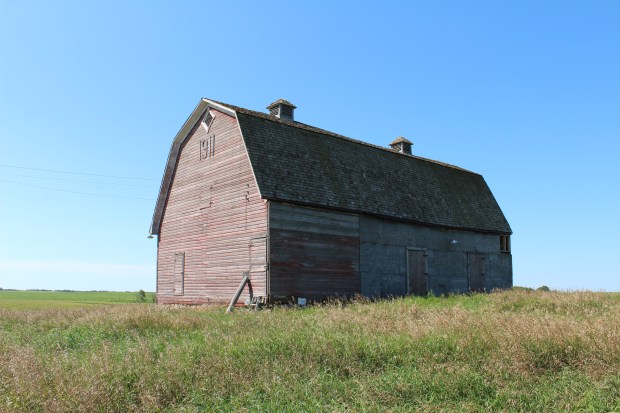
This frame shows the western face of the barn. The hay hood and hay track are also visible.

IMG_6730

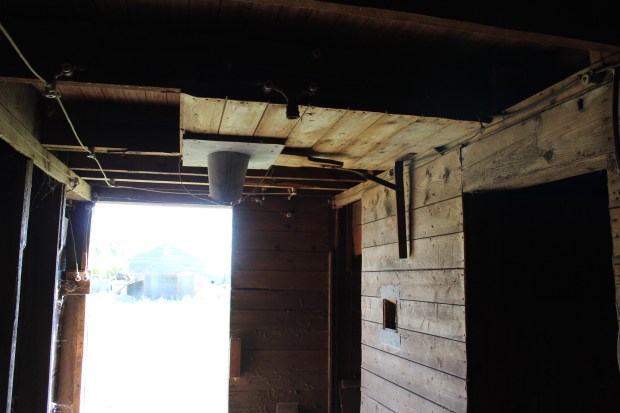
The door in this frame was added on when the barn was used as a granary. The door was used by the auger to bring grain out of the barn.

IMG_6732

This frame shows the western half of the roof above the hog barn.

IMG_6736IMG_6769

IMG_6745

This frame was taken while standing inside the hog barn looking south.

IMG_6742

This frame shows one of the pens that used to house pigs.


IMG_6751

This frame is of the north-western corner of the main barn on the first floor.

IMG_6760

IMG_6758

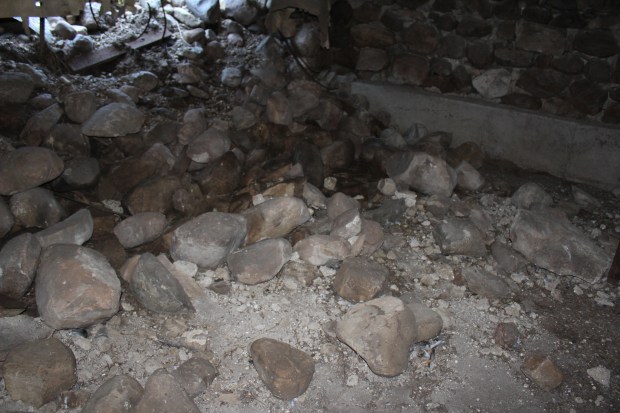
The northern stone wall that supports the northern side of the barn has collapsed.

IMG_6784

The doorway in this frame is the door on the eastern face of the main barn.
IMG_6785

This chute is part of the grain elevator system. Remember it for later as the chute nearby the eastern door.

IMG_6792

This frame is of the walkway after the door on the eastern side of the barn.

IMG_6857

This frame shows the western face of the barn.

IMG_6869

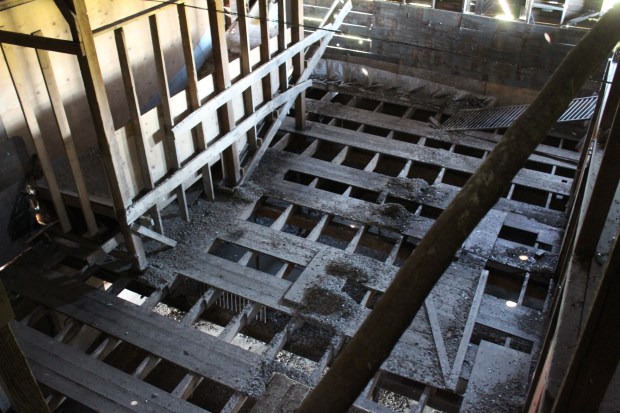
This frame shows the floor of the loft and the ground floor of the main barn. The open slits in the floor were created to allow for more grain storage.

IMG_6801

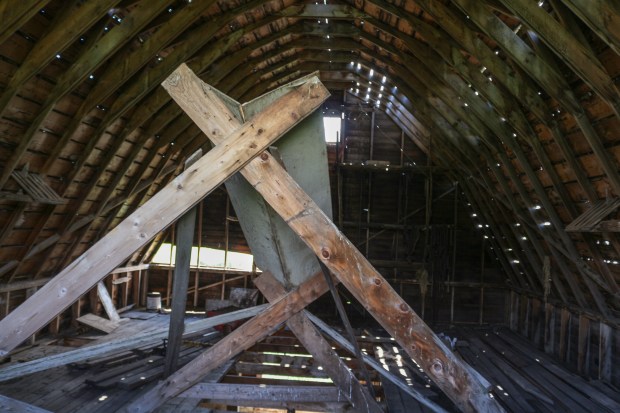
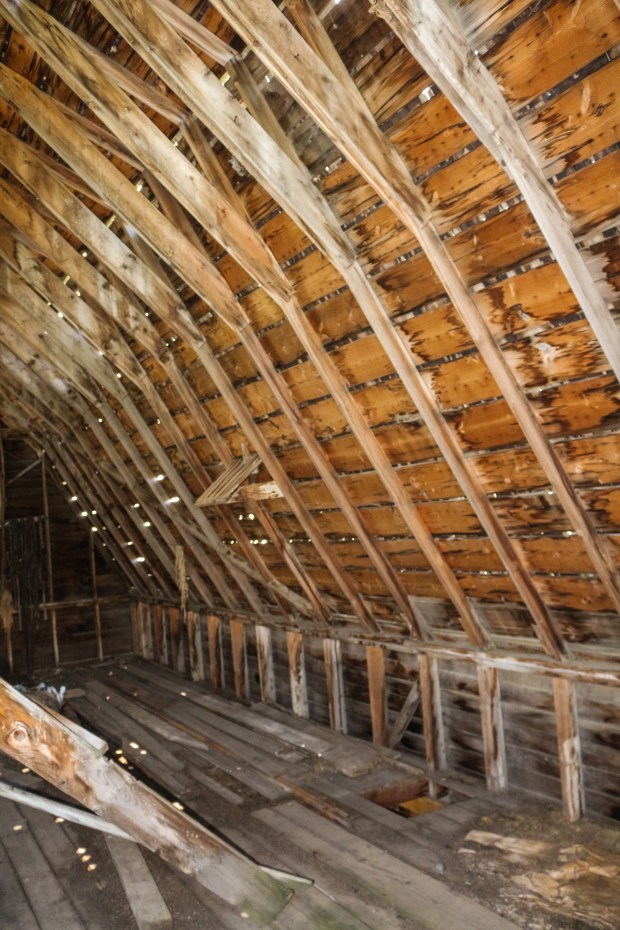
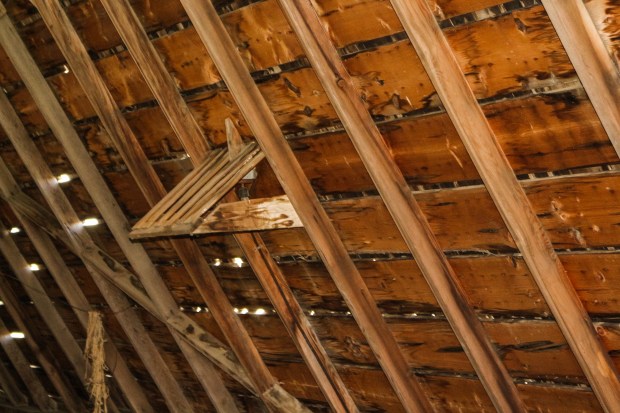
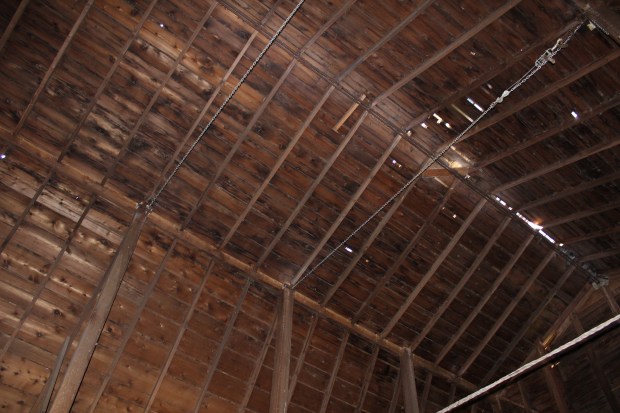
This frame shows the roof of the main barn from inside the loft. Steel cables and braces were added to keep the barn from bursting while it was being used as a granary.

IMG_6818

This wooden ladder was built to give access to the hay track in the peak of the roof.

IMG_6814

This stairway leads up to the grain handling system in the loft of the main barn addition. Note the door for the auger in the left corner of this frame.

IMG_6834

The face in this frame is the eastern face of the main barn. The grain handling system has two wooden chutes that move grain to different areas of the barn.

IMG_6830

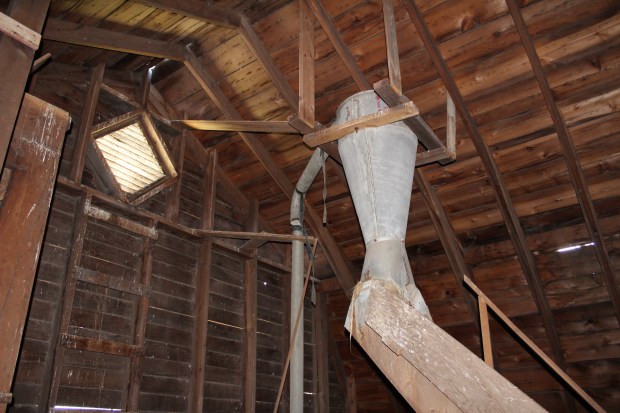
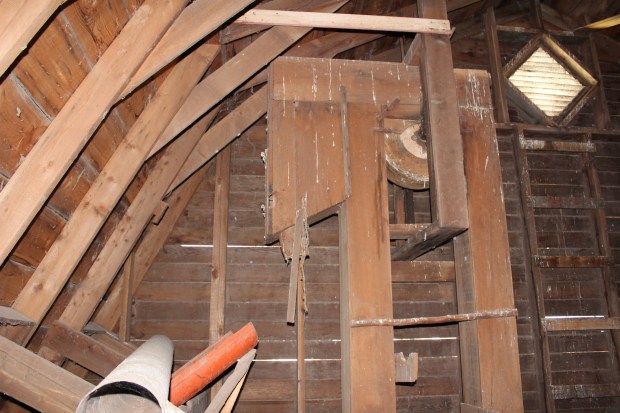
This is an older style of grain elevator. It has a belt system that lifts grain up the right leg (the right side of the wooden elevator) and deposits it into the red slide in the left corner of this frame.

IMG_6822

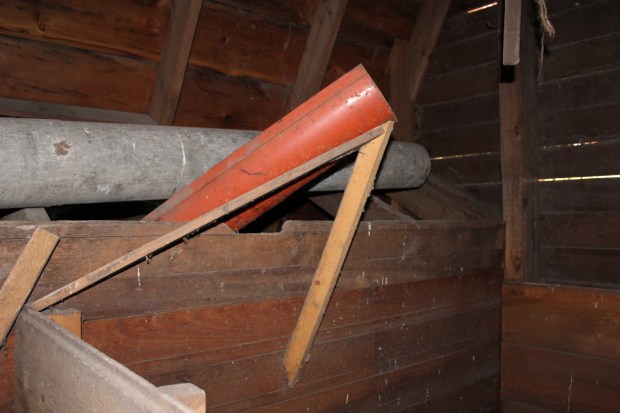
The red slide that deposits the grain into the wooden grain bin.

IMG_6824

This is the main grain bin for the wooden grain elevator. It is directly north of the wooden elevator. The depression in the bin (about halfway up the frame and to the right) leads to the chute near the eastern door on the second floor of the barn.

IMG_6878

This is the upper portion of the hopper that was pictured earlier. The red door is the small door on the eastern face of the main barn.

IMG_6851

This frame shows portions of both the original barn and the addition that was made for the grain handling system.

IMG_6874

In this frame you can see parts of the hay track and the cupola. The ladder and platform to the hay track are also visible. Since they are hidden from the elements, the original diamond window and red paint are still in great condition.

IMG_6959

This frame shows the staircase leading from the first floor/basement of the barn to the second floor of the barn.

IMG_6892

IMG_6920

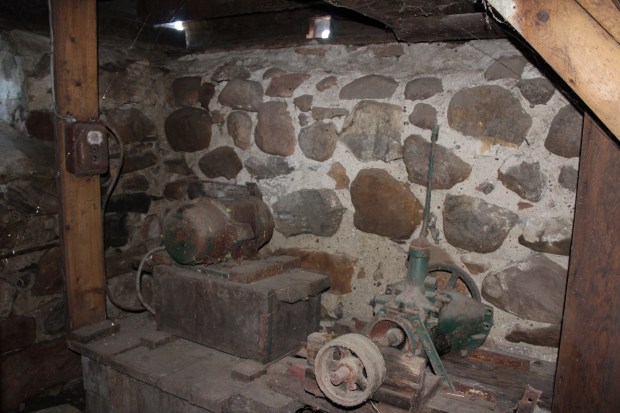
This motor runs the grain elevator.

IMG_6930

This frame shows the other side of that northern wall of the veterinary/storage room.

IMG_6952

This frame shows the western wall of that room and the doorway to enter.

Location

52.735832, -112.015766                                      NE 30-43-14 W4.

Characteristics

Barn Condition: Fair

Construction Date: 1911

Features: Two cupolas, grain elevator/handling system, addition to main barn on the east side

Roof Shape: Gambrel

Paint: Red

Decorations: Wooden numbers detailing the year that the barn was built are nailed to the eastern face of the main barn.

Roof Covering: Wooden shingles

Siding: Wooden shiplap

Foundation: Concrete